
Where to Stay in Paris (2026): Best Areas, Hotels & Neighborhood Guide
1.Why Where You Stay Matters More Than You Think
For many travellers, planning a trip to Paris begins with choosing a hotel. After deciding on travel dates and booking flights, most people open a booking website, compare prices, read guest reviews and look at photographs of hotel rooms. It seems like the logical place to start.
Yet after more than twenty years of welcoming visitors from around the world, we have learned that the hotel itself is rarely what determines whether someone has a wonderful experience in Paris. The neighbourhood does.
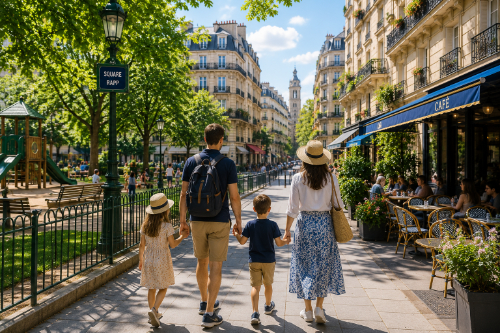
Paris is unlike many modern cities where hotels are simply places to sleep before driving to the next attraction. Here, the city itself becomes part of your accommodation. The streets outside your hotel, the bakery on the corner, the café where you have breakfast, the evening walk back after dinner and even the atmosphere of the surrounding neighbourhood all become part of your holiday. That is why choosing where to stay deserves just as much attention as choosing which monuments you want to visit.
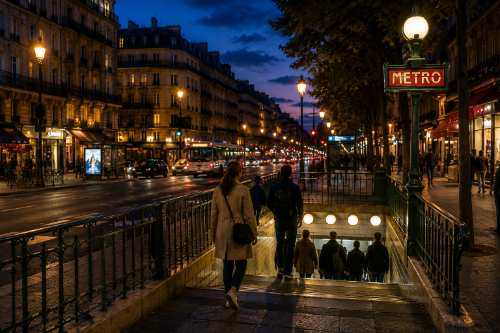
Many first-time visitors believe Paris is so well connected by public transport that the location of the hotel makes little difference. While the metro network is indeed excellent, relying on it several times every day is not always the most enjoyable way to experience the city.
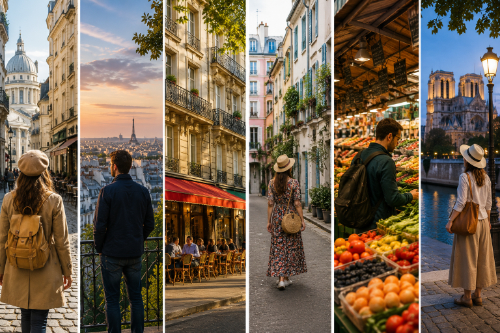
Paris reveals its true character on foot. It is while walking between neighbourhoods that visitors discover elegant boulevards, hidden courtyards, local bakeries, flower shops, lively cafés and small streets that rarely appear in guidebooks. These unexpected discoveries often become the moments people remember long after returning home.
Read More
Choosing the right neighbourhood also changes the rhythm of your holiday. Instead of planning every journey around metro stations and transport connections, you can simply step outside and begin exploring immediately. You might stop for a coffee on a terrace, wander through a local market, or continue walking simply because the next street looks inviting.
That freedom is difficult to measure when comparing hotel prices, yet it is one of the greatest luxuries Paris can offer. Throughout this guide, we will help you understand the different personalities of Paris’ neighbourhoods, explain which areas are best suited to different types of travellers, and share the practical advice we have learned after helping thousands of visitors enjoy the French capital.
Whether you are visiting Paris for the very first time, celebrating a special occasion, travelling with your family, planning a romantic getaway or simply looking for the best balance between comfort and budget, the place where you choose to stay will influence every day of your trip. Our goal is not to tell you where you should stay.
Our goal is to help you find the neighbourhood where your own Paris begins. Because once you have chosen the right location, everything else becomes easier. You spend less time travelling. You discover more of the city on foot. Your evenings become more relaxed. Your mornings become more enjoyable.
And instead of simply visiting Paris, you begin to experience it the way millions of travellers have dreamed of for generations.
At Paris Webservices, we have been welcoming English-speaking visitors for more than two decades. During that time, we have answered thousands of questions about where to stay, which neighbourhood to choose and how to make the most of a visit to Paris.
The advice throughout this guide comes from those conversations, from real experiences shared by travellers, and from years spent helping visitors discover not only the city’s famous landmarks but also the neighbourhoods that give Paris its unique character.
We hope it helps you choose not just a hotel, but the perfect place to call home during your stay in Paris.
Finding the Right Area for Your Travel Style
One of the questions we are asked more than any other is, “Which is the best area to stay in Paris?” It is usually one of the very first questions visitors ask, even before deciding which hotel to book. At first, it seems like a simple question, and many travellers expect an equally simple answer. They hope there is one arrondissement that every local would recommend without hesitation, a neighbourhood that offers the perfect balance of convenience, beauty and atmosphere.
After more than twenty years of helping visitors discover Paris, we have learned that this answer simply does not exist. Not because Paris is complicated, but because every traveller is different.
A family visiting Paris with young children will experience the city very differently from a couple celebrating their honeymoon. A visitor who has dreamed of spending hours inside the Louvre will naturally have different priorities from someone whose ideal day consists of exploring local cafés, shopping in elegant boutiques or simply wandering through beautiful streets with no particular destination in mind.

Read More
The same neighbourhood can feel perfect for one traveller and completely unsuitable for another. That is why we never begin by recommending an arrondissement. Instead, we begin by asking a different question.“What kind of holiday are you hoping to have?” The answer almost always leads us to the right neighbourhood.
Many people make the mistake of choosing a hotel before they choose an area. They compare prices, room sizes and guest reviews, believing these are the most important factors. Although these details certainly matter, they rarely determine whether someone enjoys Paris.
Location does.
The neighbourhood you choose influences almost every moment of your holiday. It determines where you have breakfast each morning, how easily you reach the city’s most famous attractions, whether you can return to your hotel for a short break in the afternoon, and whether you feel like continuing your evening after dinner or heading back because of a long metro journey.
In other words, your neighbourhood becomes part of your daily routine.
Over the years, we have spoken with thousands of visitors after they returned home. Surprisingly, very few remembered the exact size of their hotel room or the colour of the furniture. Instead, they talked about the bakery they discovered just around the corner, the café where they enjoyed breakfast every morning, the quiet street they found while walking back to the hotel, or the small restaurant they would never have found if they had stayed somewhere else. Those memories were not created by the hotel. They were created by the neighbourhood.
This is one of the reasons why we encourage visitors to think beyond the famous landmarks. Staying near the Eiffel Tower may sound attractive, but you will probably spend only a small part of your holiday actually visiting it. The same is true for the Louvre, Notre-Dame Cathedral or Montmartre. These places are essential to any first visit, but they represent only a few hours of your entire stay.
The rest of your time will be spent walking through streets, choosing restaurants, relaxing in cafés, shopping, discovering parks and returning to your hotel at the end of the day.
That is where your choice of neighbourhood really matters.
Another common misunderstanding is that all central districts feel the same. In reality, each arrondissement has developed its own identity over centuries.
Saint-Germain-des-Prés is elegant, literary and timeless.
Le Marais is lively, creative and full of independent boutiques.
The 7th arrondissement offers wide avenues, beautiful residential streets and easy access to the Eiffel Tower.
The 9th arrondissement combines shopping, theatres and excellent value for money.
Montmartre has its own unique atmosphere, completely different from anywhere else in Paris.
None of these neighbourhoods is objectively better than the others.
Each simply offers a different way of experiencing the city.
As you continue reading this guide, you will discover that our goal is not to rank Paris from best to worst. Instead, we want to help you understand the personality of each neighbourhood so that you can choose the one that best reflects your own travel style.
Because once you stop asking, “Which is the best arrondissement?”, and begin asking, “Which neighbourhood is right for me?”, choosing where to stay becomes surprisingly easy.
And when you choose the right neighbourhood, everything else naturally falls into place. You spend less time travelling, more time walking, more evenings enjoying Paris instead of commuting, and far more moments creating the memories that brought you here in the first place.
It Is a City You Experience
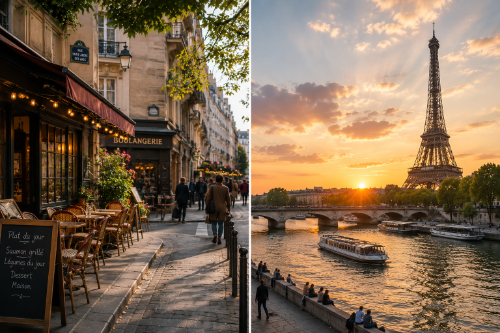
For many travellers, Paris is more than just another destination on a map. It is a city they have imagined for years, sometimes even for a lifetime. Long before they arrive, they already picture themselves walking beside the Seine, sitting at a café terrace, admiring the Eiffel Tower at sunset or wandering through elegant streets lined with historic buildings.
When they finally arrive, however, many discover something unexpected. Paris is not simply a collection of famous monuments. It is a living city.
More than two million people live in Paris every day. Children walk to school, neighbours meet at the local bakery, cafés fill with regular customers every morning, flower shops decorate the sidewalks, and small markets open long before most tourists have finished breakfast. Behind the famous landmarks exists a city with its own rhythm, traditions and neighbourhood life that has remained remarkably authentic despite welcoming millions of visitors every year.
Read More
This is why Paris cannot be experienced by simply moving from one monument to another.
The Louvre, the Eiffel Tower, Notre-Dame Cathedral and the Arc de Triomphe are extraordinary places, but they represent only a small part of what makes Paris unforgettable. The real charm of the city is often found in the moments between these famous attractions, when there is no timetable to follow and no ticket waiting.
It might be the smell of fresh bread coming from a neighbourhood bakery. It might be discovering a quiet square where local residents are enjoying lunch.
It could be hearing church bells while sitting on a café terrace or finding a beautiful street that never appeared in your guidebook.
These moments cannot be planned. They simply happen.
One of the greatest surprises for first-time visitors is how different each neighbourhood feels. Walking from Saint-Germain-des-Prés to Le Marais is not simply changing location; it is like discovering another side of the same city. One district feels elegant and timeless, another lively and creative, while another offers wide residential avenues where life moves at a quieter pace.
Paris changes constantly as you walk. That is why we always encourage visitors to slow down.
Trying to see every monument in two or three days often means missing the very atmosphere that made you want to visit Paris in the first place. The city rewards curiosity far more than speed. Taking an unexpected street because it looks beautiful often leads to discoveries that become far more memorable than another photograph of a famous landmark.
After more than twenty years of welcoming visitors from around the world, we have noticed that those who enjoy Paris the most are rarely the ones who visit the greatest number of attractions.
They are the ones who leave room for the unexpected. They stop when they see an inviting café. They spend longer than planned in a neighbourhood they enjoy. They sit beside the Seine without looking at the time. They return to the same bakery because yesterday’s croissant was the best they have ever tasted. These experiences cannot be measured on an itinerary, yet they often become the highlights of the entire trip.
This is also one of the reasons why choosing the right neighbourhood is so important. If your hotel is located in an area where you enjoy walking, every morning begins with pleasure instead of planning. Every evening becomes an opportunity to continue exploring instead of rushing back to catch the metro.
Little by little, Paris stops feeling like a city you are visiting. It begins to feel like a city you are living in, even if only for a few days.
That is perhaps the greatest luxury Paris offers. Not simply the opportunity to see famous monuments, but the chance to experience everyday Parisian life, to discover the city’s personality at your own pace, and to create memories that no guidebook could ever predict. Because in the end, Paris is not remembered only for what you saw.
It is remembered for how it made you feel.
Why Walking Will Completely Change Your Experience
One of the greatest surprises for many first-time visitors is discovering how different Paris feels once they stop thinking about transport and simply begin walking. Before arriving, it is easy to imagine the city as an enormous capital where the metro will be needed constantly. Looking at a map, the twenty arrondissements appear spread across a vast area, and many travellers assume that moving from one attraction to another will require long journeys underground. The reality is quite different.
Although Paris is a major European capital, its historic centre is remarkably compact. Many of the places visitors dream of seeing are much closer together than they expect. The Louvre, Notre-Dame Cathedral, Saint-Germain-des-Prés, the Latin Quarter, the Tuileries Garden and the Seine are all connected by pleasant walks that reveal a side of Paris impossible to experience from inside a metro carriage. What often appears to be a long distance on a map becomes an enjoyable stroll through some of the most beautiful streets in Europe.
This is one of the reasons why so many experienced travellers fall in love with Paris. They soon realise that the city is not simply a collection of monuments linked together by public transport. It is a place where the journey between two attractions often becomes just as memorable as the destination itself.
Read More
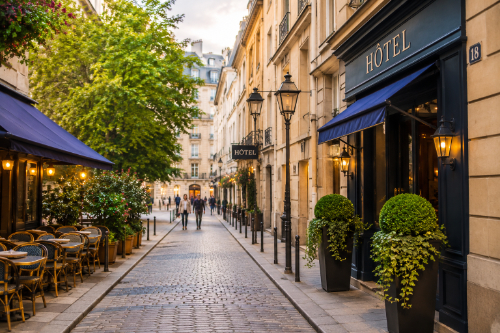
As you walk through Paris, the city reveals itself naturally. A quiet square appears unexpectedly between elegant apartment buildings. A traditional bakery fills the street with the smell of warm bread. A small café invites you to stop for coffee even though you had no intention of taking a break. You pass flower shops overflowing with colour, independent bookshops that seem untouched by time, neighbourhood markets where local residents are doing their daily shopping, and beautiful streets that never appear in travel brochures.
None of these experiences can be planned. They happen because you gave yourself permission to slow down.
Many visitors make the understandable mistake of trying to save time by taking the metro whenever they move from one monument to another. In reality, they often lose one of the greatest pleasures Paris has to offer. Travelling underground means missing everything that makes the city feel alive above ground. You arrive at your destination, but the experience between the two places simply disappears.
Walking transforms the rhythm of your holiday.
Instead of checking maps every hour, searching for the correct metro entrance or changing lines several times a day, you simply continue exploring. If a beautiful street catches your attention, you follow it. If you discover an inviting terrace, you sit down for a while. If you find a small art gallery or an interesting boutique, nothing prevents you from stepping inside. The city begins to guide you instead of the other way around.
This does not mean that public transport should be avoided. On the contrary, Paris has one of the most efficient metro systems in the world, and it remains the best solution for travelling longer distances or reaching places outside the historic centre. The difference is that the metro should become a tool rather than the centre of your itinerary.
Over the years, we have found that visitors enjoy Paris much more when they organise each day around a single neighbourhood instead of constantly crossing the city. Rather than travelling back and forth between famous landmarks, it is far more enjoyable to explore one area thoroughly before moving to another the following day.
For example, if your morning begins at the Eiffel Tower, there is little reason to leave the district immediately afterwards. Walk across to the Trocadéro Gardens, where you will discover some of the most beautiful panoramic views of the Eiffel Tower and take photographs that many travellers consider the finest in Paris. From there, you can enjoy a relaxing one-hour cruise along the Seine before continuing your walk through the Champ de Mars. After lunch at a nearby café, spend the afternoon exploring Les Invalides, where Napoleon’s Tomb and one of France’s most fascinating museums await. If you still have time and energy, finish the day in the peaceful gardens of the Rodin Museum, only a short walk away.
Without using the metro once, you will have experienced monuments, museums, gardens, restaurants, river views and some of the city’s most elegant streets, all within the same neighbourhood.
The same approach works throughout Paris. Dedicate one day to the Louvre, the Tuileries Garden and Place de la Concorde. Another day can be spent exploring Notre-Dame Cathedral, the Latin Quarter and Saint-Germain-des-Prés. A separate day is perfect for wandering through Le Marais, while Montmartre deserves to be discovered at its own pace rather than squeezed into a busy afternoon.
By exploring Paris one neighbourhood at a time, the city becomes easier to understand and infinitely more enjoyable. Instead of spending your holiday moving from one metro station to another, you spend it discovering cafés, gardens, hidden streets and unexpected views that most visitors never notice.
After more than twenty years of helping travellers discover Paris, we have noticed that those who leave with the happiest memories are rarely the ones who managed to visit the greatest number of monuments. They are the ones who walked the most, who allowed themselves to get pleasantly lost from time to time, and who understood that Paris is not a city to be conquered.
It is a city to be experienced, one beautiful street at a time.
Why Saving Money on Your Hotel Can Sometimes Cost You More
Why the Cheapest Hotel Is Not Always the Best Value
When planning a trip to Paris, it is perfectly natural to compare hotel prices before anything else. Booking websites encourage travellers to do exactly that by displaying hundreds of properties side by side, making it easy to sort accommodation from the least expensive to the most luxurious. At first glance, the decision appears straightforward. If two hotels offer similar reviews and facilities, why not choose the one that costs a little less and use the money saved for shopping, restaurants or museum tickets?
After more than twenty years of helping visitors discover Paris, we have learned that this calculation often overlooks the most valuable part of any holiday: your time.
Unlike many destinations where attractions are spread across a wide area and visitors naturally expect to drive from one place to another, Paris is a city that rewards those who stay close to its historic centre. Much of what travellers come to see is concentrated within a relatively compact area, and once you arrive there, the city invites you to slow down, walk and enjoy everything that happens between the famous landmarks.
Read More
The location of your hotel therefore influences far more than the amount you pay each night. It determines how every day begins, how easily you reach the places you want to visit, whether you can return to your room for a short break before dinner and, perhaps most importantly, how much freedom you have to enjoy Paris without constantly thinking about the journey back.
Many visitors only realise this after they arrive.
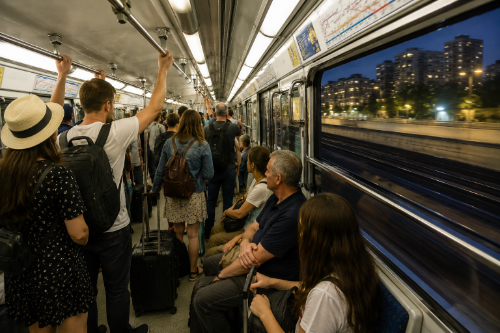
A hotel located outside the central districts may appear to be excellent value when viewed on a map, but each morning begins with the same routine. Before the sightseeing has even started, you must first walk to the nearest metro station, wait for the next train, travel across the city and sometimes change lines before finally reaching your first destination. At the end of the afternoon, the entire journey has to be repeated once again.
Individually, these journeys may not seem particularly long.
Over the course of four or five days, however, they quietly consume a surprising amount of time. Hours that could have been spent walking beside the Seine, discovering another museum, enjoying lunch on a terrace or simply sitting in one of Paris’ beautiful gardens slowly disappear into stations, platforms and train carriages.
Time is one of the few things that cannot be replaced during a holiday. You may decide to spend a little more on dinner or buy another museum ticket, but no amount of money can give back an afternoon that has been lost travelling from one side of the city to the other.
There is also another consequence that many travellers never consider while planning their trip.
Energy.
Paris is a city that encourages walking. Most visitors easily cover fifteen or twenty kilometres during a full day of sightseeing without even noticing it. After hours spent exploring museums, climbing monuments and wandering through historic streets, the prospect of another forty-five minutes on public transport often feels far less appealing than it did that morning.
This is usually the moment when many visitors decide to take a taxi or use a ridesharing service instead.
What initially seemed like an economical choice slowly becomes more expensive. A taxi after dinner here, another after an evening cruise on the Seine, perhaps another after shopping because carrying several bags on the metro no longer seems practical. By the end of the holiday, the difference between the cheaper hotel and the better-located one has often become much smaller than expected.
Yet even these additional costs are not the greatest loss.
The greatest loss is the freedom to enjoy Paris without watching the clock.
Imagine finishing dinner in Saint-Germain-des-Prés on a warm summer evening. The cafés are still busy, musicians are playing beside the Seine and the monuments are beautifully illuminated. It is one of those evenings when the city feels impossible to leave. If your hotel is only a short walk away, there is no reason to hurry. You may decide to continue walking along the river, stop for an ice cream, cross another bridge simply because the view is beautiful or sit quietly watching the boats pass beneath the lights of Paris.
Now imagine exactly the same evening, knowing that returning to your hotel will require nearly an hour of public transport before you finally reach your room.
Most visitors make the same decision.
They leave earlier.
Not because they want to, but because they feel they should.
Without even realising it, the location of the hotel begins to dictate the rhythm of the holiday.
This is one of the reasons why we often recommend investing in the best location your budget allows rather than the largest room you can afford. A slightly smaller room in the right neighbourhood usually provides a far richer experience than a spacious hotel that requires long journeys every morning and every evening.
Over the years, we have had countless conversations with visitors after they returned home. Very few have ever told us that they wished they had booked a hotel with a larger room or a more impressive lobby. Many, however, have admitted that they wished they had stayed closer to the places they enjoyed most, because they had underestimated how much of their holiday would be spent travelling instead of discovering Paris.
Our advice is therefore very simple.
When comparing hotels, do not ask only how much the room costs.
Ask yourself how much of your holiday that location will allow you to enjoy.
In Paris, the true luxury is rarely measured in square metres or hotel stars. It is measured in the freedom to step outside, begin walking and discover one of the world’s most beautiful cities without ever feeling that your day is being controlled by transport schedules. That freedom is often worth far more than the money you thought you had saved.
Discover a Different Side of the City
Most visitors plan their days in Paris with remarkable precision. They decide which museums to visit, what time to climb the Eiffel Tower, when to enter the Louvre and which monuments they want to photograph before returning to their hotel. Yet very few spend as much time thinking about their evenings, even though this is often when Paris becomes its most beautiful.
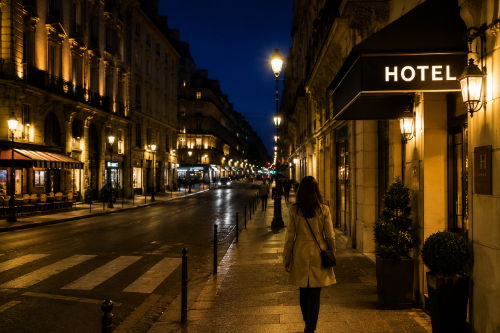
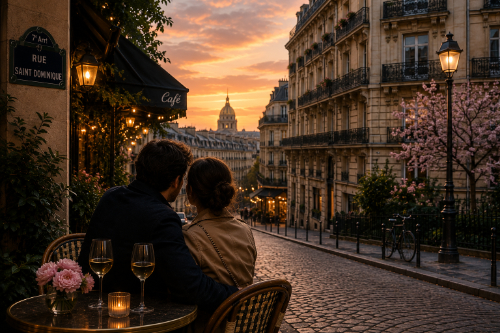
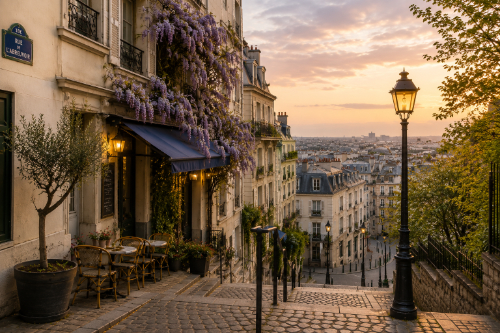
As daylight slowly fades, the city changes almost imperceptibly. The busy streets that only a few hours earlier were filled with sightseeing groups begin to slow down. Office workers leave for home, café terraces fill with conversations, restaurants become lively, and the warm glow of street lamps reflects on the Seine. The monuments, carefully illuminated every evening, create an atmosphere that feels completely different from the one visitors experience during the day.
Many Parisians would even tell you that the city is at its most elegant after sunset.
Read More
This is one of the reasons why choosing the right neighbourhood is so important. A hotel is not only the place where you sleep after a busy day of sightseeing. It also determines how you experience your evenings. If your accommodation is located in a pleasant central district, there is no pressure to return immediately after dinner. You simply continue walking, enjoying the atmosphere, stopping for dessert at a café or crossing another bridge because the view is too beautiful to ignore.
The evening becomes part of your holiday rather than the moment when sightseeing comes to an end.
Imagine finishing dinner in Saint-Germain-des-Prés on a warm spring evening. Instead of checking the time to catch the next metro, you stroll towards the Seine, where musicians are playing beside the river and couples are sitting on the stone embankments watching the boats pass beneath the illuminated bridges. A few minutes later, you find yourself crossing the Pont des Arts before continuing towards the Louvre, which looks completely different under the evening lights than it did during the afternoon.
Nothing about this walk was planned.
Yet it may become one of the memories you remember most vividly after returning home.
Exactly the same is true if you spend the evening near the Eiffel Tower. Watching the monument sparkle every hour after dark is an unforgettable experience, but what many visitors enjoy even more is simply remaining in the area afterwards. The Champ de Mars becomes quieter, the Seine reflects the lights of the city, and the cafés nearby continue serving customers long after the crowds have disappeared.
These are the moments that many guidebooks never mention.
They happen naturally when your hotel is close enough that you never feel the need to rush back.
The opposite experience is unfortunately quite common. Visitors who stay much farther from the historic centre often find themselves leaving restaurants earlier than they would like because they know they still have a long journey ahead. Instead of enjoying one last walk beside the river or stopping for a drink on a terrace, they begin thinking about metro connections, train changes or the cost of taking a taxi back to the hotel.
Little by little, the evening becomes something to organise rather than something to enjoy.
Over the years, we have noticed that some of our guests return from dinner talking far more enthusiastically about their walk back to the hotel than about the restaurant itself. They remember the reflections on the Seine, the sound of live music coming from a nearby square, the illuminated façades of the old buildings or the peaceful atmosphere of streets that seemed completely different after sunset.
These experiences cannot be scheduled.
They cannot be purchased with an entrance ticket.
They simply happen because you are in the right place at the right moment.
This is why we often encourage visitors not to fill every evening with activities. Paris does not always need another attraction. Sometimes it is enough to walk without any destination, allowing the city to reveal itself naturally. You may discover a hidden courtyard, a quiet wine bar, a beautifully illuminated church or simply a street that looks even more charming at night than it did during the day.
The longer you stay, the more you begin to understand that Paris has two personalities.
During the day, it is a city of museums, monuments and bustling streets.
In the evening, it becomes a city of conversation, elegant lighting, relaxed walks and unforgettable atmosphere.
Experiencing both sides of Paris is one of the greatest pleasures of any visit.
For this reason, when choosing where to stay, do not think only about how close your hotel is to the places you want to visit during the day. Think about where you would like to spend your evenings as well.
A neighbourhood where you can comfortably walk home after dinner, stop beside the Seine for a few minutes or simply enjoy the atmosphere without looking at your watch will often become one of the highlights of your entire trip.
Because some of the most beautiful memories of Paris are not created under the bright light of the afternoon sun.
They are created quietly, one evening at a time, as the city begins to glow.
Why the Right Location Matters More Than the Room Itself
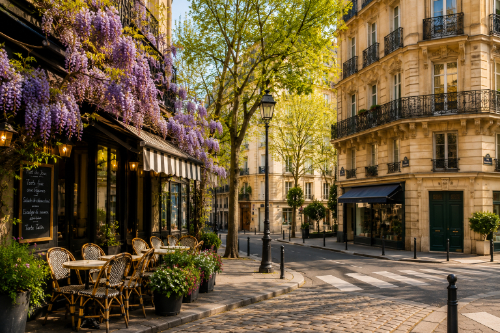
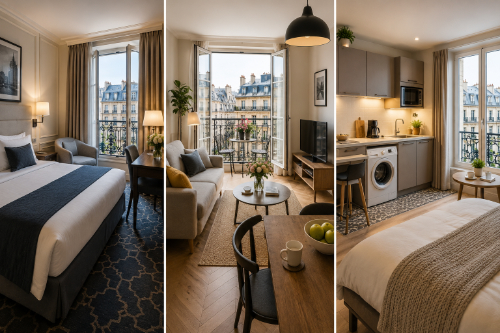
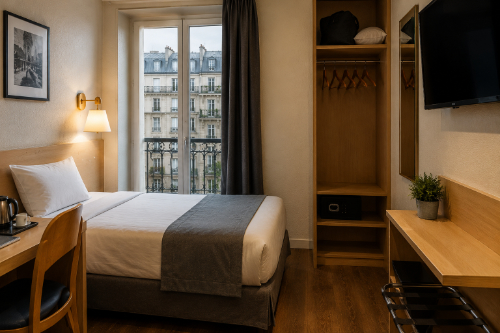
When people begin searching for a hotel in Paris, they naturally focus on the things that seem easiest to compare. They look at photographs of the rooms, read hundreds of guest reviews, compare prices, check whether breakfast is included and decide how many stars they would like their accommodation to have. These are all sensible criteria, and they certainly help narrow down the choices. However, after more than twenty years of helping visitors plan their stay in Paris, we have learned that none of these elements has as much influence on the overall experience as the location of the hotel itself. The reason is quite simple. Most visitors spend surprisingly little time inside their hotel.
After breakfast, they leave to discover the city and often return only in the evening after a full day of sightseeing. During those ten or twelve hours, the room, the television, the minibar or even the size of the bathroom become almost irrelevant. What truly shapes the holiday is everything that happens outside the front door.
Read More