
Hotels Near Major Attractions in Paris: Best Areas to Stay

Introduction
When planning a trip to Paris, one of the first questions many travellers ask is surprisingly simple: “Should I book a hotel near the Eiffel Tower?” A few minutes later, another question usually follows. “What about the Louvre? Notre-Dame? Montmartre?” It is a perfectly natural way to search for accommodation. After all, if you have travelled thousands of kilometres to visit one of the world’s most famous cities, staying beside its most iconic landmarks seems like the obvious choice.
Booking websites have understood this for years. Search for almost any major attraction in Paris and you will immediately find hundreds of hotels promoted as being “just a few minutes away.” At first glance, this sounds like the ideal solution. Who wouldn’t want to wake up with the Eiffel Tower nearby or be able to walk to the Louvre in just a few minutes?
The reality, however, is often more complicated. A famous monument does not automatically create a great neighbourhood. Likewise, staying a little farther away does not necessarily mean sacrificing convenience. In many cases, it actually provides a far more enjoyable experience.
This is one of the biggest misconceptions we encounter when speaking with visitors. Many travellers choose a hotel because it is located beside a monument without considering how they will spend the rest of their holiday. They may visit the Eiffel Tower once or twice, yet spend the following four days travelling across Paris to reach museums, restaurants, shopping streets and other neighbourhoods. The hotel seemed perfectly located for one attraction, but much less practical for everything else.
Read More
The opposite situation is equally common. Visitors staying in neighbourhoods such as Saint-Germain-des-Prés, the 7th arrondissement or the 1st arrondissement often discover that they can reach several of Paris’ most famous attractions simply by walking. Instead of being close to one monument, they are close to many. Their days become more flexible, they spend less time on public transport and they experience Paris at a much more relaxed pace.
Another point worth remembering is that monuments are very different from neighbourhoods. The Eiffel Tower is a single attraction. The Louvre is a museum. Notre-Dame is a cathedral. Montmartre is an entire neighbourhood with its own atmosphere. Le Marais is a district full of restaurants, cafés and boutiques.
Choosing accommodation therefore means deciding not only what you would like to see, but also how you would like to live during your stay. Do you imagine returning every evening to lively streets filled with restaurants? Would you rather wake up in a quiet residential neighbourhood? Is shopping important? Would you like to walk as much as possible? These questions often have a much greater influence on the success of a holiday than simply measuring the distance between your hotel and a famous monument.
Throughout this guide, we will examine the advantages and limitations of staying near Paris’ best-known attractions. Some locations are genuinely excellent choices for first-time visitors. Others are far less practical than many travellers expect. Our objective is not to identify the hotel closest to each monument, but to help you understand whether staying there will actually improve your overall experience of Paris.
Because the best hotel is rarely the one closest to the attraction you plan to visit for one hour. It is usually the one that allows you to enjoy Paris from the moment you leave your room until the moment you return in the evening.
One of the most common mistakes first-time visitors make is choosing a hotel simply because it is close to the attraction they are most excited to visit. It is completely understandable. If the Eiffel Tower has always been part of your dream of Paris, staying five minutes away sounds like the perfect decision. The same applies to the Louvre, Notre-Dame or Montmartre. On a booking website, this seems like an obvious advantage.
In reality, however, most travellers visit these landmarks only once or twice during their stay.
The rest of the holiday is spent somewhere else.
This is where many visitors realise they have planned their accommodation around a single attraction instead of around the city as a whole.
Imagine spending four nights in Paris. You visit the Eiffel Tower on your first afternoon, perhaps return one evening to watch the lights sparkle, and then spend the following days discovering the Louvre, Saint-Germain-des-Prés, Le Marais, Montmartre, the Luxembourg Gardens, the Champs-Élysées, shopping districts and neighbourhood cafés. Suddenly, the hotel that seemed perfectly located for the Eiffel Tower is no longer particularly convenient for the rest of your itinerary. Every morning begins with another Metro journey or a taxi ride simply because the accommodation was chosen for one monument rather than for the overall experience.
The opposite approach often works much better.
Instead of asking “Which hotel is closest to the Eiffel Tower?”, ask yourself “Where will I spend most of my time?”
Most visitors quickly discover that they enjoy wandering through neighbourhoods, stopping in cafés, shopping, visiting museums and walking along the Seine far more than they expected. Paris is not a city where people spend every hour inside monuments. Much of its charm comes from everything that happens between them.
Another mistake is assuming that being close to a famous attraction automatically means being in the most attractive neighbourhood. This is not always the case. Some monuments are surrounded by wonderful residential districts full of cafés and restaurants, while others are located in areas where the activity changes dramatically once the sightseeing crowds disappear. Choosing accommodation requires looking beyond the attraction itself and understanding what the neighbourhood offers during the rest of the day.
Read More
Many travellers also forget that Paris is surprisingly walkable. Looking at a map, distances often appear much greater than they actually feel. Walking from the Louvre to Notre-Dame, continuing towards Saint-Germain-des-Prés and ending the afternoon in the Luxembourg Gardens is an enjoyable experience rather than a long journey. Visitors who choose a well-located neighbourhood often discover far more of Paris than those who constantly move from one monument to another by Metro.
This is one of the reasons we encourage travellers to think in terms of neighbourhoods rather than attractions. A good neighbourhood gives you cafés for breakfast, restaurants for dinner, pleasant streets for evening walks, local bakeries, excellent transport when needed and easy access to several different monuments. A hotel beside a single attraction may offer wonderful views, but it cannot always provide that complete Parisian experience.
The purpose of this guide is therefore not to tell you which attraction has the best nearby hotels. Instead, we want to help you understand whether staying beside that attraction will genuinely improve your holiday. Sometimes the answer is yes. Quite often, however, another neighbourhood located only fifteen or twenty minutes away will offer a much richer, more comfortable and more memorable experience throughout your entire stay.
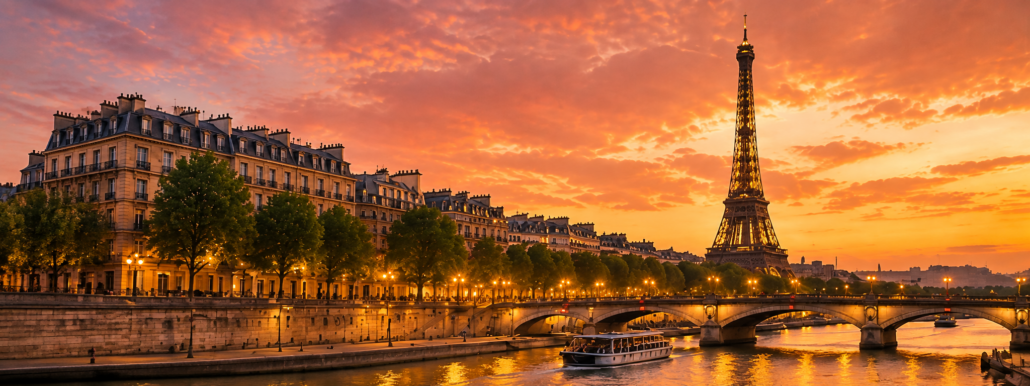
For many people around the world, the Eiffel Tower is Paris. It is the image that appears on postcards, travel brochures and countless films, so it is perfectly natural that many first-time visitors dream of staying nearby. Waking up each morning and seeing one of the world’s most famous monuments only a short walk away sounds like the perfect beginning to a holiday. In many respects, that dream becomes reality. The neighbourhood surrounding the Eiffel Tower is one of the most elegant and pleasant parts of Paris, offering beautiful avenues, impressive architecture and a relaxed atmosphere that appeals to visitors of all ages.
Unlike some tourist areas that become quiet once the attractions close, the districts around the Eiffel Tower remain lively throughout the day. Local residents continue their daily routines, cafés welcome both Parisians and visitors, and traditional food shops operate alongside elegant restaurants. Walking through the neighbourhood early in the morning, before the crowds arrive at the monument, offers a completely different perspective of Paris. The streets are peaceful, bakeries begin serving fresh pastries and the city feels far more authentic than many visitors expect.
One of the greatest advantages of staying here is the opportunity to experience the Eiffel Tower more than once. Most visitors who stay in other parts of Paris see the monument during a single visit before moving on to the next attraction. Guests staying nearby often pass it several times during their holiday. They may admire it while enjoying breakfast, return in the evening to watch the sparkling lights or simply walk through the Champ de Mars on the way back to their hotel. Seeing the Eiffel Tower under different weather conditions and at different times of day creates a much richer experience than a single visit.
The neighbourhood also offers much more than its famous landmark. Rue Cler, one of Paris’ best-known market streets, is filled with traditional bakeries, cheese shops, cafés and small restaurants that make everyday life particularly enjoyable. Les Invalides, the Rodin Museum and the banks of the Seine are all within easy walking distance, while the Musée d’Orsay and Saint-Germain-des-Prés can also be reached on foot by visitors who enjoy walking. Many travellers are surprised by how little they actually use the Metro during their stay because so many attractions are already nearby.
Read More
Families particularly appreciate this part of Paris. Wide pavements, quieter streets and generous green spaces around the Champ de Mars make walking with children much easier than in some busier districts. Couples are equally attracted by the romantic atmosphere, especially during the evening when the Eiffel Tower begins to sparkle and the Seine reflects the lights of the city. For many visitors, these simple moments become the memories they treasure long after returning home.
However, staying near the Eiffel Tower is not the perfect solution for everyone. One of the main disadvantages is that many of the city’s other major attractions are located elsewhere. If your itinerary includes spending several days around the Louvre, Le Marais, Montmartre, Opéra Garnier or Bastille, you will need to rely more frequently on the Metro or buses than visitors staying in more central neighbourhoods. The journeys are generally straightforward, but they are worth considering if you plan to move around the city extensively.
Another point concerns price. Hotels around the Eiffel Tower are among the most sought-after in Paris, and this popularity is naturally reflected in their rates. During spring, summer and the Christmas season, accommodation prices are often significantly higher than in neighbouring districts. Restaurants immediately surrounding the monument can also be more expensive, although walking only a few streets away usually reveals much better value and a more local atmosphere.
Despite these few limitations, the area around the Eiffel Tower remains one of our favourite recommendations, particularly for first-time visitors. It is also no coincidence that the 7th arrondissement has long been one of the neighbourhoods most frequently recommended by Rick Steves in his travel guides. The combination of elegant surroundings, excellent restaurants, remarkable museums and easy access to many of Paris’ most famous landmarks creates an experience that is difficult to match elsewhere in the city.
If your dream of Paris includes beautiful streets, relaxed evenings, local cafés and the pleasure of seeing the Eiffel Tower whenever you step outside, choosing a hotel in this neighbourhood is unlikely to disappoint. It may not place you closest to every attraction in Paris, but it offers something many visitors value even more: the feeling of truly living in one of the city’s most beautiful districts rather than simply visiting one of its monuments.
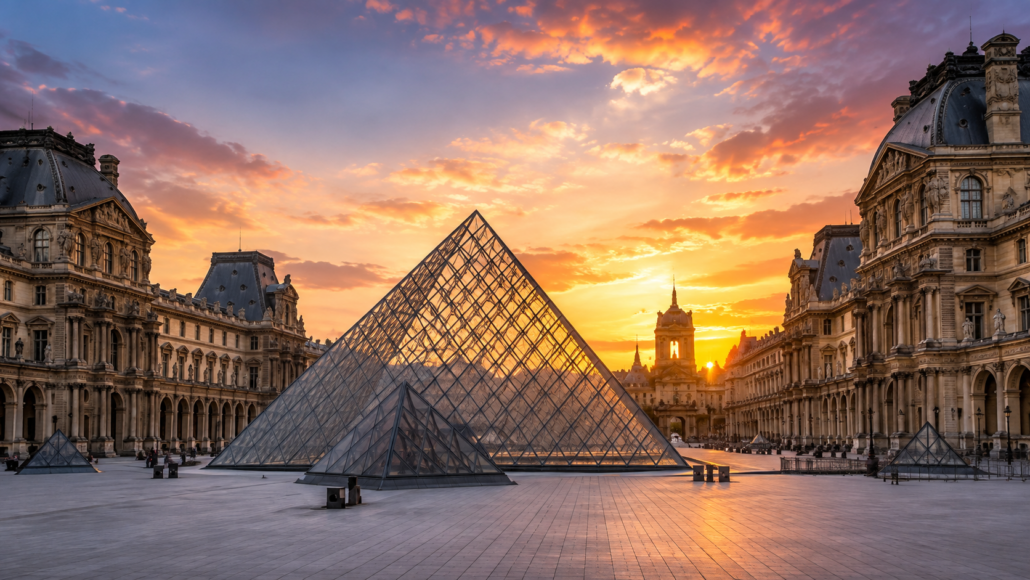
For many visitors, staying near the Louvre Museum seems like the perfect choice. After all, the Louvre is not only the world’s most visited museum but also one of the geographical hearts of Paris. Looking at a map, it appears to be surrounded by many of the city’s most famous landmarks, making it easy to assume that booking a hotel nearby automatically guarantees the ideal location. In many respects, this assumption is correct. Few neighbourhoods allow visitors to begin their day in such an extraordinary setting, where history, architecture and culture meet at almost every street corner.
Stepping outside your hotel in the morning and walking towards the Louvre before the crowds arrive is a completely different experience from visiting later in the day. The Cour Napoléon, the glass pyramid and the surrounding historic buildings are remarkably peaceful during the early hours, allowing visitors to appreciate the scale and beauty of the museum without the usual bustle of thousands of tourists. Even if you have already planned a visit inside the museum, simply passing through the square several times during your stay creates a very different relationship with one of Paris’ greatest landmarks.
The location is also exceptionally practical for sightseeing. From the Louvre, it is only a pleasant walk through the Tuileries Garden to Place de la Concorde, while continuing along the Seine naturally leads towards Musée d’Orsay, Saint-Germain-des-Prés and Notre-Dame Cathedral. The elegant streets around Palais Royal, Place Vendôme and Rue Saint-Honoré provide excellent shopping, beautiful cafés and some of Paris’ finest architecture. Few neighbourhoods offer such a concentration of famous attractions within walking distance.
Read More
Shopping enthusiasts will also appreciate the area. Luxury boutiques around Place Vendôme, designer stores on Rue Saint-Honoré and the shopping district of Les Halles are all nearby. Visitors interested in combining museums with shopping rarely need to use public transport, as most destinations can be reached comfortably on foot.
Restaurants are plentiful, although choosing carefully is important. Streets immediately surrounding the Louvre naturally attract large numbers of visitors, and some establishments focus primarily on tourist traffic. Fortunately, walking only a few minutes away often reveals traditional Parisian cafés, elegant brasseries and smaller restaurants where both the atmosphere and the quality become noticeably more authentic. Exploring the neighbouring streets rather than dining directly beside the museum usually provides a much more rewarding experience.
Public transport is excellent. Several Metro stations serve the district, making it easy to reach the Eiffel Tower, Montmartre, Le Marais or the Latin Quarter within a short time. Even so, many visitors discover that they use the Metro less than expected because so much of central Paris is already within walking distance. This is one of the principal advantages of staying near the Louvre. Public transport becomes available whenever needed without becoming an essential part of every day.
Despite its many advantages, staying near the Louvre is not perfect for everyone. One of the main limitations is the atmosphere during the evening. Once the museum closes and many day visitors leave the area, certain streets become noticeably quieter than neighbourhoods such as Saint-Germain-des-Prés, Le Marais or Opéra, where cafés, restaurants and local life continue well into the evening. Visitors looking for lively terraces, nightlife or a more residential atmosphere may therefore prefer another district.
Accommodation is another consideration. Because of the exceptional location, hotels around the Louvre are among the most expensive in Paris. Historic buildings often mean smaller rooms, and the most desirable properties are frequently booked months in advance. While the location undoubtedly justifies much of the price, travellers should decide whether being beside the Louvre is more important than enjoying a larger room or a slightly lower budget elsewhere.
If your holiday is centred on museums, elegant architecture, luxury shopping and discovering historic Paris on foot, few neighbourhoods can compete with the area surrounding the Louvre. It offers one of the finest locations in the city and places many of Paris’ greatest treasures within easy reach. For visitors who dream of waking up in the very heart of historic Paris, it remains an outstanding choice. However, if your evenings are just as important as your days and you prefer a neighbourhood with a stronger café culture and more local atmosphere after dark, districts such as Saint-Germain-des-Prés or Le Marais may ultimately provide a more balanced experience.
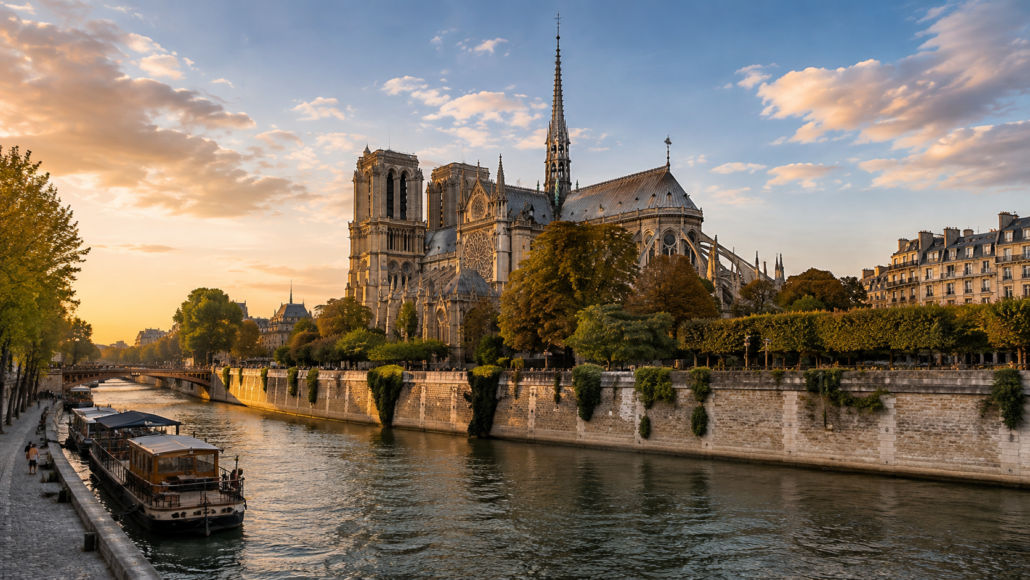
For many travellers, Notre-Dame Cathedral represents the very heart of Paris. Long before they arrive, they imagine walking across the Seine at sunrise, hearing the cathedral bells echo through the narrow streets and spending their evenings wandering through one of the oldest parts of the city. Choosing a hotel nearby therefore seems like an obvious decision. While the area certainly offers one of the most beautiful settings in Paris, staying close to Notre-Dame has both advantages and limitations that are worth understanding before making a reservation.
The greatest attraction of this neighbourhood is undoubtedly its atmosphere. Unlike districts dominated by shopping or business activity, the area surrounding Notre-Dame feels deeply connected to the history of Paris. Walking through the Latin Quarter, crossing the bridges linking the Left Bank with the Île de la Cité or sitting beside the Seine quickly explains why this part of the city has inspired writers, artists and travellers for centuries. Rather than simply visiting a monument, you become surrounded by the origins of Paris itself.
One of the greatest pleasures of staying here is how naturally the days unfold. After breakfast, you can stroll through the quiet streets before the crowds arrive, admire Notre-Dame from different viewpoints and continue effortlessly towards Saint-Germain-des-Prés, the Louvre or Le Marais. The Seine acts almost like a guide, connecting many of the city’s greatest landmarks with beautiful riverside walks that rarely feel like sightseeing in the traditional sense.
The surrounding neighbourhood also offers an excellent selection of cafés and restaurants. The Latin Quarter remains one of the liveliest areas of Paris, filled with traditional bistros, small wine bars, independent bookshops and historic cafés where visitors and local residents mix throughout the day. The atmosphere changes constantly from morning until late evening, making it one of the most enjoyable districts for simply wandering without a fixed destination.
Read More
Culture lovers will appreciate how many important attractions lie within walking distance. The Panthéon, the Luxembourg Gardens, Sainte-Chapelle, the Conciergerie, the Louvre and Saint-Germain-des-Prés can all be reached without relying heavily on public transport. This allows visitors to experience Paris at a slower pace while discovering many places that never appear on a typical sightseeing schedule.
Public transport is excellent, although many guests find they rarely need it. Several Metro stations and RER connections serve the area, making journeys to the Eiffel Tower, Montmartre or the Champs-Élysées quick and straightforward. Nevertheless, the greatest advantage of staying near Notre-Dame is that much of central Paris already lies within comfortable walking distance.
There are, however, a few limitations that visitors should consider. Unlike neighbourhoods such as Opéra or the 7th arrondissement, the number of hotels immediately surrounding Notre-Dame is relatively limited. Many buildings in this historic area are protected, meaning opportunities for new hotel developments are rare. As a result, accommodation is often in high demand and prices can be significantly higher than travellers expect, particularly during spring, summer and the Christmas season.
Room sizes also tend to be smaller than average. Many hotels occupy historic buildings that have been carefully preserved for centuries. While this gives them tremendous charm and character, it also means that larger rooms are less common, lifts may be compact and modern facilities sometimes have to fit within historic architecture.
Another aspect to consider is the popularity of the area. During the middle of the day, especially between spring and early autumn, the streets around Notre-Dame become extremely busy with visitors from around the world. Early mornings and evenings remain wonderfully peaceful, but travellers looking for a quieter atmosphere throughout the day may prefer Saint-Germain-des-Prés or the 7th arrondissement.
For most visitors, however, these are relatively minor compromises. If your dream of Paris includes historic streets, riverside walks, traditional cafés and some of the city’s most beautiful architecture, staying near Notre-Dame offers an unforgettable experience. Few places capture the spirit of Paris so naturally. You are not simply staying near one of the world’s most famous cathedrals—you are staying in the historic centre of a city whose story began more than two thousand years ago.
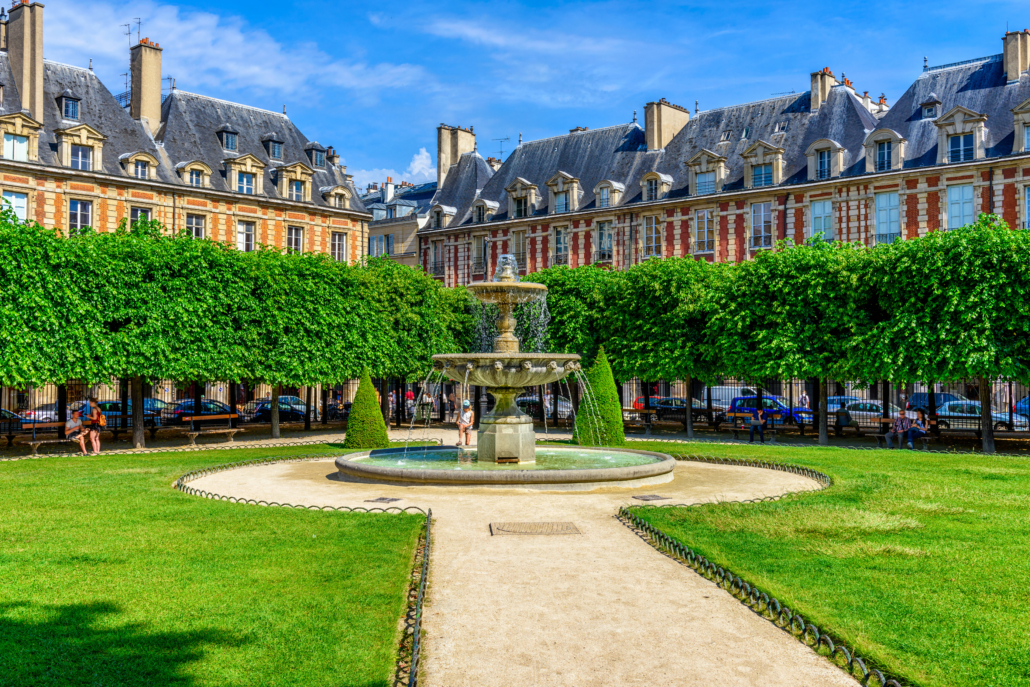
Unlike the Eiffel Tower, the Louvre or Notre-Dame, Le Marais is not a single attraction. It is an entire neighbourhood, extending across parts of the 3rd and 4th arrondissements, with historic mansions, small museums, independent boutiques, cafés, restaurants and residential streets. This distinction is important because travellers who choose a hotel here are not simply staying close to something they plan to visit once. They are selecting a district that can become part of their daily Parisian experience from breakfast until late in the evening.
The atmosphere is one of the principal reasons to stay in Le Marais. The neighbourhood combines several different versions of Paris within a relatively compact area. Around Place des Vosges, the streets feel elegant and historic, while Rue des Rosiers reflects the district’s long-established Jewish heritage. Elsewhere, contemporary galleries, fashion boutiques and lively cafés give the area a younger and more creative character. Le Marais is also closely associated with Paris’s LGBTQ+ community, particularly around the western side of the district, adding another important dimension to its open and cosmopolitan identity.
For visitors who enjoy walking without following a rigid itinerary, Le Marais is particularly rewarding. You can begin the morning in a local bakery, visit the Musée Carnavalet or the Musée Picasso, browse small shops during the afternoon and end the day in one of the neighbourhood’s many restaurants or wine bars. Some of the most memorable moments are not necessarily connected to a famous monument. They may come from discovering a hidden courtyard, entering a small gallery or simply watching daily life from a café terrace.
The location is also excellent for exploring central Paris. Place des Vosges, the Hôtel de Ville, the Centre Pompidou, the Seine and the eastern side of Île Saint-Louis are all nearby. Notre-Dame can be reached on foot, while the Louvre and Latin Quarter remain within a reasonable walking distance for active travellers. Bastille lies just to the east, and the pleasant streets around Rue de Bretagne and the Marché des Enfants Rouges extend the experience towards the northern part of the district. Staying here allows you to reach several very different neighbourhoods without feeling that every journey requires public transport.
Read More
Le Marais is also one of the most convenient areas for travellers who consider restaurants, cafés and shopping an important part of their holiday. Unlike some districts surrounding major monuments, it does not lose all its activity once sightseeing hours are over. The streets remain animated in the evening, and there is usually no need to travel across Paris simply to find somewhere interesting for dinner. The shopping is equally varied, ranging from international fashion brands to French designers, vintage stores, specialist food shops and independent boutiques.
However, the same energy that makes Le Marais attractive can also create some disadvantages. Certain streets become extremely busy during weekends, public holidays and the warmer months. Restaurants attract both residents and visitors, queues form outside popular food addresses, and the narrow pavements can feel crowded during the afternoon. Travellers imagining a completely peaceful, traditional residential neighbourhood may therefore find some parts of Le Marais more fashionable and tourist-oriented than expected.
Noise is another factor to examine carefully when choosing a hotel. A room overlooking a lively street, restaurant terrace or bar may be atmospheric during the evening but less appealing when you are trying to sleep. This is particularly important on Thursday, Friday and Saturday nights. A hotel located only one or two streets away from the busiest areas may offer an entirely different experience, so always look at the hotel’s precise position rather than relying only on the neighbourhood name.
Accommodation in Le Marais can also be expensive in relation to room size. Many hotels occupy protected historic buildings with narrow corridors, compact lifts and smaller bedrooms. These features contribute to the character of the property, but they may not be suitable for everyone. Travellers carrying several large suitcases, families requiring connecting rooms or guests with reduced mobility should check the lift, staircase, room dimensions and entrance accessibility before booking. In some older buildings, an elevator may stop between floors, requiring guests to use a few steps even after leaving the lift.
It is also important to understand that the term “Le Marais” is sometimes used quite broadly on booking platforms. A hotel advertised as being in or near Le Marais may be located at its outer edge rather than beside Place des Vosges or Rue des Rosiers. This is not necessarily a disadvantage—the quieter northern and eastern sections can provide better value and a more residential atmosphere—but travellers should check the exact address and walking distances rather than relying solely on the hotel’s marketing description.
Le Marais is an excellent choice for couples, returning visitors, solo travellers and anyone who values food, fashion, history and evening atmosphere. Families can also enjoy the area, particularly around its quieter residential streets, although room size and nighttime noise deserve additional attention. It may be less suitable for visitors who want the broad avenues and calm atmosphere of the 7th arrondissement, or those whose priority is being close to the Eiffel Tower, Champs-Élysées or Opéra Garnier.
For travellers who want to step outside their hotel and immediately find restaurants, shops, historic streets and local activity, Le Marais remains one of the most complete places to stay in Paris. Its strength is not proximity to one particular monument. It is the ability to enjoy the neighbourhood itself throughout the entire stay, even on days when you have no sightseeing programme at all.
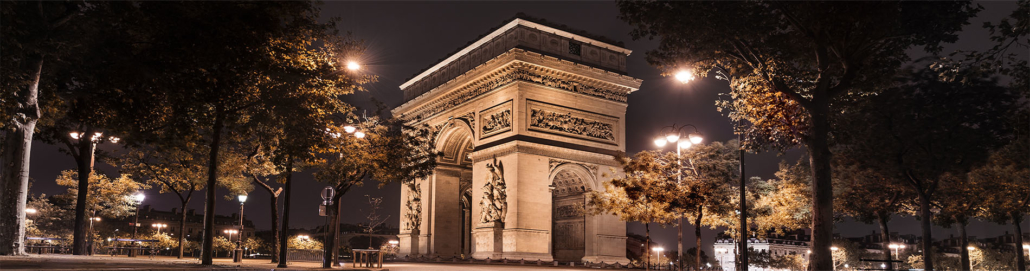
For many international visitors, staying near the Champs-Élysées represents a particular vision of Paris: grand avenues, luxury hotels, famous fashion houses and the Arc de Triomphe illuminated at the end of the street. The address is immediately recognisable, and hotels in this part of the city often appeal to travellers who want a prestigious location with excellent transport connections, high-end shopping and easy access to some of the capital’s best-known landmarks.
However, the Champs-Élysées is not a conventional residential neighbourhood. It is a major avenue surrounded by several distinct areas, and the experience can change considerably depending on the exact location of your hotel. Staying directly on the avenue is very different from staying a few streets away near Avenue Montaigne, Rue du Faubourg Saint-Honoré, Parc Monceau or the quieter western streets behind the Arc de Triomphe. Before reserving, it is therefore important to look beyond the words “near the Champs-Élysées” and understand precisely where the hotel is situated.
The upper section of the avenue, between George V and the Arc de Triomphe, is the busiest and most commercial. It offers immediate access to shops, cafés, cinemas and several large international brands. The atmosphere remains active from morning until late in the evening, which can be exciting for visitors who enjoy being at the centre of everything. The Arc de Triomphe is only a short walk away, and the surrounding avenues create some of the most impressive urban views in Paris.
The area known as the Golden Triangle, between the Champs-Élysées, Avenue Montaigne and Avenue George V, provides a more refined experience. This is where many of Paris’s luxury hotels, haute-couture boutiques and prestigious restaurants are located. The streets are generally more elegant and less crowded than the main avenue, while still remaining close to its attractions. Travellers looking for a five-star hotel, exceptional service or designer shopping will find one of the finest concentrations of luxury addresses in the city.
Read More
Closer to Rond-Point des Champs-Élysées and Place de la Concorde, the atmosphere changes again. The avenue becomes greener, with easier access to the Grand Palais, Petit Palais, the Tuileries Garden and the Seine. This section can provide a particularly good compromise for visitors who want to stay near the Champs-Élysées while remaining within walking distance of the Louvre, Rue Saint-Honoré and several important museums. It feels less dominated by large shops than the upper avenue and is better connected to the historic centre on foot.
One of the greatest advantages of this area is its accessibility. Several Metro lines serve the avenue, and the transport hub at Charles de Gaulle–Étoile provides direct connections to many parts of Paris. The Eiffel Tower, Opéra Garnier, the Louvre, Montmartre and Le Marais can all be reached relatively easily. Travellers who enjoy walking can follow the monumental route from the Arc de Triomphe through the Champs-Élysées and Place de la Concorde, continue across the Tuileries Garden and arrive at the Louvre without needing public transport.
The western location is also particularly practical for visitors planning excursions outside Paris. Many hotel-pickup services for destinations such as Versailles, Giverny and Normandy operate conveniently from the 8th arrondissement and the surrounding western districts. For guests joining one or more early departures during their stay, this can reduce the need to cross Paris in the morning to reach a meeting point. It should not be the only reason to choose the area, but it is a meaningful practical advantage when comparing two otherwise similar hotels.
Shopping is naturally one of the strongest reasons to stay here, although it is important to distinguish between different types of shopping. The Champs-Élysées itself is now largely occupied by prominent international brands and flagship stores. For a more exclusive experience, Avenue Montaigne and Rue du Faubourg Saint-Honoré offer luxury fashion houses, while the streets towards Madeleine and Opéra provide access to a broader range of boutiques and department stores. Visitors whose holiday includes a significant amount of shopping will appreciate being able to return purchases to the hotel rather than carrying them throughout the day.
The area also offers an impressive range of accommodation, from internationally recognised palace hotels to smaller four-star properties in the surrounding streets. Nevertheless, the prestige of the address is reflected in the price. Rooms are frequently more expensive than equivalent accommodation in other arrondissements, particularly when the hotel is directly on the avenue or offers a view of the Arc de Triomphe. Travellers should decide whether they are paying for superior comfort and service or primarily for the name of the location.
Restaurants require similar attention. Some excellent dining establishments are found around Avenue George V, Avenue Montaigne and the nearby residential streets, but the most visible restaurants directly on the Champs-Élysées often charge premium prices because of their location. A busy terrace with a view of the avenue can be enjoyable once, yet it may not provide the intimate neighbourhood atmosphere many travellers associate with Paris. Walking five or ten minutes away from the main avenue generally produces a wider choice, a calmer setting and often better value.
Noise and crowds are the principal limitations of staying directly on the Champs-Élysées. Traffic continues late into the evening, the pavements can become extremely busy, and major celebrations or public events occasionally transform the entire area. A room facing the avenue may offer an impressive view but should have effective soundproofing. Travellers who are sensitive to noise may be happier in one of the smaller streets behind the avenue, where they can enjoy the same location without being exposed to constant activity.
Some visitors are also surprised by the atmosphere. The Champs-Élysées is grand, energetic and internationally famous, but it does not always feel like the intimate Paris of small bakeries, neighbourhood markets and quiet café terraces. It is a showcase avenue rather than a village-like district. Guests looking for that more local atmosphere may prefer Saint-Germain-des-Prés, the 7th arrondissement or Le Marais. Those attracted by luxury, shopping, impressive architecture and a prestigious address are more likely to appreciate it.
The area works particularly well for travellers visiting Paris for the first time who want a highly recognisable location, as well as for business visitors, luxury travellers and guests planning several excursions from the western side of the city. Families may appreciate the excellent transport and spacious high-category hotels, although the crowds and traffic immediately along the avenue should be considered. Couples may prefer the quieter streets of the Golden Triangle, where elegant restaurants and discreet hotels provide a more refined experience.
Our recommendation is not necessarily to choose a hotel directly on the Champs-Élysées, but to consider one within a five- to ten-minute walk. This small distance can make an important difference. You retain easy access to the Arc de Triomphe, shopping, public transport and the grand avenue while benefiting from quieter streets, more pleasant restaurants and a more comfortable atmosphere at the beginning and end of each day.
For the right traveller, staying near the Champs-Élysées can be an excellent decision. The location is prestigious, well connected and particularly convenient for shopping and western Paris. The key is to select the precise street carefully. In this part of Paris, moving only a few hundred metres away from the famous avenue can transform the experience without sacrificing any of its advantages.
The neighbourhood surrounding Opéra Garnier is one of the most practical places to stay in Paris, particularly for visitors looking for a balance between sightseeing, shopping, restaurants and public transport. It may not provide the village atmosphere of Saint-Germain-des-Prés or the historic intimacy of Le Marais, but few areas are as convenient for reaching so many different parts of the city. For first-time visitors who want a central base without organising their entire holiday around a single monument, Opéra can be an excellent compromise.
The Palais Garnier itself gives the neighbourhood a strong architectural identity. The building dominates the surrounding avenues and creates one of the grandest urban settings in Paris. Even visitors who do not attend a performance often enjoy exploring the opera house during the day, admiring its monumental staircase, ornate interiors and richly decorated public rooms. Staying nearby also allows you to see the building at quieter times, particularly early in the morning or later in the evening, when the crowds and traffic have diminished.
However, the term “Opéra district” covers a surprisingly large area, and not every hotel using the name offers the same experience. A property immediately beside the Palais Garnier will feel busy, commercial and highly central. A hotel towards Madeleine will offer a more elegant atmosphere, while accommodation near the Grands Boulevards may place you closer to theatres, restaurants and evening activity. Hotels farther north in the 9th arrondissement can provide a more residential character, although they may be a longer walk from the opera house than their descriptions suggest.
One of the principal reasons to stay near Opéra Garnier is the exceptional access to shopping. The major Parisian department stores, including Galeries Lafayette and Printemps Haussmann, are only a short walk away. Visitors interested in fashion, cosmetics, French food products, accessories or gifts can easily spend several hours exploring this part of the city. Being able to return to the hotel during the day to leave purchases is a genuine convenience, particularly for travellers who plan to shop more than once during their stay.
Read More
The neighbourhood is also well positioned for luxury shopping. Place Vendôme, Rue de la Paix, Madeleine and Rue du Faubourg Saint-Honoré are all nearby, while the boutiques of Rue Saint-Honoré can be reached comfortably on foot. Unlike staying directly beside the Champs-Élysées, the Opéra area places visitors between several different shopping districts rather than concentrating them around a single avenue.
Its location is equally convenient for sightseeing. The Louvre Museum, Palais Royal, Place Vendôme, the Tuileries Garden and Place de la Concorde are all within reasonable walking distance. Montmartre is farther away but straightforward to reach by Metro, while Le Marais, Notre-Dame and the Eiffel Tower are easily accessible by public transport. This makes Opéra particularly suitable for travellers with a varied itinerary who plan to visit attractions in several different parts of Paris.
Public transport is one of the area’s greatest strengths. Numerous Metro lines and bus routes serve the neighbourhood, allowing visitors to travel in almost every direction without making complicated connections. The nearby Auber RER station also provides useful access across the city and towards the western suburbs. This extensive transport network can be especially valuable during a short stay, when avoiding long journeys and repeated changes allows more time for sightseeing.
The district also appeals to visitors attending concerts, theatre performances or evening events. In addition to the Palais Garnier, the Grands Boulevards area contains numerous theatres, cinemas and entertainment venues. Restaurants generally remain open into the evening, and the streets retain activity after the department stores close. Guests can usually find somewhere to dine without travelling to another arrondissement, although the character of the restaurants varies considerably from one street to another.
As in many highly visited parts of Paris, it is advisable to move away from the most obvious addresses when choosing where to eat. Restaurants immediately facing major attractions or department stores often depend heavily on passing visitors. Walking towards Rue des Martyrs, the quieter streets of the 9th arrondissement, Madeleine or the Grands Boulevards usually provides a wider range of traditional brasseries, modern French restaurants and international cuisine. The neighbourhood’s central position means that excellent dining areas are rarely more than a short walk away.
There are, however, some disadvantages to staying near Opéra Garnier. The first is the level of activity. Boulevard Haussmann and the streets surrounding the department stores can become extremely crowded, particularly during weekends, sales periods and the weeks preceding Christmas. Traffic is also significant, with buses, taxis, delivery vehicles and private cars circulating throughout the day. Travellers expecting peaceful streets immediately outside their hotel may find the heart of the district more intense than anticipated.
Noise can therefore be an important consideration. Hotels facing one of the major boulevards may offer impressive views but require effective double glazing. Rooms overlooking an internal courtyard are often quieter, although they may receive less natural light. Before booking, it is worth reading recent comments specifically concerning soundproofing instead of relying only on the hotel’s overall rating.
The neighbourhood can also feel more commercial than residential. It is an excellent place for shopping, transport and sightseeing, but it does not always provide the intimate street life found in Saint-Germain-des-Prés or the quieter sections of the 7th arrondissement. Local residents certainly live here, particularly farther north and east, but the immediate surroundings of the opera house are shaped largely by offices, shops, hotels and visitors.
Hotel prices vary considerably. The district contains luxury establishments, international chains, traditional independent hotels and smaller properties occupying historic buildings. This variety makes it possible to find accommodation for several budgets, but the most convenient addresses can still be expensive. Rooms in older buildings may be compact, and lifts are sometimes much smaller than international travellers expect. As always in Paris, checking the room’s actual dimensions is more reliable than judging it from photographs alone.
Another detail deserves attention when comparing hotels online: some properties use the word “Opéra” even when they are located well beyond the immediate neighbourhood. This does not necessarily make them unsuitable, but a hotel described as “Opéra” may be fifteen or twenty minutes from the Palais Garnier. Visitors should check the complete address, nearest Metro station and walking route rather than assuming the attraction will be visible from the hotel.
For families, the Opéra area can be very convenient because of its transport connections, restaurants and proximity to shops. Nevertheless, parents with young children may prefer one of the quieter side streets rather than Boulevard Haussmann itself. Older travellers may also appreciate the central location, although they should verify the distance between the hotel and the nearest station, as some underground connections involve long corridors and stairs.
The neighbourhood is particularly well suited to first-time visitors, shoppers, business travellers and guests staying in Paris for only a few days. It allows a varied itinerary without requiring a long journey every morning, and there is enough activity nearby to make evenings easy to organise. Visitors planning excursions should confirm the pickup conditions for their precise address, as only certain sections of the 9th arrondissement may be included by operators offering hotel collection.
Our recommendation is to look for accommodation within walking distance of Opéra Garnier but preferably on a quieter side street. The areas between Opéra and Madeleine, around Place Édouard VII or towards the lower part of the 9th arrondissement can provide an excellent balance between accessibility and comfort. You remain close to department stores, museums, restaurants and public transport without necessarily being exposed to the busiest part of Boulevard Haussmann.
Staying near Opéra Garnier may not offer the most romantic or residential version of Paris, but it offers something equally valuable: an exceptionally efficient base from which to experience the entire city. For travellers who want sightseeing, shopping, entertainment and transport to work together naturally, it remains one of the most practical and versatile hotel locations in Paris.
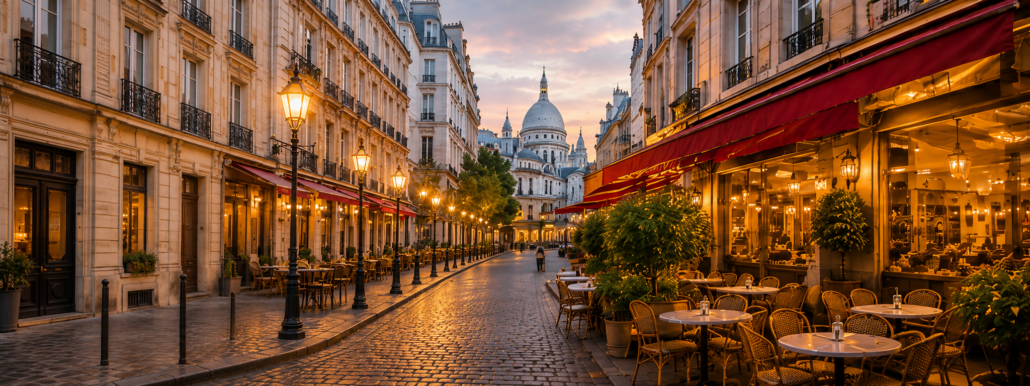
Montmartre offers one of the most distinctive hotel experiences in Paris. Perched on a hill in the 18th arrondissement, the neighbourhood is famous for the white dome of the Sacré-Cœur Basilica, panoramic views across the city, steep cobbled streets and its long association with painters, writers and performers. For visitors searching for atmosphere rather than simple proximity to monuments, staying in Montmartre can be wonderfully memorable.
However, Montmartre is also one of the areas where a hotel’s precise location matters most. A property near Place du Tertre, a boutique hotel around Lamarck-Caulaincourt, accommodation beside Rue des Abbesses and a hotel closer to Pigalle or the Moulin Rouge may all be advertised as being in Montmartre, yet each provides a very different experience. Travellers should therefore look carefully at the complete address, the surrounding streets, the elevation and the walking route from the nearest Metro station before making a reservation.
The upper part of Montmartre provides the romantic setting most visitors imagine. Early in the morning, before organised groups and day visitors arrive, the streets around Sacré-Cœur can feel remarkably peaceful. Local residents begin their day, cafés prepare their terraces and delivery vehicles make their way through narrow streets that appear almost unchanged from another era. Guests staying nearby can experience the neighbourhood during these quieter hours, something most visitors arriving in the middle of the day never see.
The evening offers another advantage. After the largest sightseeing crowds have departed, Montmartre gradually returns to a more relaxed rhythm. The lights across Paris become visible from the hillside, smaller restaurants begin filling with local residents and the illuminated Sacré-Cœur creates a particularly beautiful setting. For couples, photographers and travellers who enjoy wandering without following a fixed itinerary, these moments can justify choosing Montmartre despite its distance from some of the city’s other attractions.
The neighbourhood contains much more than the basilica and Place du Tertre. Around Rue des Abbesses, visitors will find bakeries, cafés, specialist food shops and restaurants serving the local community as well as travellers. Farther west and north, the streets around Lamarck-Caulaincourt feel quieter and more residential. Small stairways, hidden gardens, historic houses and views appearing unexpectedly between buildings make this one of the most rewarding parts of Paris to explore slowly.
Visitors interested in the artistic history of the city will also appreciate the neighbourhood’s character. Montmartre was associated with figures such as Renoir, Toulouse-Lautrec, Modigliani and Picasso, and traces of that artistic past remain throughout the district. Although parts of the neighbourhood are now heavily visited, its unusual street layout, architecture and hillside setting continue to distinguish it from the more formal avenues of central Paris.
Read More
The greatest practical limitation is the hill itself. Montmartre involves steep slopes, long staircases, cobbled streets and uneven pavements. A hotel that appears only a few hundred metres from a Metro station on a map may require a demanding uphill walk. This can become particularly difficult when arriving with heavy luggage, pushing a stroller or returning after an entire day of sightseeing. The Montmartre funicular helps visitors reach Sacré-Cœur, but it does not eliminate every slope or staircase within the wider neighbourhood.
For older travellers or anyone with reduced mobility, checking the actual route to the hotel is essential. It is not enough to know that a Metro station is nearby. The journey from the station may include stairs, steep streets or changes in elevation that are not obvious on a booking website. Taxi access is generally possible, but some narrow, pedestrianised or temporarily restricted streets can make collection directly outside certain hotels more complicated.
Montmartre is also less central than it sometimes appears on tourist maps. Reaching the Louvre, Notre-Dame, the Eiffel Tower, Saint-Germain-des-Prés or Le Marais will usually require the Metro, a bus or a taxi. The connections are manageable, but visitors planning a full programme in central Paris may find themselves travelling back and forth each day. This is especially important during a short stay, when the time spent returning to the hotel can influence the overall rhythm of the holiday.
The atmosphere changes considerably around the lower slopes of Montmartre, particularly near Pigalle, Boulevard de Clichy and the Moulin Rouge. During the day and early evening, these areas are extremely busy and visited by travellers from around the world. They offer theatres, concert venues, restaurants, bars and a lively nightlife scene. Later at night, however, the atmosphere can become less reassuring. Adult entertainment venues remain open, the streets attract large groups leaving bars and clubs, and visitors may encounter intoxicated people, persistent solicitation, pickpockets or unpredictable behaviour.
This does not mean that the entire Moulin Rouge or Pigalle area is dangerous, but travellers should not assume that it offers the same calm atmosphere as the residential streets around Lamarck-Caulaincourt. Certain side streets immediately around and above the Moulin Rouge, particularly on routes climbing towards Montmartre, may feel uncomfortable late at night. Some remain crowded because of the nightlife, while others become unexpectedly quiet or poorly lit after businesses close.
Solo travellers, families with children, older visitors and women returning alone should examine the evening route between the Metro station and the hotel before booking. A property may appear close to Abbesses or Sacré-Cœur when measured in a straight line, while the most practical walking route passes through the nightlife district around Pigalle or the Moulin Rouge. This is the type of detail that is rarely visible in the hotel photographs but can make an important difference once you arrive.
Visitors staying in this part of Montmartre should remain aware of their surroundings, avoid displaying a telephone or wallet unnecessarily and be cautious when walking alone through unfamiliar side streets late at night. If returning after midnight, taking an official taxi or a recognised ride service directly to the hotel may be more comfortable than walking uphill from Pigalle. These are normal precautions rather than a reason to avoid Montmartre entirely, but they should be taken seriously when selecting accommodation.
The northern and eastern edges of the wider Montmartre area also require careful consideration. A hotel may advertise itself as being “near Sacré-Cœur” or “in Montmartre” while actually being closer to Barbès, Château Rouge or Porte de Clignancourt. These locations may offer lower room rates and useful transport connections, but their atmosphere can feel much more unsettled at night than the quieter western side of the hill. Travellers should never choose a hotel based only on the word “Montmartre” in its description.
The busiest streets surrounding Sacré-Cœur and Place du Tertre present a different issue. They are among the most heavily visited parts of Paris, particularly during weekends and the summer season. Restaurants and souvenir shops in the most visible locations often depend largely on tourist traffic, and prices may not always reflect the quality offered. Travellers looking for better food and a more local atmosphere will generally have a more rewarding experience by walking towards Abbesses, Lamarck-Caulaincourt or the quieter streets west of the main sightseeing route.
Hotel accommodation ranges from small traditional properties to romantic boutique hotels and more affordable establishments on the edges of the district. Rates can sometimes be lower than around the Louvre, Saint-Germain-des-Prés or the Champs-Élysées, although the most attractive hotels on the hill can still command high prices. Historic buildings may have compact rooms, narrow staircases and very small lifts, so travellers with several large suitcases should verify these details in advance.
Noise must also be considered carefully. A hotel beside a busy restaurant, bar or popular pedestrian street may remain animated well into the evening. Rooms overlooking an internal courtyard often provide a quieter experience than those facing the street, although they may receive less natural light. Conversely, a property on the northern or western side of the hill may feel remarkably peaceful but require more transport to reach the historic centre. There is therefore no single Montmartre experience: the choice of street is almost as important as the choice of hotel.
Montmartre is particularly suitable for couples, returning visitors, photographers and travellers who want their accommodation neighbourhood to have a strong personality. It can also be a good choice for a longer stay, when there is enough time to accept slightly longer journeys in exchange for a more distinctive local environment. For a first visit lasting only three or four days, however, travellers should decide whether Montmartre itself is one of their main priorities. If most of the planned itinerary lies around the Louvre, Notre-Dame, the Eiffel Tower and Saint-Germain-des-Prés, a more central hotel may be more efficient.
Visitors planning guided day trips should also confirm where their excursions depart. The 18th arrondissement is frequently outside the hotel-pickup zones used by small-group tour operators, particularly when vehicles must leave Paris towards Versailles, Giverny or Normandy. Guests may therefore need to travel to a central meeting point early in the morning. This is a manageable arrangement, but it should be considered before booking several excursions during the same stay.
Our recommendation is to choose Montmartre because you genuinely want to experience the neighbourhood, not simply because a hotel appears less expensive or looks close to Sacré-Cœur on a map. For atmosphere and comfort, the areas around Abbesses, Lamarck-Caulaincourt and the western side of Montmartre often provide a better balance than the streets immediately surrounding Place du Tertre, Pigalle or the Moulin Rouge. They retain much of Montmartre’s character while offering more neighbourhood shops, restaurants and everyday Parisian life.
Staying in Montmartre can be one of the most memorable choices in Paris, but it requires accepting its geography, its distance from the historic centre and the differences between its streets after dark. The hills, crowds and areas requiring greater vigilance are real considerations, yet so are the quiet mornings, extraordinary views and evening walks through streets unlike anywhere else in the city. For travellers who select the precise location carefully and value character more than absolute convenience, Montmartre does not simply provide a hotel location—it becomes an important part of the journey itself.
Montparnasse offers a very different experience from staying near the Eiffel Tower, the Louvre or Notre-Dame. Visitors generally do not choose this neighbourhood because they want to wake up beside one famous monument. They choose it for its practical location, excellent public transport, railway connections, restaurants and more residential atmosphere. For the right itinerary, it can be one of the most convenient areas in Paris, but first-time visitors should understand that its immediate surroundings do not always correspond to the romantic image they may have of the city.
The district lies primarily across the 14th and 15th arrondissements, close to the southern edge of the 6th arrondissement. Its identity is shaped by Gare Montparnasse, the Montparnasse Tower, broad commercial avenues and a network of quieter residential streets extending towards Vavin, Edgar Quinet, Rue Daguerre and the Luxembourg Gardens. These different sections offer very different hotel experiences, even when booking platforms describe them all as being “near Montparnasse.”
The area has an important place in Parisian cultural history. During the early twentieth century, Montparnasse attracted artists, writers and intellectuals from around the world. Historic cafés such as La Coupole, Le Dôme, La Rotonde and Le Select became meeting places for the artistic community. Although the neighbourhood has changed considerably, these institutions and the surrounding streets preserve part of that heritage. Travellers interested in literary and artistic Paris may therefore find more character here than the modern buildings around the station initially suggest.
One of the greatest advantages is the range of restaurants. Montparnasse is particularly known for its Breton crêperies, a tradition connected to the railway routes linking Paris with Brittany. Around Rue du Montparnasse and the adjoining streets, visitors can find numerous restaurants serving savoury galettes and sweet crêpes, often at more reasonable prices than in the most heavily visited parts of central Paris. The neighbourhood also contains traditional brasseries, international restaurants, food shops and cafés used by local residents rather than exclusively by tourists.
The atmosphere changes noticeably as you move away from the station. Around Boulevard du Montparnasse and Vavin, the district feels more connected to the historic Left Bank. Cafés, cinemas, restaurants and bookshops create a lively but generally comfortable environment. From this side of Montparnasse, the Luxembourg Gardens, Saint-Germain-des-Prés and the Latin Quarter become accessible on foot for travellers who enjoy walking.
Read More
The streets around Edgar Quinet provide another interesting option. The neighbourhood remains animated during the day and evening, with restaurants, a market and convenient Metro access. It is close enough to the railway station to be practical without necessarily feeling dominated by it. Hotels in this section can offer a useful compromise for visitors who need Gare Montparnasse but still want restaurants and neighbourhood life immediately outside their accommodation.
Farther south, the area around Rue Daguerre offers a more residential experience. This pedestrian-friendly market street contains bakeries, food shops, cafés and small restaurants used throughout the year by people living in the neighbourhood. Visitors staying here may feel less surrounded by major tourist attractions, but they gain a calmer and more authentic daily environment. It can be particularly suitable for families, returning visitors or travellers staying in Paris for a longer period.
The railway station is naturally one of the principal reasons to choose Montparnasse. It provides important train connections towards western and southwestern France, making the area convenient for visitors travelling to destinations such as Brittany, the Loire Valley or Bordeaux. If you arrive late in Paris, leave early the following morning or plan to spend only one night between train journeys, staying close to the station can be a sensible decision.
However, travellers should not overestimate the advantage of being within walking distance of the station. A hotel advertised as being “five minutes from Gare Montparnasse” may still be several hundred metres from the entrance required for your train. The station is large, its platforms extend a considerable distance, and the surrounding roads can be busy. Walking with two or three large suitcases, crossing several streets and finding the correct entrance may be more demanding than the distance shown on a map suggests.
The nearest Metro station or station exit must also be checked carefully. Montparnasse–Bienvenüe is a major transport interchange with several lines, but its underground corridors are long. Entering through the wrong access point can add a significant walk before reaching the required platform. This is not usually a problem for travellers carrying only a small bag, but it can become tiring with heavy luggage, children or reduced mobility.
Public transport remains one of Montparnasse’s strongest advantages. Several Metro lines connect the district with Saint-Germain-des-Prés, the Latin Quarter, the Eiffel Tower, the Champs-Élysées, Montmartre and other parts of Paris. Buses also provide useful surface routes for visitors who prefer seeing the city while travelling. Although Montparnasse is not at the centre of every attraction, its connections mean that most destinations remain relatively straightforward to reach.
Visitors who enjoy walking can reach the Luxembourg Gardens, Saint-Germain-des-Prés and parts of the Latin Quarter from the northern side of Montparnasse. The Eiffel Tower, Louvre, Le Marais and Montmartre are farther away and will usually require public transport or a taxi. This is an important consideration for first-time visitors planning an intensive sightseeing programme. A hotel may provide excellent Metro access while still requiring a journey at the beginning and end of almost every day.
The Montparnasse Tower is the most recognisable landmark in the district, and its elevated viewpoint provides an extensive panorama of Paris. Nevertheless, the streets immediately surrounding the tower and railway station feel more modern and commercial than historic. Large office buildings, shopping areas, traffic and transport infrastructure dominate the landscape. Visitors imagining cobbled streets and traditional architecture directly outside their hotel may consequently be disappointed if they book without examining the precise location.
This does not make the district unpleasant. It simply means that Montparnasse should be chosen for the correct reasons. Its strengths are practicality, transport, restaurants, local services and generally better value than the most prestigious parts of central Paris. Its weakness is that the area immediately beside the station does not always provide the visual atmosphere many travellers expect from their first visit.
Hotel prices can be attractive compared with the Louvre, Saint-Germain-des-Prés or the Champs-Élysées. The neighbourhood contains international hotels, independent properties and smaller establishments occupying traditional buildings. Rooms may occasionally be larger than those found in the historic centre, although this varies considerably. Families and travellers staying for several nights may therefore find better overall value without moving too far from central Paris.
The precise street remains important when selecting accommodation. Hotels directly facing the station offer maximum convenience for train travel but may experience traffic, delivery noise and constant movement. Properties near Rue de la Gaîté are surrounded by theatres, restaurants and evening activity, but some rooms can be noisy after performances end. Hotels towards Vavin, Edgar Quinet or the northern side of Boulevard du Montparnasse generally provide a more attractive balance between transport and neighbourhood atmosphere.
As with all major railway districts, visitors should remain attentive around the station, particularly when carrying luggage or using a telephone in crowded areas. The surroundings remain active until late, but certain side streets can feel less welcoming after shops and offices have closed. Standard precautions are usually sufficient: keep valuables secure, know the route back to the hotel and use a taxi when arriving late with several suitcases rather than walking an unfamiliar route.
Montparnasse can also be convenient for visitors joining excursions leaving Paris towards Versailles or other destinations to the west or southwest. However, hotel-pickup coverage varies between operators and may include only certain sections of the 14th and 15th arrondissements. Travellers planning several guided tours should confirm whether collection is available from the exact hotel address or whether they will need to reach a central meeting point.
For families, Montparnasse can offer a good combination of restaurants, local shops, public transport and potentially more spacious accommodation. Returning visitors may appreciate living in a neighbourhood that is less dominated by sightseeing crowds. Business travellers benefit from the railway station and transport network, while visitors continuing their journey through France may find the location especially efficient.
For a first visit of only three or four nights, we would not automatically recommend staying directly beside Gare Montparnasse unless train access is an important part of the itinerary. A hotel slightly farther north, towards Vavin or the Luxembourg Gardens, provides a more pleasant introduction to Paris while preserving the practical advantages of the district. Visitors can walk towards Saint-Germain-des-Prés, enjoy the restaurants of Montparnasse and still reach the station relatively easily when necessary.
Our recommendation is therefore to distinguish between staying beside the station and staying in the wider Montparnasse neighbourhood. The first option is primarily practical and works well for an overnight stop or an early train. The second can provide a much more balanced Parisian experience, especially around Vavin, Edgar Quinet and Rue Daguerre.
Montparnasse may not offer the immediate grandeur of the Champs-Élysées or the historic scenery surrounding Notre-Dame, but it remains a practical, lively and often underestimated part of Paris. Travellers who select the exact location carefully can enjoy excellent restaurants, efficient transport and a more local atmosphere while remaining within easy reach of the city’s major attractions. The key is to choose Montparnasse for its overall convenience rather than simply because a hotel appears close to the railway station.
Bastille offers a lively and more contemporary alternative to the monumental districts of western Paris. Visitors do not generally choose this neighbourhood for views of a famous building or immediate access to one major attraction. They choose it for its restaurants, nightlife, local markets, excellent public transport and proximity to Le Marais. For travellers who want to experience an energetic part of Paris rather than remain surrounded exclusively by monuments and luxury boutiques, staying near Bastille can be an excellent decision.
The neighbourhood takes its name from the former Bastille fortress and prison, which once stood on the site of today’s Place de la Bastille. The prison itself disappeared after the French Revolution, and no substantial part of the original building remains visible in the square. The monument standing at its centre, the July Column, actually commemorates the Revolution of July 1830 rather than the storming of the Bastille in 1789. Visitors should therefore understand that Bastille is more important as a historic symbol and living neighbourhood than as a monument requiring several hours of sightseeing.
The term “Bastille” is also used to describe several different areas meeting around the square. Parts of the 4th, 11th and 12th arrondissements all converge here, and the atmosphere changes noticeably depending on which side of the square your hotel is located. A property towards Place des Vosges feels connected to Le Marais, while accommodation around Rue de la Roquette and Rue de Charonne provides easier access to restaurants and nightlife. Hotels near the Port de l’Arsenal or towards the 12th arrondissement generally offer a quieter and more residential environment.
The western side of Bastille is the most convenient for visitors interested in Le Marais. Place des Vosges is within walking distance, and the historic streets of the 4th arrondissement begin only a few minutes beyond the square. From there, travellers can continue towards the Musée Carnavalet, Rue des Rosiers, Hôtel de Ville, the Seine and Île Saint-Louis. This makes Bastille an interesting alternative for visitors who want access to Le Marais without necessarily paying the highest hotel rates found in its most fashionable streets.
The southern side of the neighbourhood, around the Port de l’Arsenal, provides a different experience. Boats, waterside paths and quieter residential streets create a calmer atmosphere than the busy roads immediately surrounding Place de la Bastille. This part of the district can be particularly appealing to couples, older visitors and families who want to remain near restaurants and transport without sleeping directly above a nightlife area.
Read More
The Coulée Verte René-Dumont, an elevated landscaped walkway built along a former railway route, also begins close to Bastille and continues eastwards through the 12th arrondissement. It provides an opportunity to experience a greener and less familiar side of Paris, away from the conventional sightseeing circuits. Visitors staying several days may particularly enjoy having this type of local walk close to their hotel.
To the east and northeast, the 11th arrondissement becomes younger, livelier and more informal. The streets around Rue de la Roquette, Rue de Charonne and Faubourg Saint-Antoine contain a dense concentration of cafés, wine bars and restaurants. The choice ranges from traditional French cooking to contemporary and international cuisine, often at more reasonable prices than around the Louvre or the Champs-Élysées. For travellers who consider dining and evening atmosphere an important part of their holiday, this is one of Bastille’s greatest strengths.
The nearby Marché d’Aligre and its surrounding streets provide another reason to consider the wider neighbourhood. Food shops, market stalls, cafés and local residents create an atmosphere that feels less dependent on tourism. Visitors staying for a week or occupying an apartment or aparthotel may appreciate having these everyday services close by. It is a side of Paris that many short-stay visitors never discover.
Public transport is exceptionally convenient. Bastille is served by several Metro lines, including Line 1, which crosses central Paris and provides direct access to areas such as Hôtel de Ville, the Louvre, Place de la Concorde and the Champs-Élysées. Other lines connect the neighbourhood with Gare du Nord, Gare d’Austerlitz, République, Opéra and additional districts. This means that, although Bastille lies to the east of the traditional tourist centre, travelling to many major attractions remains relatively straightforward.
Nevertheless, the location has limitations. The Eiffel Tower, Arc de Triomphe, Opéra Garnier and the western side of Paris are not within comfortable walking distance for most visitors. Reaching them generally requires the Metro, a bus or a taxi. A guest planning to spend most days around the Eiffel Tower, Saint-Germain-des-Prés, the Louvre or the Champs-Élysées may therefore find a more central or western hotel more efficient.
The same issue applies to excursions leaving Paris towards Versailles, Giverny or Normandy. Bastille and much of the 11th and 12th arrondissements are frequently outside the hotel-pickup areas used by small-group tour operators travelling west from Paris. Guests may need to take a taxi or the Metro to a designated meeting point early in the morning. This arrangement is manageable, but it should be considered before selecting Bastille if several excursions are already included in the itinerary.
Nightlife is both an advantage and a potential disadvantage. Around Rue de Lappe, Rue de la Roquette and certain streets of the 11th arrondissement, bars and music venues remain active until late. The atmosphere can be enjoyable for younger travellers, groups of friends and visitors who want to go out in the evening without crossing the city. However, rooms facing these streets may be exposed to voices, music, taxis and groups leaving bars after midnight.
Later in the evening, visitors may also encounter intoxicated people, persistent street activity and occasional petty theft around the busiest nightlife streets. Bastille should not be described as a dangerous neighbourhood in general, but the atmosphere can become disorderly in particular locations on Friday and Saturday nights. Travellers should remain attentive to phones and wallets, avoid unnecessary confrontation and know the route back to their accommodation.
Families, older visitors and anyone sensitive to noise should avoid choosing a hotel directly on Rue de Lappe or immediately above a busy bar. A property only two or three streets away may provide a much quieter experience while preserving easy access to the area’s restaurants. Rooms overlooking an internal courtyard can also be preferable, although travellers should still check recent comments about soundproofing before booking.
Place de la Bastille itself is a large and heavily trafficked junction. Cars, buses, bicycles and pedestrians converge from several directions, and crossing the square may feel confusing during the first few days. Hotels directly facing the square offer convenient access and impressive urban views, but traffic noise can continue throughout the night. Travellers expecting a calm village atmosphere should look towards the Port de l’Arsenal, Place des Vosges or quieter residential streets rather than the main square.
Bastille is also a symbolic location for public gatherings, celebrations and demonstrations. On certain days, traffic and public transport may be disrupted, and the square can become considerably more crowded than usual. These events are not an everyday problem, but guests staying immediately beside the square should understand that it remains an important public meeting place as well as a transport hub.
Hotel prices are often more accessible than in Saint-Germain-des-Prés, the 7th arrondissement or around the Champs-Élysées. The neighbourhood contains boutique hotels, smaller independent establishments and modern properties in several price categories. Travellers may find better room sizes or more services for the same budget, particularly when moving a little farther east into the 11th arrondissement. However, a lower price should always be considered together with the additional travelling time required to reach western Paris.
Booking platforms sometimes use “Bastille” for hotels located quite far from the central square. A property may actually be closer to Voltaire, Charonne, Ledru-Rollin or Nation. These can all be interesting neighbourhoods, but they do not provide the same walking access to Le Marais or Place des Vosges. Checking the exact address, nearest Metro station and distance from Place de la Bastille is therefore essential.
Bastille can work particularly well for younger travellers, couples, groups of friends, returning visitors and anyone who prioritises restaurants and nightlife. It is also suitable for longer stays, when travellers have enough time to explore eastern Paris rather than concentrating exclusively on the principal monuments. Families can enjoy the neighbourhood, especially around the quieter streets of the 12th arrondissement, but should choose the hotel’s precise location carefully.
For a first visit, Bastille can still be a good option if the hotel is close to a Metro station and the traveller understands the geography. Line 1 makes reaching many central attractions relatively easy, while Le Marais, Place des Vosges and the Seine can be explored on foot. However, visitors dreaming of quiet historic streets immediately outside their hotel may prefer the western side of Bastille rather than the nightlife district extending into the 11th arrondissement.
Our recommendation is to look for accommodation between Bastille and Place des Vosges if historic surroundings and sightseeing are the priorities. Travellers seeking a quieter environment should consider the Port de l’Arsenal or the 12th-arrondissement side, while visitors interested in restaurants and nightlife may prefer Rue de Charonne or the wider 11th arrondissement, provided that the hotel is not directly above a busy bar.
Bastille’s greatest strength is its variety. Within a relatively small area, visitors can find history, nightlife, markets, restaurants, residential streets and excellent transport. Its main limitation is that the experience can change completely within only a few hundred metres. Choosing the correct side of the square is therefore essential.
For travellers who want a lively neighbourhood and do not mind using the Metro to reach western Paris, Bastille provides excellent value and a more contemporary view of the city. It may not offer the grand monuments seen from a hotel beside the Louvre or Eiffel Tower, but it reveals a dynamic part of Paris where people live, dine and go out throughout the year.
For many international travellers, staying near Gare du Nord appears to be an obvious choice. The station welcomes trains from London and other European cities, provides connections with northern France and is linked to several Metro and RER lines. After a long journey, the idea of leaving the station and reaching a hotel within a few minutes sounds convenient. Likewise, travellers catching an early train often believe that sleeping beside the station will make their departure considerably easier.
For a very specific itinerary, this can be a sensible decision. If you arrive late in the evening, leave early the following morning or spend only one night in Paris between two train journeys, a carefully selected hotel near Gare du Nord may reduce unnecessary travel. Business travellers using the station repeatedly can also benefit from the location. However, for a sightseeing holiday lasting four or five days, we rarely recommend choosing this area simply because your train arrives there.
Gare du Nord is primarily a major transport hub, not a neighbourhood organised around tourism or Parisian street life. Thousands of commuters, international passengers and regional travellers pass through the station and surrounding streets every day. The atmosphere is busy, functional and frequently hurried. Hotels here are often selected for a single night, a train connection or a lower room rate rather than because the area provides the most enjoyable base from which to experience Paris.
This distinction becomes important once the arrival day is over. A visitor may save twenty or thirty minutes after stepping off the train but then spend the remainder of the holiday travelling to the areas they actually want to explore. The Louvre, Notre-Dame, Saint-Germain-des-Prés, the Eiffel Tower, the Champs-Élysées and Le Marais are not immediately outside the station. Public transport connections are good, but most sightseeing days will still begin and end with a Metro, RER, bus or taxi journey.
Montmartre appears relatively close on a map, but even this journey is not always as simple as visitors expect. The streets become steeper as you approach the hill, and walking from Gare du Nord with luggage is not recommended simply because the straight-line distance seems short. What appears manageable on a booking website can involve crowds, traffic, uneven pavements and a demanding uphill route.
Read More
Another common misunderstanding concerns the meaning of a hotel being “five minutes from Gare du Nord.” The station is large and has several access points. A hotel may be five minutes from the building while still requiring additional time to reach the correct platform, international departure area or taxi rank. When carrying two or three heavy suitcases, even a distance of 500 or 700 metres can become uncomfortable, particularly after a long international journey.
The pavements surrounding the station are frequently crowded, and travellers may need to cross busy roads while watching their luggage and trying to follow directions on a telephone. Families with young children, older travellers and anyone with reduced mobility should not assume that walking to a nearby hotel will necessarily be easier than taking a taxi directly to accommodation in a more pleasant neighbourhood.
The precise side of the station also makes a significant difference. Hotels to the south and southwest, towards Faubourg Poissonnière and the 9th arrondissement, can provide a more comfortable transition towards central Paris. As you move away from the immediate station entrance, the streets become more residential and offer a better choice of restaurants, cafés and local shops. This side is generally preferable for visitors who want to remain within reasonable reach of Gare du Nord without sleeping directly beside it.
The area between Gare du Nord and Gare de l’Est is particularly convenient for travellers using both stations. Gare de l’Est serves different parts of France and Europe and is within walking distance. Nevertheless, the streets between the two stations remain busy throughout much of the day, and their atmosphere is shaped strongly by transport, hotels, fast-food outlets and constant passenger movement.
Farther southeast, the neighbourhood gradually becomes more attractive towards the Canal Saint-Martin. Visitors will find independent cafés, restaurants, local shops and pleasant waterside walks. Accommodation here can offer a better neighbourhood experience while preserving reasonable access to both Gare du Nord and Gare de l’Est. However, it should not be described as immediately beside the station, especially for travellers carrying substantial luggage.
The northern and northeastern sides, towards La Chapelle and Barbès, require more careful hotel selection. These areas are culturally diverse, lively and used by large numbers of residents every day, but certain streets can feel chaotic or intimidating to international visitors unfamiliar with Paris. The atmosphere changes after shops close, and some locations become noticeably less reassuring late in the evening.
Gare du Nord itself and the streets immediately surrounding it should not be described as permanently dangerous. During the day, millions of ordinary journeys take place without difficulty. Nevertheless, the density of passengers, taxis, street activity and people waiting around the station creates favourable conditions for pickpocketing, telephone theft, luggage distraction and persistent solicitation. Visitors need to be more attentive here than they might be in a quieter residential neighbourhood.
The difference becomes more noticeable late at night. Travellers arriving after a delayed train may encounter intoxicated people, individuals sleeping rough, unofficial drivers offering transportation and groups remaining around the station entrances. This does not mean that every traveller will experience a problem, but families, senior visitors and people travelling alone may feel uncomfortable walking through unfamiliar side streets with luggage after midnight.
The most important precaution is to prepare the route before leaving the station. Keep telephones and wallets secure, avoid placing bags behind you while checking directions and do not leave luggage unattended, even for a short moment. If taking a taxi, use the clearly identified official taxi rank rather than accepting an offer from someone approaching inside the station or beside an exit. Official Paris visitor guidance also recommends using regulated transport and paying particular attention to belongings in crowded stations.
Travellers arriving late with several suitcases may find that taking an official taxi directly to a central hotel is less stressful than walking to cheaper accommodation near Gare du Nord. A taxi journey of twenty or thirty minutes under normal conditions can be a reasonable price to pay for spending the entire holiday in a neighbourhood selected for its atmosphere, restaurants and proximity to attractions rather than for a single arrival and departure.
Hotel rates around Gare du Nord can be lower than those around the Louvre, Saint-Germain-des-Prés or the Eiffel Tower, but the apparent saving should be considered carefully. A less expensive room may involve additional Metro journeys, taxis and travelling time every day. Over four or five nights, the difference in the hotel rate may become less significant once the inconvenience and transport costs are included.
Hotel quality also varies considerably. The area contains reputable international properties, traditional independent hotels and very basic establishments aimed primarily at short stays. Photographs alone do not always reveal street noise, room size, lift access or the atmosphere immediately outside the entrance. Reading recent reviews about cleanliness, soundproofing, reception hours and the surrounding street is particularly important in this district.
A reception open throughout the night is a valuable feature if your train may arrive late. Travellers should also confirm whether the hotel has a lift, especially when carrying large suitcases, and whether luggage storage is available before check-in or after check-out. A room facing an internal courtyard may be quieter than one overlooking Rue de Dunkerque, Boulevard de Denain or another busy road, although it may receive less natural light.
The neighbourhood does offer positive aspects beyond transport. Its population is exceptionally diverse, and the surrounding streets contain restaurants representing many different culinary traditions. Travellers interested in discovering a less conventional side of Paris can find excellent international food within a relatively compact area. However, visitors dreaming of elegant café terraces, quiet historic streets or romantic evening walks may find that the district does not match their expectations for a first stay.
Public transport is undeniably convenient. Gare du Nord is served by Metro, RER and suburban railway services, providing access to central Paris, Charles de Gaulle Airport and many surrounding destinations. However, using these connections with luggage can be physically demanding. Long corridors, crowded platforms, stairs and escalators may turn what appears to be a direct connection into a tiring experience, particularly during the morning and evening rush hours.
The RER connection to Charles de Gaulle Airport can be practical for travellers carrying limited luggage, but it should not automatically determine the hotel location. Services can be crowded, and disruptions or engineering work occasionally affect journeys. Visitors should check the situation shortly before travelling and allow enough time rather than choosing Gare du Nord solely because of the airport connection.
International train departures require additional planning. Travellers leaving for London must complete security and border formalities, and access to the departure area closes before the train leaves. Arrival recommendations can vary according to the destination, ticket type and current operating conditions. Guests should therefore follow the time printed on their ticket and the latest instructions from the train operator instead of treating the journey like a conventional domestic train departure.
This is another reason why sleeping beside the station does not remove every source of stress. A hotel may be only a few minutes away, but arriving at the station too late for the required checks can still result in a missed train. The correct approach is to allow a generous margin, confirm the departure procedure and identify the entrance before the morning of travel.
Visitors planning guided excursions should also verify their pickup arrangements. The area around Gare du Nord and much of the 10th arrondissement is frequently outside the hotel-pickup zones used by small-group operators travelling towards Versailles, Giverny or Normandy. Guests may need to reach a meeting point in central or western Paris early in the morning. If several excursions are included in the holiday, staying near Gare du Nord can consequently create additional journeys rather than greater convenience.
For a one-night connection, our recommendation is to choose a well-reviewed hotel with a twenty-four-hour reception, good soundproofing and a clear route from the station. Properties on the southern or southwestern side generally provide a better balance than those immediately north or east of the station. Paying slightly more for a reputable hotel and a more comfortable street is often preferable to choosing the cheapest room available.
For a stay of several nights, we normally recommend selecting the neighbourhood where you actually want to spend your holiday and using an official taxi to and from Gare du Nord. Travellers can stay in Saint-Germain-des-Prés, the 7th arrondissement, near the Louvre, around Opéra or in another central district without making the train journey particularly complicated. The transfer requires a little more organisation on arrival and departure, but the benefit is enjoyed throughout every other day of the visit.
Gare du Nord should ultimately be viewed as an exceptionally useful arrival, departure and connection point, not automatically as the ideal centre of a Paris holiday. Staying nearby can make sense when train logistics dominate the itinerary, but proximity to a platform should not outweigh neighbourhood atmosphere, evening comfort and daily access to the places you have travelled to Paris to experience.
The best decision is therefore based on the length and purpose of the stay. For one night before an early train, a carefully chosen hotel near Gare du Nord can be practical. For four or five days of sightseeing, most visitors will enjoy Paris considerably more by staying in a central neighbourhood and accepting one taxi journey at the beginning and end of the holiday.
Choosing a hotel near Disneyland Paris requires a very different calculation from choosing accommodation near the Louvre, Notre-Dame or the Eiffel Tower. The first point travellers must understand is that Disneyland Paris is not located within the city of Paris. The resort is at Marne-la-Vallée–Chessy, east of the capital, with its own railway station immediately beside the entrance to the Disney Parks.
The RER A provides a direct connection from central Paris, and the train journey itself generally takes around 35 to 40 minutes, depending on the departure station. However, this does not represent the complete door-to-door travelling time. Guests must first reach the correct RER station from their hotel, walk through the underground corridors, wait for the train and complete the short walk and security procedures after arriving at Marne-la-Vallée–Chessy. In practice, the journey from a Paris hotel room to the park entrance can easily require one hour or more.
The right hotel choice therefore depends primarily on how many days you intend to spend at Disneyland Paris. If the park is only one part of a longer Paris holiday, staying in central Paris is generally the most practical solution. If Disneyland Paris is the main purpose of the trip and you plan to visit for two or three consecutive days, accommodation close to the resort becomes considerably more attractive.
For a single Disney day during a four- or five-night stay in Paris, changing hotels usually creates more inconvenience than it saves. Packing suitcases, checking out, arranging transport, waiting for another room and unpacking again can consume much of the time gained by moving closer to the parks. In this situation, it is normally easier to remain in the same Paris hotel and use the RER A for the day.
Travellers following this approach should choose a Paris hotel with reasonable access to an RER A station. Trains towards Marne-la-Vallée–Chessy can be joined from several important transport hubs, including Auber, Châtelet–Les Halles, Gare de Lyon and Nation. However, being close to the line on a map is not always enough. Some stations have long corridors, multiple levels and numerous exits, so families travelling with strollers should examine the actual route from the hotel to the platform.
Read More
The return journey also deserves consideration. At the end of the evening entertainment, large numbers of visitors leave the parks at approximately the same time. The railway station is extremely close to the resort entrance, but platforms and trains can become crowded. Parents may find themselves standing with tired children, folded strollers, coats and purchases after an already demanding day. Engineering work can also affect evening RER services, particularly during certain weekends or holiday periods, so the latest transport information and final departures should always be checked on the day of the visit.
Staying close to Disneyland Paris becomes much more valuable when the family plans to spend two or more full daysin the parks. The ability to begin early, return to the hotel during the afternoon and go back to the parks in the evening can completely change the experience, particularly for families with young children. Without this flexibility, parents sometimes attempt to remain in the parks from opening until the end of the evening because returning to Paris for a break is impractical.
A nearby hotel allows the day to be divided into more manageable periods. Younger children can sleep, adults can rest, wet clothes can be changed after poor weather and the family can return for the evening without carrying everything throughout the entire day. This practical advantage is often more important than the hotel’s theming, swimming pool or additional facilities.
Disney Hotels provide the most immersive experience and, depending on the selected property, may place guests within walking distance of the parks or provide access by shuttle. Eligible stays can also include Extra Magic Time, allowing entry to one or both parks before the standard public opening time on applicable dates. These benefits can be valuable during busy periods, but travellers should verify exactly what is included in their own booking because conditions, participating parks and operating times can change.
The convenience comes at a price. Disney Hotels can be considerably more expensive than ordinary accommodation in neighbouring towns, particularly during school holidays, weekends and popular seasonal events. Families should compare the complete package rather than looking only at the room rate. Park tickets, breakfast, meal options, transport, parking and early-entry benefits may or may not be included depending on the reservation.
A lower-priced hotel is not automatically better value if the family must purchase park tickets separately, pay for breakfast, arrange transportation every morning and spend additional time waiting for a shuttle. Conversely, an expensive themed hotel may not be necessary for visitors who plan to leave early each morning, remain inside the parks all day and use the room only for sleeping.
Official partner hotels offer an intermediate solution. Many provide family rooms, breakfast options and complimentary shuttle transportation to the Disney Parks. They are often less expensive than the most centrally located Disney Hotels while still being organised around park visitors. However, “free shuttle” does not mean that the journey is completely effortless. Guests must follow a timetable, wait with other families and sometimes travel in crowded vehicles at the beginning and end of the day.
Shuttle frequency and operating hours can change, so they should always be confirmed directly with the hotel. Travellers should also check whether the shuttle is genuinely complimentary, whether reservations are required and where it stops. A hotel may be only a few kilometres from Disneyland Paris but still require a surprisingly long journey when waiting and transfer time are included.
The phrase “near Disneyland Paris” is used very broadly on accommodation websites. Some properties are within walking distance, while others are located several kilometres away in Chessy, Serris, Magny-le-Hongre or neighbouring communities. The straight-line distance shown on a map does not explain whether there is a pedestrian route, a hotel shuttle, a public bus or a practical late-evening connection.
Before booking, travellers should identify exactly how they will reach the park every morning and return after the evening entertainment. A hotel advertised as ten minutes away may mean ten minutes by car under ideal conditions, not ten minutes on foot. Families without a vehicle should never assume that a nearby-looking property provides simple access.
Val d’Europe can be an attractive alternative for visitors who want to stay near Disneyland Paris without remaining inside the resort environment. It is served by the RER A, one stop before Marne-la-Vallée–Chessy, and offers hotels, apartments, restaurants, shops and everyday services. Families staying several nights may appreciate the wider range of dining options and the possibility of purchasing groceries or preparing simple meals.
Aparthotels around Val d’Europe can work especially well for larger families requiring additional space, separate sleeping areas or a kitchenette. Nevertheless, guests must still take the RER, a bus or another form of transportation to the parks. They should check the walking distance to the station and not assume that every hotel using the Val d’Europe name is located directly beside it.
Staying near Disneyland Paris has significant disadvantages if the family also wants to explore central Paris. The train ride may appear short when described as 35 or 40 minutes, but repeated door-to-door journeys quickly become tiring. A morning visit to the Louvre, an afternoon at the Eiffel Tower and dinner in Saint-Germain-des-Prés are much more difficult to organise when the hotel is outside the city.
Returning to Marne-la-Vallée every evening also removes much of the pleasure of experiencing Paris after dark. Instead of walking back through a historic neighbourhood after dinner, visitors must reach an RER station, wait for a train and continue to their hotel from the suburban station. Families may save money on the room while losing valuable time and flexibility throughout the rest of the holiday.
The same difficulty applies to guided tours and excursions. Hotels around Disneyland Paris are outside the hotel-pickup areas used by Paris tour operators. Visitors joining excursions to Versailles, Giverny, Normandy or other destinations will normally need to reach a Paris meeting point very early or arrange a private transfer. Depending on the departure time, the first RER service may not provide a sufficiently comfortable margin.
A family planning several Paris excursions should therefore avoid using Disneyland Paris as a base for the entire holiday. The accommodation may be convenient for the parks but inconvenient for almost everything else. What appears to be a compromise often results in long journeys in both directions.
Airport access must also be considered separately. Disneyland Paris has road and rail connections with the Paris airports, but the most convenient option depends on the arrival time, number of passengers, amount of luggage and transport schedule. Families arriving after a long international flight should not assume that the least expensive public transport route will also be the easiest. A direct transfer may provide better value when several people and large suitcases are travelling together.
For visitors combining several days in Paris with several days at Disneyland, a split stay can provide the best overall experience. For example, the family can spend the first part of the holiday in central Paris, visit museums and neighbourhoods, and then move to a hotel near Disneyland Paris for the final two nights. This avoids repeated long journeys while allowing both parts of the holiday to have the correct base.
The order can also be reversed, particularly when the family wants to begin with Disneyland and finish with a more relaxed stay in Paris. The important point is to avoid changing hotels for only one park day. A split stay becomes worthwhile when the time saved over several consecutive Disney days clearly outweighs the inconvenience of packing and transferring luggage.
Families should also consider the children’s ages and energy levels. Teenagers and adults may manage a long RER journey after remaining in the parks all day. Parents carrying a sleeping child, folding a stroller and managing shopping bags may experience the same journey very differently. The value of a nearby hotel increases considerably when young children need an afternoon rest or are unlikely to remain comfortable until late evening.
Dining preferences should also influence the decision. Staying inside or immediately beside the resort provides convenience and a themed atmosphere, but restaurant choices may be more expensive and concentrated around the visitor experience. Val d’Europe offers a wider range of everyday dining and shopping, while central Paris provides the greatest variety and a completely different atmosphere. Travellers should decide whether they want the Disney experience to continue after leaving the parks or whether they prefer returning to Parisian neighbourhood life.
Our recommendation is straightforward. If Disneyland Paris represents one day within a longer Paris holiday, remain in central Paris and travel by RER A. Choose a hotel that provides practical access to the line, leave early and verify the evening return service before departure.
If the family plans to spend two or three consecutive days in the Disney Parks, staying in a Disney Hotel, an official partner hotel or carefully selected accommodation around Val d’Europe will usually provide a more comfortable experience. The possibility of returning to the room during the day and avoiding two long RER journeys every morning and evening can justify the additional hotel cost.
If the itinerary includes several days in Paris and several days at Disneyland, divide the holiday between two hotels. Although moving luggage requires organisation, it allows each part of the trip to function naturally. Paris should be experienced from Paris, while a multi-day Disney visit is generally more enjoyable from accommodation close to the resort.
The main mistake is choosing a hotel near Disneyland Paris simply because it appears less expensive than a central Paris hotel. The room rate is only one part of the calculation. Travelling time, transport costs, children’s fatigue, evening flexibility and access to the rest of the itinerary are equally important.
The best hotel is therefore determined not by the distance shown on a map but by the number of Disney days compared with the number of Paris days. Once that balance is clear, the decision between central Paris, Val d’Europe and a Disney Hotel becomes much easier.
Taxi and Uber Costs Between Paris and Disneyland Paris
Travellers who prefer a door-to-door journey can also take a taxi or Uber between central Paris and Disneyland Paris. The driving time is generally 45 to 75 minutes, depending on the hotel’s location and traffic on the eastern side of Paris. During weekday rush hours, weekends and major events, the journey may take longer.
For an official Paris taxi, visitors should budget approximately €80 to €110 per vehicle and per one-way journeybetween central Paris and Disneyland Paris. Unlike taxi journeys between Paris and Charles de Gaulle or Orly airports, there is no regulated fixed fare for Disneyland Paris. The final amount is calculated by the taximeter and depends on distance, traffic, travelling time and whether the taxi was reserved in advance. The return journey from Disneyland Paris to a hotel in central Paris will normally fall within a similar €80 to €110 range, although the precise fare may differ because the taxi collecting passengers at Chessy may operate under different local conditions.
With UberX, the average price displayed by Uber for a journey between Paris and Chessy is currently around €55 to €60 per vehicle. In practice, we recommend allowing approximately €55 to €80 for each one-way journey. Uber uses dynamic pricing, so the fare can increase significantly when demand is high. This happens particularly after the evening entertainment, when thousands of visitors leave the parks at approximately the same time. During busy periods, poor weather or late-evening departures, an Uber journey can cost €90 or more.
Families requiring a larger UberXL vehicle should expect to pay more than the standard UberX rate. The price will depend on availability and can sometimes reach or exceed the cost of an official taxi. Travellers should also check that the selected vehicle can accommodate the number of passengers, a stroller and any luggage. A standard UberX may technically accept four passengers but still lack sufficient luggage space for a family travelling with several large suitcases.
These prices are charged for the complete vehicle rather than for each passenger. For a family of four, a taxi or Uber may therefore become a reasonable option, particularly when the comfort of travelling directly from the hotel is important. Based on the usual ranges, a return journey should cost approximately €160 to €220 by official taxi or around €110 to €160 with UberX under normal demand, although Uber can become considerably more expensive at park closing time.
By comparison, the RER A costs €2.55 per person and per journey in 2026, making it by far the least expensive solution. The difference is therefore not simply financial. The RER is economical and usually efficient, while a taxi or Uber provides door-to-door convenience, avoids underground corridors and may be much easier for families with young children, strollers or several bags.
After examining the areas surrounding Paris’s major attractions, one principle becomes clear: the hotel closest to a famous monument is not automatically the hotel with the best location. A traveller may visit the Eiffel Tower, Louvre or Notre-Dame once during the holiday, but the neighbourhood around the hotel will be experienced every morning and every evening. It determines where you have breakfast, how easily you find dinner, how much time you spend travelling and whether returning to the hotel feels pleasant or simply practical.
The correct question is therefore not, “Which hotel is closest to the attraction I want to see?” It is, “Which neighbourhood will make my complete itinerary easier and more enjoyable?” This small change in approach often leads to a much better accommodation choice.
For a first visit lasting three to five nights, we generally recommend a central neighbourhood where several attractions can be reached on foot. The area should also provide restaurants, cafés, public transport and a comfortable atmosphere after dark. Staying somewhere that works well for the entire holiday is usually more valuable than being directly beside one landmark.
The 1st arrondissement, the area around the Louvre and the Tuileries, provides exceptional access to museums, the Seine, luxury shopping and many of the historic centre’s principal sights. It is difficult to find a more central base for daytime sightseeing. However, certain streets become quiet after shops and museums close, so travellers who enjoy a lively evening atmosphere should examine the precise location carefully.
Saint-Germain-des-Prés and the 6th arrondissement remain among our preferred recommendations for a first visit. They offer an excellent combination of historic streets, cafés, restaurants, the Luxembourg Gardens and walking access to Notre-Dame, the Louvre and the Seine. Hotel prices can be high and rooms are often compact, but the neighbourhood generally provides a balanced experience from morning until evening.
The 7th arrondissement and the area around the Eiffel Tower are particularly suitable for travellers who want elegant surroundings, quieter evenings and the pleasure of seeing the monument repeatedly during their stay. Families often appreciate the wider streets and calmer atmosphere. The principal limitation is the distance from Le Marais, Montmartre, Bastille and some eastern districts, but the neighbourhood itself remains one of the most comfortable and recognisable places to stay.
Read More
Le Marais is an excellent choice for visitors who prioritise restaurants, shopping, historic streets and evening activity. It offers more than proximity to a single attraction because the neighbourhood itself becomes part of the experience. However, room sizes, street noise and weekend crowds require careful attention. A hotel only a few streets away from the busiest pedestrian areas can provide a considerably more comfortable stay.
The area surrounding Opéra Garnier is one of the best practical compromises. It provides excellent transport, department stores, restaurants and reasonable walking access to the Louvre, Place Vendôme and the Tuileries. It may feel more commercial than Saint-Germain-des-Prés or Le Marais, but it works particularly well for visitors with a varied itinerary and for anyone who considers shopping an important part of the holiday.
Staying near the Champs-Élysées is appropriate for travellers seeking luxury hotels, prestigious shopping and convenient access to the western side of Paris. However, we generally prefer the quieter streets surrounding the avenue rather than accommodation directly on it. Moving only five or ten minutes away can reduce traffic and nighttime noise while preserving all the practical advantages of the location.
Montmartre should be selected because you genuinely want to experience its hillside atmosphere, artistic history and views. It is not the most efficient location for a short sightseeing programme concentrated in central Paris. The slopes, staircases and longer daily journeys must be accepted as part of the choice. The exact street is particularly important because the atmosphere around Abbesses or Lamarck-Caulaincourt is very different from Pigalle, the Moulin Rouge or the northern and eastern edges of the district.
Visitors considering Montparnasse should distinguish between staying in the wider neighbourhood and sleeping directly beside the railway station. The areas around Vavin, Edgar Quinet and Rue Daguerre can provide restaurants, transport and a more residential atmosphere. The immediate station district is mainly practical for an early train or a short connection. It should not automatically be chosen for an entire sightseeing holiday.
Bastille offers restaurants, nightlife, good value and convenient access to Le Marais, but its eastern location creates longer journeys to the Eiffel Tower and other western attractions. It can be an excellent choice for younger travellers, returning visitors and people who value evening activity. Families and guests sensitive to noise should select accommodation towards Place des Vosges, the Port de l’Arsenal or the quieter side streets rather than directly beside the nightlife around Rue de Lappe.
We would choose a hotel near Gare du Nord primarily for a late arrival, early departure or one-night railway connection. Proximity to the station may save time on two occasions, but it rarely compensates for spending four or five days in an area selected mainly for transport. Travellers visiting Paris for several nights will generally have a more enjoyable experience by staying in their preferred central neighbourhood and taking an official taxi to the station.
The decision concerning Disneyland Paris depends on the number of park days. For a single Disney day during a longer Paris holiday, remain in central Paris and travel by RER A. For two or three consecutive park days, a Disney Hotel, partner hotel or carefully selected property around Val d’Europe will usually provide greater comfort. When several days are planned in Paris and several at Disneyland, dividing the trip between two hotels is often the most logical solution.
These recommendations demonstrate why searching by attraction name can sometimes be misleading. Booking platforms frequently use phrases such as “near the Eiffel Tower,” “Montmartre hotel,” “Opéra district” or “close to Disneyland Paris” very broadly. A hotel may technically fall within the advertised area while being twenty minutes away on foot, separated by a steep hill or located on a street with a completely different atmosphere.
Always examine the exact address, not only the district name. Check the walking route during both the day and evening, identify the nearest public transport entrance and look at what is directly outside the hotel. A distance of 700 metres may be comfortable during an afternoon walk but difficult with children, luggage, steep streets or heavy rain.
Recent guest reviews are useful when they answer practical questions rather than simply describing the staff as friendly or the breakfast as good. Look specifically for comments concerning street noise, soundproofing, room size, air conditioning, lifts, luggage storage and the atmosphere around the hotel after dark. These details often have more influence on the stay than the number of decorative facilities shown in promotional photographs.
Travellers should also calculate the complete cost of the location. A cheaper hotel may require two additional Metro journeys every day, regular taxis and one or two hours of lost time. A slightly more expensive central room can therefore provide better overall value. The purpose of the calculation is not simply to reduce spending but to understand what is being exchanged for the lower nightly rate.
This becomes even more important for families. Travelling across Paris twice a day with young children can become exhausting, particularly after museums, long walks and late dinners. A central hotel makes it possible to return during the afternoon, change clothes, allow children to rest or leave purchases in the room. These practical advantages rarely appear in a price comparison, but they can transform the rhythm of the holiday.
Older travellers and visitors with reduced mobility should consider the terrain as carefully as the distance. Montmartre’s slopes, large railway stations, long underground corridors and historic buildings without suitable lifts can create difficulties that are invisible on a conventional map. A hotel described as central is not necessarily accessible, and a nearby Metro station is not always easy to use.
The same planning should be applied when guided excursions form part of the itinerary. Visitors joining tours to Versailles, Giverny, Normandy or other destinations should confirm whether their hotel falls within the operator’s pickup area. Many small-group services concentrate their hotel collections in central and western Paris. Staying in the 10th, 11th, 12th or 18th arrondissement, or near Disneyland Paris, may require an early taxi or Metro journey to a meeting point.
Hotel pickup should never become the only reason to choose accommodation, but it can help decide between two otherwise comparable properties. Starting an excursion from the hotel lobby rather than crossing Paris early in the morning is a meaningful advantage, particularly for families and older visitors.
Our overall preference for a first visit is therefore a hotel in a central, walkable and comfortable neighbourhood, even if the room is slightly smaller or more expensive. Saint-Germain-des-Prés, the 7th arrondissement, the area around the Louvre and carefully selected parts of Le Marais generally provide the strongest combination of sightseeing, restaurants and atmosphere. Opéra is an excellent alternative for travellers who value shopping and transport.
For returning visitors, the choice can become more adventurous. Montmartre, Bastille, Montparnasse or the quieter parts of the 9th and 11th arrondissements can reveal a more local side of Paris. Once the principal monuments are familiar, staying outside the most central districts may become part of discovering the city differently.
The final decision should always reflect how you intend to spend your days. If you plan to visit museums and monuments from early morning until evening, prioritise centrality and transport. If restaurants and nightlife matter most, choose a neighbourhood that remains active after dark. If you are travelling with children, value space, calm and the possibility of returning to the room. If several excursions are planned, examine pickup arrangements before confirming the hotel.
There is no single perfect address for every visitor. The best hotel is the one that supports the rhythm of your particular holiday. It should not merely place you close to something you plan to photograph once. It should allow you to leave comfortably each morning, return safely each evening and enjoy Paris during all the hours in between.
Ultimately, the most successful choice is rarely the hotel with the shortest distance to one famous attraction. It is the hotel located in a neighbourhood where your entire stay works naturally.
What is the best area to stay in Paris for major attractions?
For a first visit, the most convenient areas are generally the 1st, 4th, 5th, 6th and parts of the 7th arrondissements. These districts place you close to many major attractions, including the Louvre, Notre-Dame, the Seine, the Latin Quarter, Saint-Germain-des-Prés and the Musée d’Orsay. The best choice depends on which attractions are most important to you and how much you want to walk.
Is it better to stay near the Eiffel Tower or near the Louvre?
If seeing the Eiffel Tower every day is an important part of your Paris experience, staying in the 7th arrondissement or nearby can be an excellent choice. If your priority is visiting several attractions on foot, the Louvre area is usually more central. From the Louvre, you can easily reach the Tuileries Garden, Palais Royal, the Seine, Musée d’Orsay, Notre-Dame and parts of Saint-Germain.
What hotels are closest to the Eiffel Tower?
Many hotels in the 7th arrondissement and western part of the 15th arrondissement are within walking distance of the Eiffel Tower. However, always check the exact address and walking time before booking. A hotel using “Eiffel Tower” in its name or description may still be twenty or thirty minutes away on foot.
Is it worth paying more to stay near a major Paris attraction?
For a short stay, it often can be. A central hotel may allow you to spend more time sightseeing and less time travelling across the city. For longer stays, you may prefer a quieter or less expensive neighbourhood with good Métro connections. The best value is not always the cheapest room, but the hotel that gives you the right balance of price, location and transportation.
Can I stay within walking distance of all the main Paris attractions?
No single hotel is within a short walk of every major Paris attraction. The Louvre, Notre-Dame, Musée d’Orsay and Saint-Germain are relatively close to one another, but the Eiffel Tower, Arc de Triomphe and Montmartre are located farther away. Even from a very central hotel, you should expect to use the Métro, bus or taxi during your stay.
Which Paris attractions are easiest to visit from the city centre?
The Louvre, Tuileries Garden, Palais Royal, Notre-Dame, Sainte-Chapelle, Saint-Germain-des-Prés, Latin Quarter and Musée d’Orsay are among the easiest attractions to combine when staying in central Paris. Many can be reached on foot from the 1st, 5th or 6th arrondissement.
Is staying near Notre-Dame a good choice?
Yes. The area around Notre-Dame is one of the most practical locations for visitors who enjoy walking. From the Latin Quarter, Saint-Michel or Île Saint-Louis, you can easily reach Notre-Dame, Sainte-Chapelle, the Seine, the Panthéon, Saint-Germain-des-Prés and parts of Le Marais.
Is Montmartre a good place to stay for a first visit to Paris?
Montmartre can be an excellent choice if you value atmosphere, views and neighbourhood character. However, it is farther from many central attractions, so you will probably use public transportation more frequently. Montmartre is also hilly, which should be considered by travellers with reduced mobility or anyone who prefers to avoid steep streets and stairs.
Is the Champs-Élysées a good area for tourists to stay?
The Champs-Élysées area is convenient for the Arc de Triomphe, Avenue Montaigne, Grand Palais and western Paris. It also offers strong transportation connections. However, the avenue itself is busy and commercial. Many travellers prefer hotels on quieter nearby streets while remaining within walking distance of the Champs-Élysées.
Is the Opéra district a good place to stay in Paris?
Yes. The Opéra area is particularly practical for visitors interested in shopping, sightseeing and transportation. Galeries Lafayette, Printemps, Place Vendôme and the Grands Boulevards are nearby, while the Louvre can also be reached relatively easily.
What is the best area to stay near the Louvre?
The 1st arrondissement, Palais Royal and surrounding streets are the most convenient locations for the Louvre. Parts of the 2nd arrondissement and Saint-Germain-des-Prés can also work well if you are comfortable with a slightly longer walk.
What is the best area to stay near the Musée d’Orsay?
The 7th arrondissement and Saint-Germain-des-Prés are excellent choices. This area offers convenient access to the Musée d’Orsay, the Seine, the Louvre, Tuileries Garden and many Left Bank attractions.
What is the best area to stay near Notre-Dame?
The Latin Quarter, Saint-Michel, Île Saint-Louis and Saint-Germain-des-Prés are among the best areas. They combine historic atmosphere, restaurants, cafés and convenient access to many central attractions.
Is it better to stay near an attraction or near a Métro station?
In many cases, being close to a well-connected Métro station is more useful. Paris attractions are spread across the city, so convenient public transportation can save more time than staying directly beside one monument. Ideally, choose a hotel that combines a central location with easy access to one or more Métro lines.
How far from a Métro station should my hotel be?
For most visitors, a hotel within approximately five to ten minutes’ walk of a Métro station is convenient. Travellers with luggage, children or limited mobility may prefer an even shorter distance.
Which arrondissement is best for first-time visitors to Paris?
The 1st, 4th, 5th, 6th and 7th arrondissements are among the most popular choices for first-time visitors because they provide access to many major attractions and historic neighbourhoods. There is no single best arrondissement for everyone, so your itinerary and budget should guide the decision.
Where should families stay near Paris attractions?
Families often benefit from staying in central areas with restaurants, bakeries, supermarkets and transportation nearby. Parts of the 5th, 6th, 7th and 15th arrondissements can be practical choices. Room size and bed configuration should also be checked carefully because many Paris hotel rooms are smaller than visitors expect.
Where should senior travellers stay in Paris?
Senior travellers should prioritise a central location, straightforward transportation, elevator access and easy taxi pick-up. Flat neighbourhoods can also be more comfortable than hilly areas such as Montmartre. Staying close to restaurants and essential services can reduce unnecessary walking at the end of the day.
Which area is best if I want to explore Paris mostly on foot?
The areas around the Louvre, Saint-Germain-des-Prés, the Latin Quarter and Notre-Dame are particularly suitable for walking. From these neighbourhoods, several important attractions can be linked together without using transportation for every journey.
Are hotels near major Paris attractions more expensive?
They often are, especially near the Eiffel Tower, Louvre, Saint-Germain-des-Prés, Champs-Élysées and other highly sought-after central areas. However, moving only a few streets away from the busiest zones can sometimes provide better value while keeping you within easy walking distance.
Are hotels with Eiffel Tower views worth the extra cost?
That depends on your priorities. For some visitors, seeing the Eiffel Tower from their room is an important part of the Paris experience. However, rooms with confirmed tower views are usually more expensive. Make sure the specific room category you book includes the view rather than assuming every room in the hotel offers it.
How can I check whether a hotel is really close to an attraction?
Always check the hotel’s exact address on a map and calculate the walking route rather than relying only on the hotel’s description. Compare the distance to the attraction, nearest Métro station and other places you plan to visit.
Should I choose my Paris hotel before planning my sightseeing itinerary?
It is better to have at least a general idea of your itinerary first. List the attractions you most want to visit, identify where they are located and then choose a hotel that provides convenient access to several of them. This approach is usually more effective than choosing a hotel first and organising everything around it.
How many nights should I stay in central Paris?
There is no fixed rule, but visitors staying only two or three nights usually benefit most from a central location because their sightseeing time is limited. Travellers staying a week or longer may be more comfortable choosing a quieter residential neighbourhood with good transportation connections.
Should I stay in central Paris if I am taking day trips?
It depends on where your excursions depart. If you are planning tours to Versailles, Giverny or Normandy, check the pick-up or meeting-point arrangements before booking your hotel. A centrally located hotel is useful, but being close to the relevant departure area can make early-morning excursions easier.
Are hotels near tourist attractions noisy?
Some can be, particularly hotels located on busy avenues, nightlife streets or major traffic routes. Before booking, read recent guest reviews about street noise and ask for a courtyard-facing or higher-floor room if noise is a concern.
Is Le Marais a good alternative to staying beside a major attraction?
Yes. Le Marais is central, historic and filled with restaurants, cafés, boutiques and museums. Although it is not centred around one major monument, it provides excellent access to Notre-Dame, the Seine, Place des Vosges and central Paris.
What should I check before booking a hotel near a Paris attraction?
Check the exact location, walking distance to the nearest Métro station, transportation connections, recent guest reviews, room size, elevator availability, air conditioning, street noise and nearby restaurants. These practical details often matter more than being a few minutes closer to a famous monument.
What is the most important advice when choosing a hotel near Paris attractions?
Do not choose your hotel based on one attraction alone. Paris is a city of neighbourhoods, and the best hotel location is usually the one that makes your entire itinerary easier. Look for a balance between sightseeing, public transportation, restaurants, neighbourhood atmosphere and your budget.
CONTACT
- 18 Rue José-Maria de Heredia
75007 Paris, France
Phone: +33 9 52 06 02 59 - Office Hours: Monday–Saturday, 8:00 AM–3:00 PM (April–October)
- Contact Us

✓ Licensed French Travel Agency
✓ Licensed VTC Private Transport Operator
✓ Licensed LOTI Transport Operator
✓ Atout France Registered (IM075120025)
✓ APST Financial Guarantee
✓ Fully Insured by Hiscox
✓ Secure Online Payment
✓ Recommended by Rick Steves
