
Hotel near public transport in Paris


How Much Should Public Transport Influence Your Hotel Choice?

When travellers begin searching for a hotel in Paris, one piece of advice appears almost everywhere: stay close to a Metro station. Hotel booking websites reinforce this idea by prominently displaying the distance between a property and the nearest station, sometimes presenting a two- or three-minute walk as though it were one of the most important advantages of the hotel. For someone planning a trip from abroad and looking at Paris on a map, this recommendation seems perfectly logical. The city appears large, the main monuments seem spread across different districts, and the network of coloured Metro lines gives the impression that travelling underground will be an essential part of almost every day.
Public transport is certainly an important consideration when choosing accommodation in Paris, and there is no question that the city benefits from an extensive transport network. The Metro, buses, RER trains, trams and taxis make it possible to move between very different parts of the capital without needing a car. However, after more than twenty years of helping international visitors organise their stay in Paris, our experience is that travellers often give too much importance to the distance between their hotel and the nearest station, while paying too little attention to the neighbourhood in which they will actually be staying.
A hotel located immediately beside a Metro station can be convenient, but convenience alone does not necessarily make it a good location. The neighbourhood surrounding the hotel will influence every day of the trip, from the moment you leave for breakfast until the moment you return after dinner. It determines whether you can walk comfortably to interesting areas, whether there are restaurants and cafés nearby, whether an evening stroll feels natural, whether returning to the hotel during the afternoon is easy and whether you feel that Paris begins outside the hotel door or only after another journey on public transport.
For this reason, we generally recommend choosing the neighbourhood first and analysing public transport connections second. A hotel located seven or eight minutes from a useful Metro station in an attractive and walkable area can often provide a much better overall experience than a hotel situated directly above a station in a neighbourhood from which you will want to leave every morning. The objective should not be to eliminate walking or to minimise every journey by a few minutes. It should be to choose a location that allows you to experience Paris naturally while still giving you convenient transport options whenever you genuinely need them.
One of the difficulties when choosing a hotel from abroad is that travellers tend to evaluate Paris through maps, distances and transport applications. A map can tell you how many metres separate a hotel from a station or how many stops lie between two places, but it cannot easily show you what the experience of staying in that neighbourhood will actually feel like. Two hotels may appear equally well located on paper while providing completely different experiences once you arrive.
Visitors who choose accommodation mainly because it is beside a Metro station often develop a routine in which transportation becomes the first and last part of almost every day. They leave the hotel, walk to the station, travel to the area they want to visit, spend the day sightseeing and then repeat the same journey in the evening. This system works perfectly well, and there is nothing inherently wrong with it, but over several days the visitor can begin to feel that the hotel is simply a place to sleep rather than part of the Paris experience.
Staying in a neighbourhood where you naturally want to spend time creates a different rhythm. You may leave the hotel in the morning and stop at a bakery before you have even decided where to go. You may walk towards the Seine, discover a market, continue into another neighbourhood or find a café that becomes part of your daily routine. In the evening, you may choose a nearby restaurant and walk back to the hotel rather than making another journey across the city. None of these experiences appears particularly important when comparing hotels online, yet they often become some of the most enjoyable parts of a stay.
This is especially relevant in Paris because the city is not organised around isolated attractions separated by large distances. Much of what visitors come to experience is found in the streets between the major monuments. Historic buildings, small squares, cafés, bakeries, bookshops, markets, gardens, churches and neighbourhood life form part of the experience just as much as museums and famous landmarks. A location that encourages walking therefore gives visitors access not only to transportation but to the city itself.
Paris often appears larger on a map than it feels once you begin exploring it. The historic centre is relatively compact, and many of the areas most visitors want to discover connect naturally on foot. It is entirely possible to begin near the Louvre, walk through the Tuileries Garden, continue towards Place de la Concorde and then decide whether to proceed towards the Champs-Élysées, cross the Seine or explore another nearby neighbourhood. On another day, a visit around Notre-Dame can easily continue into the Latin Quarter or across the river towards Saint-Germain-des-Prés without requiring public transport.
The important point is not that visitors should walk everywhere. That would be unrealistic and unnecessarily tiring, particularly during a busy sightseeing programme. The point is that walking should be considered one of the principal ways of discovering Paris rather than simply the distance between a hotel and a Metro entrance. Many journeys of fifteen or twenty minutes on foot are pleasant enough that they do not feel like transportation at all, especially when the route passes attractive streets, cafés, shops or the Seine.
This is also why a hotel that seems slightly farther from public transport may not actually be less convenient. If the surrounding neighbourhood allows you to walk to several places you intend to visit, you may use the Metro less often than expected. Conversely, a hotel directly beside a station can result in more daily travel if the surrounding area contains little that interests you. The number of minutes between the hotel and the nearest station should therefore always be considered together with the number of useful places that can be reached on foot.
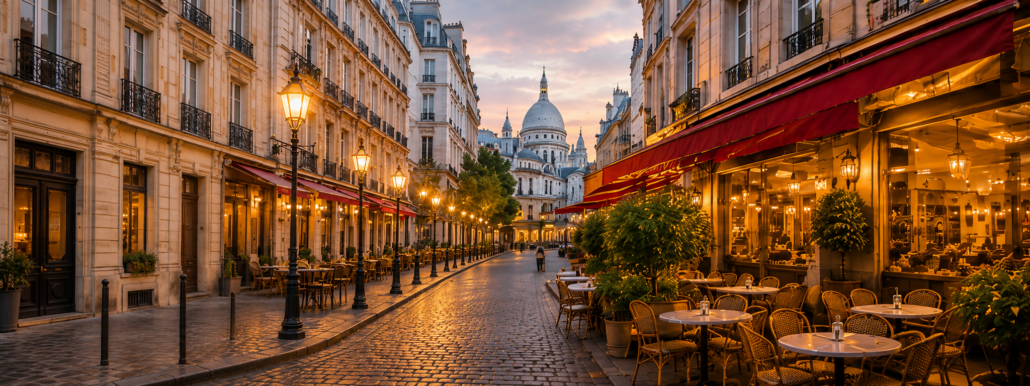
For most visitors without mobility limitations, there is very little practical difference between staying three minutes from a Metro station and staying seven or eight minutes away. Hotel descriptions often present every additional minute as though it were a disadvantage, but in everyday travel those few minutes are rarely significant. A pleasant eight-minute walk through an attractive neighbourhood may be preferable to a two-minute walk beside a busy traffic junction, a major railway station or an area that offers little reason to remain there.
The distance begins to matter more when the walk becomes sufficiently long that it must be repeated several times each day. A hotel located fifteen or twenty minutes from the nearest useful transport connection may become inconvenient, particularly after several days of sightseeing. Travellers frequently underestimate how much walking they already do in Paris. Museums themselves can require considerable walking, Metro stations may involve long corridors and stairs, and exploring neighbourhoods naturally adds many kilometres to the day. Adding a long journey between the hotel and public transport every morning and evening can therefore become more tiring than it initially appeared when making the reservation.
As a general indication rather than a strict rule, a hotel located around five to ten minutes from a useful public transport connection is perfectly acceptable for many travellers. What matters is the word useful. The closest station is not necessarily the station that will make your stay easier, and this is one of the most important points to understand before choosing a hotel.
Hotel descriptions frequently mention the distance to the nearest Metro station without explaining whether the line serving that station is convenient for the places a visitor actually wants to see. This can create a misleading impression. Being one hundred metres from a Metro entrance sounds excellent, but if most journeys require one or two changes, another hotel located several minutes farther from a different line may prove much more practical.
When comparing hotels, travellers should therefore look beyond the simple Metro symbol displayed on a map. The important questions are which line serves the station, where that line goes and how often you are likely to use it during your stay. A direct journey can be considerably more comfortable than a shorter route involving an interchange, particularly at the end of a long sightseeing day.
Large interchange stations can also involve much more walking than first-time visitors expect. Changing lines is generally straightforward because signage is good, but some stations extend beneath several streets and require long corridors, multiple staircases or moving walkways. A journey that appears quick on a transport application can therefore involve considerably more effort than the train time alone suggests. For young and active travellers this may be a minor inconvenience, but for families with small children, older visitors or anyone with mobility difficulties, it can become an important factor.
For this reason, a slightly longer walk from the hotel to a station offering useful direct connections can often be preferable to staying directly beside a station that requires frequent changes. The best transport location is not necessarily the property closest to a platform; it is the one that gives you the simplest combination of walking and transportation for the itinerary you are actually planning.
Transport applications are extremely useful for planning a stay in Paris, but the journey times they display should be interpreted carefully. Travellers sometimes compare two hotels by looking only at the time between the nearest stations, when the more relevant comparison is the complete journey from the hotel entrance to the entrance of the museum, monument or neighbourhood they intend to visit.
A typical Metro journey includes walking from the hotel to the station, entering the station, reaching the correct platform, waiting for the train, travelling, possibly changing lines, finding the correct exit and then walking from the destination station to the final address. Once all of these elements are included, a journey that appears very short on a network map can become much longer in practice.
Before booking, it is therefore useful to test several realistic journeys from the hotel rather than relying on one general statement about transport connections. Look at how the property connects with the Louvre, Notre-Dame, the Eiffel Tower, Montmartre, Saint-Germain-des-Prés or any other areas you expect to visit regularly. The objective is not to find a hotel offering a direct connection to every attraction, which is neither realistic nor necessary, but to understand whether your typical journeys will be simple or whether you will spend a large part of each day changing trains.
It is equally useful to compare the same journeys on foot. Visitors are often surprised to discover that walking twenty minutes can take little more time than travelling one or two stops by Metro once the complete door-to-door journey is considered. In central Paris, choosing to walk can also be much more enjoyable because the journey itself becomes part of the visit.

The Paris Metro remains one of the most efficient ways of travelling across the capital, particularly when the distance is too great to walk comfortably or when road traffic is heavy. Its extensive network means that most central neighbourhoods are reasonably well connected, and trains operate frequently enough that visitors rarely need to plan their day around a timetable.
However, the age and design of the network also create characteristics that should be understood before choosing a hotel. Many stations were built at a time when modern accessibility standards did not exist, and staircases remain common. Some stations are relatively simple, while others involve long internal passages. Travellers carrying large suitcases, parents with pushchairs and visitors with reduced mobility may therefore find certain journeys more demanding than expected.
Crowding is another factor worth considering. During normal commuting periods, some lines become very busy, particularly around major employment centres and interchange stations. This does not prevent tourists from travelling, but it can make the experience less comfortable, especially when travelling with children or luggage. During warm summer periods, underground platforms and crowded trains can also feel considerably less pleasant than walking above ground.
None of these points should discourage visitors from using the Metro. It remains an essential and extremely useful part of travelling around Paris. The purpose of understanding these limitations is simply to avoid choosing a hotel solely because a station appears to be nearby. The overall transport experience depends on much more than distance.
Visitors often study the Metro before arriving in Paris but pay relatively little attention to buses. This is unfortunate because the bus network can be particularly useful for tourists. Travelling above ground allows you to continue seeing the city while moving from one neighbourhood to another, and many routes pass attractive streets, major boulevards, historic buildings and the Seine.
For some visitors, buses can also be more comfortable than the Metro because they reduce the need for long underground corridors and repeated staircases. Older travellers and people who prefer remaining above ground may find them particularly useful. A hotel served by convenient bus routes can therefore offer more flexibility than its Metro connections alone might suggest.
The disadvantage is that buses are affected by traffic conditions. Roadworks, demonstrations, large events and normal congestion can all increase journey times. If you have a timed museum reservation or an important appointment, rail transport may provide greater predictability. If you are travelling without a strict deadline, however, a bus can be both practical and enjoyable.
This illustrates a broader point when choosing accommodation: the best-connected hotels are not necessarily those located beside a single Metro station, but those that provide several practical options. A neighbourhood offering useful walking routes, Metro access, buses and easy taxi pick-up gives the traveller far more flexibility than one dependent on a single form of transportation.
The RER serves a different purpose from the Metro. Within central Paris it can occasionally provide a very fast connection between major areas because stations are farther apart, but its greatest usefulness is for longer journeys and destinations outside the central city.
For visitors, the presence of an RER station near a hotel can be useful depending on the itinerary, but it should not automatically be considered an advantage over a good Metro or bus connection. As with every other form of transport, its value depends on where you actually intend to go. A traveller spending most of the stay exploring central neighbourhoods may have little reason to use the RER regularly, while another visitor planning several excursions may find it extremely convenient.
The important principle remains the same: do not evaluate a hotel according to the number of transport symbols shown nearby. Evaluate how those connections correspond to the trip you are planning.
Some visitors assume before arriving that taxis should be avoided because public transport is cheaper. This is understandable, but it can lead travellers to underestimate the value of occasionally choosing comfort and convenience over the lowest possible fare.
For one person travelling frequently, public transport will usually be the most economical solution. For a couple, family or small group, however, the difference can sometimes be less significant once several individual transport fares are compared with the cost of sharing one vehicle. More importantly, a taxi provides door-to-door transportation without staircases, changes of line or long walks between stations.
This can be particularly useful after dinner, after a long sightseeing day, when travelling with luggage or when the weather is poor. The disadvantage is traffic, especially during busy periods when road journeys can take considerably longer than travelling underground. For this reason, the Metro and taxis should not be viewed as competing choices. They are different tools that are useful in different situations.
A good hotel location should ideally allow you to use whichever option makes the most sense at that moment rather than forcing you to rely on one transport method throughout the stay.
Families travelling with children often have different priorities from couples or solo travellers. A ten-minute walk that seems insignificant in the morning can feel considerably longer in the evening when children are tired. Parents using pushchairs must also consider stairs and station accessibility, while families who prefer returning to the hotel in the afternoon will benefit more from a central location than travellers who remain outside all day.
For families, it is useful to look not only at the nearest Metro station but also at the availability of buses, taxi access, nearby restaurants and the possibility of reaching some attractions on foot. A hotel in a lively and practical neighbourhood can make everyday logistics much easier because meals, short walks and basic services do not require another transport journey.
This is one of the reasons why a hotel slightly more expensive but better located can sometimes represent better value for a family. The additional accommodation cost may be compensated by less transportation, easier breaks during the day and greater flexibility when children become tired.
Older travellers should also avoid evaluating hotels simply according to the number of minutes separating the entrance from a station. What happens after entering that station can be equally important. Several flights of stairs, long corridors and frequent line changes can make a theoretically convenient location much less practical.
A hotel in a flatter, walkable neighbourhood with nearby restaurants, easy taxi access and a range of transport options may therefore be more suitable than one located immediately beside a large interchange station. The same principle applies even more strongly to travellers with reduced mobility, for whom the accessibility of specific stations and surrounding streets should be investigated individually.
Public transport should never be treated as a single category when accessibility matters. A nearby Metro entrance may not offer the same level of convenience as a bus connection, accessible rail station or reliable taxi access. The best choice depends on the individual traveller and should be evaluated accordingly.
Arrival and departure days also require a different way of thinking about transportation. A journey that is simple during sightseeing can become much less comfortable when carrying heavy suitcases. Stairs, station corridors and crowded trains are far more noticeable when travelling with luggage.
This does not mean that visitors should choose their hotel according to the easiest possible luggage journey. In most cases, arrival and departure represent only two journeys during the entire stay. It may be more sensible to choose the hotel that works best for everyday sightseeing and use a taxi or another appropriate transport option when travelling with luggage.
The important point is not to assume that the same transport method must be used throughout the trip. The solution that makes sense when visiting a museum may not be the solution that makes sense when travelling to or from an airport or railway station.
Airport access is another consideration that frequently receives too much weight when travellers compare Paris hotels. Naturally, everyone wants the arrival and departure journey to be reasonably straightforward, particularly after a long international flight. However, if you are staying in Paris for four, five or six nights, the airport journey represents only a very small part of your overall experience.
You may travel between the airport and the hotel twice, but you will leave and return to the hotel many more times during the stay. Choosing a less attractive or less practical neighbourhood simply because it offers a slightly easier airport connection can therefore be a poor compromise.
For most travellers, it makes more sense to choose the location that works best for the days spent in Paris and treat the airport journey as a separate logistical question. There are several ways of reaching the city, and the most suitable option may depend on the number of passengers, the amount of luggage, the time of arrival and individual mobility.

Most people compare hotel locations by imagining how they will leave in the morning. It is equally useful to imagine returning at the end of the day. After several hours of museums, monuments, shopping and walking, the way you return to the hotel can have a surprisingly large impact on how convenient the location feels.
A hotel in an area with restaurants, cafés and pleasant streets gives you the option of having dinner nearby and returning on foot. A hotel located far from the places where you spend your evenings may require another Metro journey every night. Neither situation is necessarily wrong, but travellers should understand the difference before making a reservation.
This becomes especially important during a longer stay. On the first evening, an additional thirty-minute journey may not seem significant. After several full days of sightseeing, being able to finish dinner and walk comfortably back to the hotel can become one of the most appreciated aspects of the location.
When researching accommodation, it is therefore worth looking at the neighbourhood not only during daytime but also considering how you are likely to use it in the evening. Nearby restaurants, cafés and a pleasant atmosphere are not simply lifestyle advantages; they can significantly reduce the amount of transportation required during the trip.
Another question that deserves attention is whether you expect to return to the hotel during the afternoon. Some travellers leave after breakfast and do not return until late evening, while others prefer to rest, change clothes or simply take a break before dinner.
For families with children, older visitors and travellers visiting Paris during very warm weather, an afternoon return can be particularly valuable. A centrally located hotel makes this easy. A hotel requiring a long cross-city journey effectively discourages it, even if the property itself is excellent.
This is another example of why transport convenience cannot be reduced to the distance from a Metro station. A hotel may have excellent transport connections but still feel far away if every return requires thirty or forty minutes of travelling. A more central property may allow many journeys to be completed on foot or with a short taxi ride, making the whole day easier to organise.
When travellers compare hotels online, their attention naturally goes towards famous attractions and transport connections. Everyday services often receive much less consideration, even though they are used constantly once the stay begins.
Having a bakery, café, restaurant, pharmacy or small grocery shop within a short walk can make a substantial difference. Visitors frequently need breakfast, bottled water, medication, a quick meal or somewhere nearby for dinner after a long day. If these services are easily accessible, the hotel feels much more convenient regardless of whether the nearest Metro station is two minutes or eight minutes away.
The immediate surroundings also influence how connected visitors feel to Paris. A residential street with local cafés and shops can provide a much stronger sense of place than accommodation beside a large transport interchange. For many travellers, this neighbourhood atmosphere becomes part of what they remember about the trip.
It is also worth remembering that the geographically closest Metro station may not be the most useful one. Some hotels are located between several lines, with one station only a few minutes away and another slightly farther. The second station may provide significantly better connections for the visitor’s itinerary.
When researching accommodation, look at all practical stations within reasonable walking distance rather than accepting the nearest station as the only option. Having access to two different Metro lines, a bus route and taxi services can be considerably more useful than staying directly beside a single station.
This kind of flexibility allows travellers to adapt transportation according to the day rather than planning every journey around the same route.
The duration of the stay should also influence the decision. Travellers spending only two or three nights in Paris have limited time and may benefit considerably from staying in a more central location. If every morning begins with a lengthy journey towards the historic centre and every evening ends with the same journey in reverse, a significant amount of the visit can be spent travelling.
For a longer stay, visitors may be more comfortable choosing a neighbourhood farther from the main tourist areas, particularly if they already know Paris or want a more residential experience. They have more time to explore and less pressure to maximise each sightseeing day.
There is therefore no single perfect neighbourhood for every visitor. The best choice depends on the length of the stay, the itinerary, physical mobility, travel style and personal priorities.
Another common mistake is selecting accommodation because it is extremely close to one famous attraction. Being able to see the Eiffel Tower from the neighbourhood or walk quickly to one particular museum may sound ideal, but visitors should consider how much time they will actually spend at that attraction compared with the rest of the trip.
A five-day stay cannot sensibly be organised around a monument that may occupy only a few hours. The better question is whether the hotel provides a practical base for the entire itinerary. A location that offers good walking possibilities, several transport connections and easy access to different neighbourhoods will usually be more valuable than exceptional proximity to one single attraction.
When choosing between two hotels, the most useful comparison is not simply the number of stars, the room rate or the distance from the nearest station. Try to imagine an ordinary day from each property. Consider where you would have breakfast, how you would reach the first area you want to visit, whether you could walk between several attractions, how easy it would be to return in the afternoon and what the journey home after dinner would involve.
Look at the transport lines near each hotel and consider whether the journeys you are likely to make are direct or require frequent changes. Examine the surrounding streets and check whether restaurants and essential services are nearby. Think about how you personally travel rather than relying exclusively on general recommendations.
Once these factors are considered together, the better location often becomes much easier to identify.
Our Practical Advice After More Than Twenty Years
After more than twenty years of helping international visitors organise their time in Paris, our recommendation is to treat public transport as one element of the hotel decision rather than the starting point. A useful transport connection within a reasonable walking distance is certainly desirable, but it should support the quality of the location rather than compensate for a neighbourhood that does not suit the traveller.
For most visitors, we would prefer a hotel in an attractive, practical and walkable area with several transport possibilities over a hotel chosen exclusively because a Metro entrance is immediately outside. The ability to walk to cafés, restaurants and interesting neighbourhoods, return comfortably in the evening, occasionally come back during the afternoon and choose between walking, Metro, bus and taxi creates a level of flexibility that cannot be measured by the distance to one station.
Paris is at its most enjoyable when transportation becomes something you use when necessary rather than something around which every day must be organised. The Metro is extremely useful for crossing the city, buses can turn an ordinary journey into part of the sightseeing experience, taxis provide comfort when it matters, and walking remains one of the best ways to understand how the different parts of Paris connect.
Ultimately, the objective is not to find the hotel with the shortest possible walk to public transport. It is to find a hotel from which the city is easy and enjoyable to experience. When the neighbourhood itself gives you reasons to walk, explore, eat nearby and occasionally change your plans, public transport becomes what it should be: an excellent tool available whenever you need it, rather than the centre of your holiday.
By Paris Webservices | Local Paris Travel Experts Since 2006
Is it important to stay near a Metro station in Paris?
Staying near a Metro station is convenient, but it should not be the only factor when choosing a hotel in Paris. For most visitors, the quality of the neighbourhood, the possibility of walking to restaurants and attractions, and the usefulness of the transport connections are more important than being only a few metres from a station entrance. A hotel located seven or eight minutes from a useful Metro line in a pleasant and central neighbourhood can often provide a better experience than a hotel located directly beside a station in an area where you will need to use public transport every time you go out.
How far should a hotel be from a Metro station in Paris?
For travellers without mobility difficulties, a walk of approximately five to ten minutes to a useful Metro station is generally perfectly reasonable. What matters is not only the distance but also the quality of the route and the usefulness of the line. A pleasant eight-minute walk through a lively neighbourhood with cafés, bakeries and shops may feel much easier than a shorter walk through a busy transport area. Families with young children, older travellers and visitors with reduced mobility may prefer shorter distances or easier access to buses and taxis.
Is it better to stay in central Paris or close to a Metro station?
If possible, the best choice is a hotel that combines a pleasant central location with convenient public transport. However, when there is a choice between a well-located hotel several minutes from a useful station and a hotel directly beside the Metro but farther from the areas you want to explore, we would generally give more importance to the neighbourhood. Staying in a central and walkable part of Paris can reduce the number of journeys you need to make every day and allows you to discover much more of the city on foot.
Are all Paris Metro stations equally convenient for tourists?
No. The distance to a Metro station tells you very little unless you also look at the line serving that station and the destinations it connects with. Some stations provide direct access to several areas that visitors regularly explore, while others may require frequent changes. Large interchange stations can also involve long underground corridors and additional walking. When comparing hotels, it is therefore better to study the actual journeys you expect to make rather than simply choosing the property closest to a Metro entrance.
Do I need to use the Metro every day when visiting Paris?
Not necessarily. Many of the most popular neighbourhoods in central Paris connect naturally on foot, and walking is one of the best ways to experience the city. Visitors staying in a well-located neighbourhood may discover that they use the Metro mainly for longer journeys between different parts of Paris, while shorter distances are often more enjoyable on foot. Buses and taxis can also be useful alternatives depending on the journey, the weather and how tired you are at the end of the day.
Should I choose my Paris hotel according to airport transport?
Airport access is worth considering, but it should rarely determine the entire hotel choice. If you are spending several nights in Paris, you will normally travel between the airport and your hotel only when you arrive and when you leave, while you will use the hotel as a base every day during your stay. For that reason, it usually makes more sense to choose the neighbourhood that works best for your sightseeing, restaurants and daily activities, and then organise the airport journey separately.
What is the best hotel location in Paris for families with children?
Families generally benefit from staying in a neighbourhood where several activities, restaurants and everyday services can be reached on foot. Easy access to public transport is useful, but parents should also consider Metro stairs, pushchairs, the possibility of returning to the hotel during the afternoon and how long the journey back will feel when children are tired. A slightly more central hotel can sometimes make the entire stay easier by reducing the amount of transportation required each day.
What should older travellers consider when choosing a hotel near public transport?
Older travellers should look beyond the number of minutes between the hotel and the nearest station. The complete journey may involve stairs, long corridors and Metro changes, which can make an apparently convenient location more demanding than expected. A hotel in a walkable neighbourhood with nearby restaurants, bus connections and easy taxi access may therefore be more practical than one located immediately beside a large Metro interchange.
Is a hotel beside a major train or Metro station always a good choice?
Not necessarily. Major transport hubs offer excellent connections, but they can also be busy, crowded and less attractive for walking in the immediate surroundings. Some travellers appreciate the convenience, especially if they are making several train journeys, while others prefer staying a few streets away in a quieter neighbourhood and walking to the station when necessary. The best choice depends on whether transportation or neighbourhood atmosphere is more important for the type of stay you are planning.
How can I compare two Paris hotels with different transport connections?
The most useful method is to compare complete journeys rather than simply measuring the distance to the nearest station. Look at how long it takes to reach the areas you expect to visit, whether the journeys are direct, how much walking is involved, what the neighbourhood is like in the evening and whether restaurants and useful services are close to the hotel. Once these factors are considered together, the more practical location is usually much easier to identify.
CONTACT
- 18 Rue José-Maria de Heredia
75007 Paris, France
Phone: +33 9 52 06 02 59 - Office Hours: Monday–Saturday, 8:00 AM–3:00 PM (April–October)
- Contact Us

✓ Licensed French Travel Agency
✓ Licensed VTC Private Transport Operator
✓ Licensed LOTI Transport Operator
✓ Atout France Registered (IM075120025)
✓ APST Financial Guarantee
✓ Fully Insured by Hiscox
✓ Secure Online Payment
✓ Recommended by Rick Steves
