PRACTICAL LOUVRE TRAVEL GUIDE
Planning the Museum Before the Museum Begins

Before the Louvre becomes overwhelming, it has to be planned.
The museum is not difficult because it lacks beauty. It is difficult because it offers too much at once. Hours, tickets, entry slots, entrances, transport, food breaks, and closing time all shape the visit before the first gallery even appears.
Get those details right, and the Louvre feels much easier to enjoy. Get them wrong, and even a short visit can become tiring very quickly.
This guide focuses on what actually changes the day: when to go, how to enter, what to book, what to avoid, and how to move through the museum without wasting energy before the visit has really begun.
Before the Louvre becomes overwhelming, it needs a plan.
The Louvre is not difficult because it lacks beauty. It is difficult because it offers too much at once. Hours, tickets, entry slots, entrances, transport, food breaks, and closing time all shape the visit before the first gallery even appears.
That is why we recommend planning the Louvre around time first, not masterpieces. Choose the right day, the right hour, and the right entry strategy, and the museum becomes much easier to enjoy. Ignore those details, and even a short visit can feel tiring very quickly.
This guide focuses on what actually changes the day: when to go, how late openings work, which free admission periods matter, and why the calendar can be just as important as the collection itself.
OPENING HOURS
The Louvre is open most days of the year, but not every hour feels the same. A visit at 10:00 AM, a visit after lunch, and a visit on a Friday evening can feel like three different museums.
That is why timing matters. The right slot does not only reduce waiting. It changes the rhythm of the visit.
Standard schedule
The museum opens at 9:00 AM and is closed every Tuesday, as well as on 1 January, 1 May, and 25 December. On standard days, the galleries close at 6:00 PM.
We recommend treating the final hour with caution. Last entry is 1 hour before closing, and the rooms begin to be cleared 30 minutes before the museum closes. In practice, arriving too late rarely gives enough time to enjoy the visit properly.
Late openings
Wednesday and Friday are the most useful days to know. On those days, the Louvre stays open until 9:00 PM.
For many visitors, we recommend these evening sessions over a crowded midday visit. After about 5:30 PM, the pressure of the day often begins to drop. The main routes become easier to walk. The museum feels less rushed, and the galleries can be experienced with more calm.
This is especially useful if the goal is not to see everything, but to see a few sections well.
Free admission periods
The first Friday evening of each month offers free entry for all visitors from 6:00 PM to 9:00 PM, except in July and August.
This is now the main recurring free admission period at the Louvre. There is no longer a general free first Sunday of the month.
We recommend booking a time slot even for free admission. Free entry does not mean effortless entry, and reservation remains the safest way to organise the visit.
| When time is flexible, the calendar matters as much as the collection itself. |
This is one of the decisions that can change the whole visit.
At the Louvre, booking is not just a formality. It shapes when you enter, how much you wait, and how much energy you still have once the visit actually begins.
Book online before arrival
We recommend booking your timed entry ticket on the official Louvre ticketing website before arriving in Paris. In busy periods, this is not just a useful tip. It is the safest way to make the visit manageable.
The Louvre can be overwhelming enough once you are inside. The goal is to avoid losing your patience before you even reach security.
How timed entry works
A timed ticket gives access for the date and time slot selected when booking. That detail matters. The ticket is tied to a specific visit, so it should be treated as part of the day’s schedule, not as a flexible pass.
We recommend choosing a slot that fits the rhythm of your visit. Early morning can work well for first-time visitors. Evening openings on Wednesday and Friday can be better for those who prefer a calmer atmosphere.
Book earlier for peak season
For visits in spring, summer, school holidays, or long weekends, book as early as possible. Morning and late afternoon slots often become the most attractive, because they help avoid the worst of the midday pressure.
We especially recommend avoiding a last-minute approach in July and August. The Louvre is one of the most visited museums in the world, and the busiest days are rarely forgiving.
Check the conditions before paying
Before confirming your booking, check the date, time, visitor category, and price carefully. Louvre tickets are generally valid only for the selected date and time slot, and they are not normally modifiable, exchangeable, or refundable.
This is why it is better to plan calmly before buying than to book quickly and try to correct the visit later.
Avoid fraudulent sellers
Never buy Louvre tickets from people selling them around the museum entrance. Also be careful with unofficial websites that imitate the Louvre’s ticketing service.
If a ticket promises to skip every queue or feels suspiciously convenient, it is worth being cautious. A bad ticket can mean losing time, money, and possibly entry.
We recommend using the official ticketing service whenever possible. It is the simplest way to keep the visit clean, predictable, and stress-free.
| At the Louvre, booking is not a detail. It is the first part of the visit. |
Ticket rules can look simple at first. In practice, they shape the whole rhythm of the visit.
We recommend checking the official Louvre ticketing page before booking, especially in 2026, because prices now depend on visitor category.
Standard admission
From 14 January 2026, the Louvre uses a two-tier admission system. Visitors who are citizens or residents of the European Economic Area pay €22. Visitors who are not citizens or residents of the EEA pay €32. The official ticketing service lists these categories separately when booking.
Both ticket categories give access to the Louvre’s permanent collections and temporary exhibitions. The ticket also includes access to the Musée national Eugène-Delacroix on the same day as the Louvre visit or on the next opening day of the Delacroix museum.
This is why the ticket should not be seen only as an entry fee. Used well, it can structure a larger cultural day around the Louvre and Delacroix.
Who enters free
Free admission still applies to several visitor categories. This includes visitors under 18, visitors aged 18 to 25 who are citizens or residents of the European Economic Area, and visitors with a recognised disability, with one accompanying person.
Teachers, job seekers, artists, and other specific categories may also qualify depending on status and documentation. We recommend checking the official list before arrival and bringing the required proof. At the Louvre, free admission usually still needs to be organised properly.
Museum passes
The Paris Museum Pass can be useful for visitors planning several museum and monument visits over a short stay. It includes access to the Louvre, but it does not remove the need to reserve a time slot for the museum.
We recommend the pass only if the itinerary is museum-heavy. For a single Louvre visit, a standard timed ticket is usually simpler. For two, four, or six days of museums across Paris, the pass can make the logistics easier.
What to check before paying
Before buying, check three things carefully: visitor category, date, and time slot. Louvre tickets are nominative, non-transferable, and non-modifiable, so a small booking mistake can create unnecessary stress.
This is especially important for mixed groups, where some visitors may qualify for free admission, some for the EEA rate, and others for the non-EEA rate.
| The price of the ticket matters less than choosing the right ticket, the right slot, and the right plan around it. |
Small practical choices have outsized effects inside a museum of this scale.
Book the 9:00 AM slot
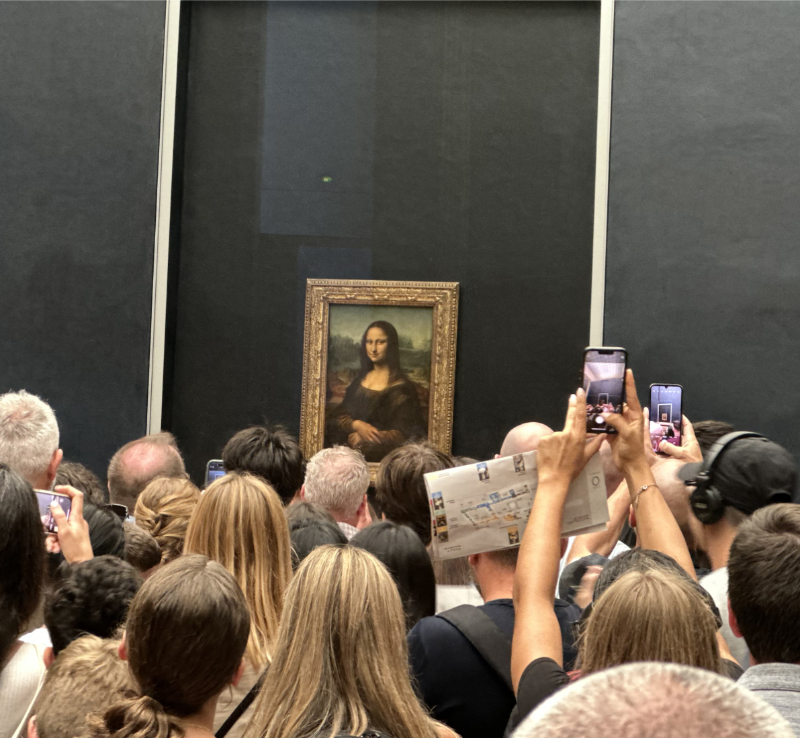
The 9:00 AM timed entry is the strongest practical choice most visitors can make. Large tour groups usually arrive later, which means the first 45 minutes offer the clearest access to priority works such as the Mona Lisa, the Winged Victory, or the Code of Hammurabi.
Choose evening sessions when possible
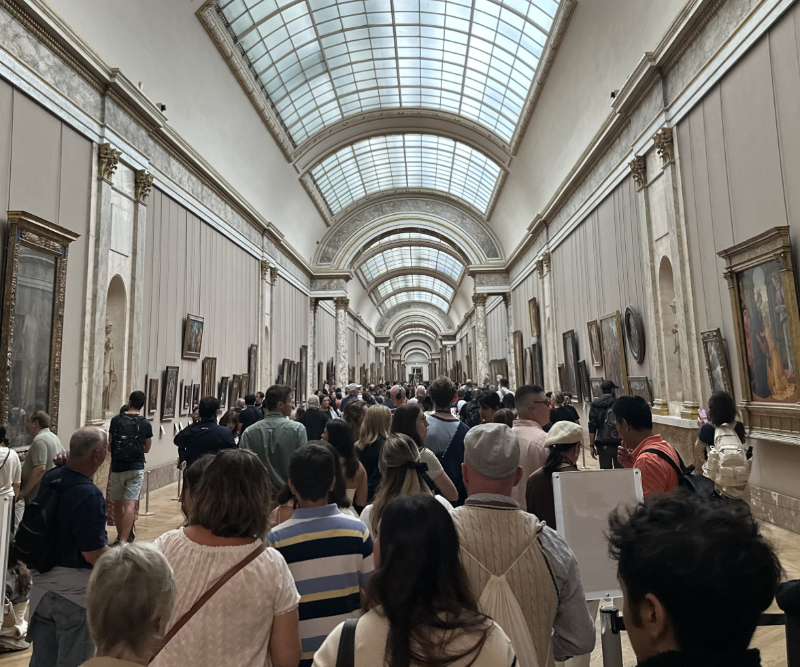
Wednesday and Friday evenings are among the best times to visit. After 5:30 PM, the museum changes character. The flow slows down, the main painting galleries become easier to cross, and the experience feels notably calmer.
Focus on one wing
Do not try to survey the full Louvre in one visit. Choose one wing and cover it properly. Denon suits Italian painting and classical sculpture. Richelieu suits Northern European art and decorative arts. Sully suits Egyptian and Near Eastern antiquities.
Plan the exit as well as the entry
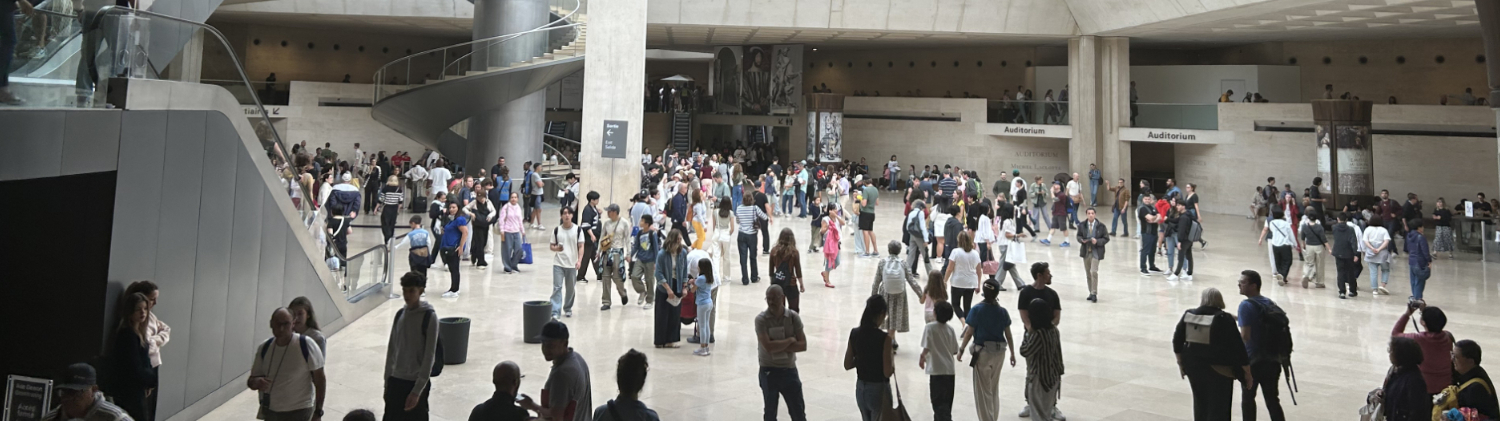
Between 4:30 PM and 6:00 PM, large numbers of visitors converge on the Napoleon Hall at the same time. Leaving before 4:00 PM, or staying beyond 6:00 PM on a late opening day, helps avoid the heaviest departure congestion.
Do not pair it with Orsay on the same day
The Louvre and the Musée d’Orsay each deserve serious time. Trying to do both in one day usually compresses both visits into something hurried and forgettable.
Keep belongings secure
The Napoleon Hall queues and the lift areas on the first floor of the Denon wing are known pickpocketing points. A bag worn across the body reduces risk considerably.
| At the Louvre, logistics are not background. They are part of the art of visiting well. |
Author’s note: This text was written with the intention of sharing and transmitting knowledge, not as an academic work. Its author is not a historian. Some details or interpretations may not reflect current historiographical consensus. For a rigorous approach, please refer to the sources listed at the end of this document
Références : Musée du Louvre, Site officiel ; Musée du Louvre, Billetterie ; Musée du Louvre, Préparer sa visite ; Musée du Louvre, Restaurants, cafés et services ; RATP, Palais Royal – Musée du Louvre.
OUR BEST TOURS