LOUVRE SCULPTURES GUIDE
Discovering One of the Louvre’s Most Underrated Collections

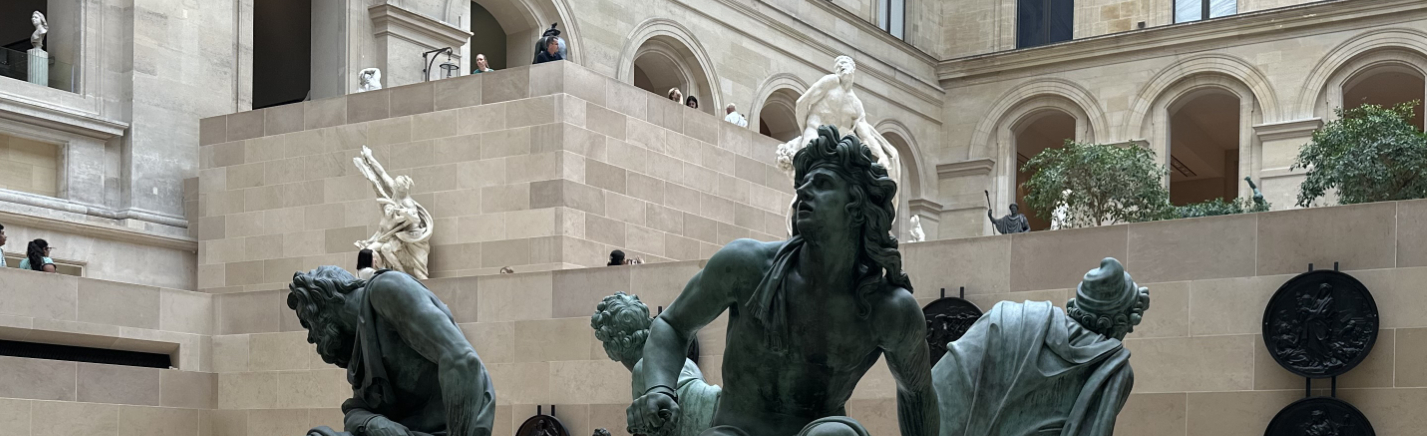
Most visitors enter the Louvre thinking about paintings.
The Mona Lisa. The great French canvases. The Italian masters. The route feels obvious.
Then sculpture interrupts that rhythm.
It does not ask to be read in the same way. A painting holds you in front of it. A sculpture makes you move. Step to the side, and the work changes. Walk around it, and the body, the gesture, the tension begin to appear differently.
That is why the Louvre’s sculpture galleries are so rewarding. They are calmer, often more spacious, and sometimes more physically powerful than the rooms everyone rushes toward.
Across Richelieu and Denon, sculpture becomes many things at once. Architecture. Devotion. Royal display. Public monument. Human body. Drama in stone.
For visitors willing to slow down, these galleries reveal another Louvre. Less crowded. More direct. And in many ways, more immediate.
Here, marble does not simply wait to be admired. It occupies space.
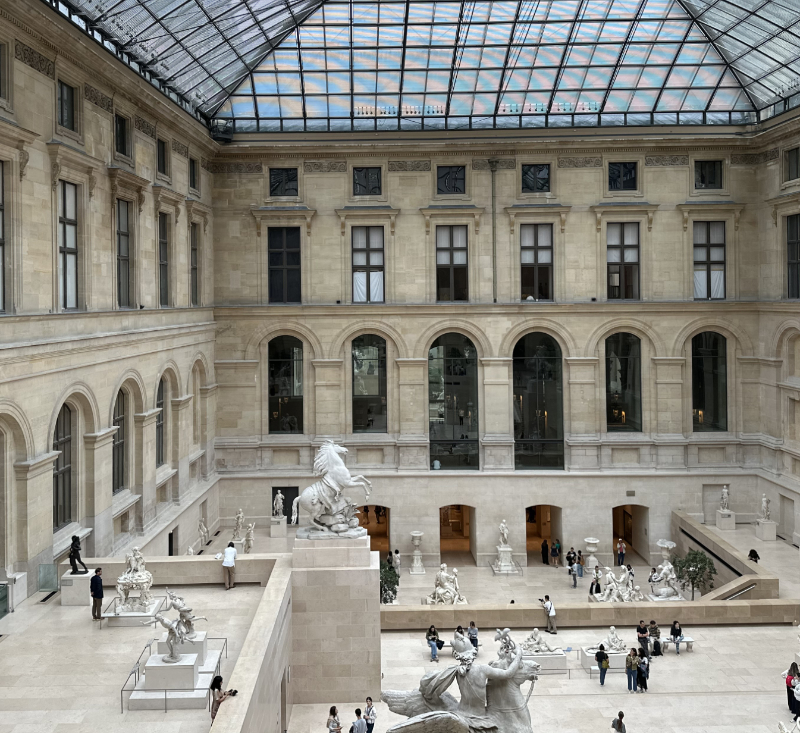
The Louvre is often approached through paintings. Visitors move from room to room, from frame to frame. The rhythm is familiar. The Cour Marly and the Cour Puget break that rhythm. They open the space and change the way sculpture is seen.[1]
These are not galleries in the usual sense. They are covered courtyards. Under glass, sculpture is no longer confined to walls. It stands in space. Light falls differently. Distances become clearer. One does not simply look at the works. One moves among them.[1]
The Cour Marly
The Cour Marly takes its name from the works it gathers. The equestrian groups once belonged to the gardens of the Château de Marly, commissioned by Louis XIV. Among them, the Horses of Marly by Guillaume Coustou the Elder remain the most striking.[2]
These sculptures were not made for a museum. They were designed for open air, for perspective, and for movement. Their history reflects that. After the Revolution, they were moved to Paris. They later stood at the entrance of the Champs Élysées before being brought indoors in the late twentieth century.[2] They have changed setting, but not scale.
What matters is not only their size. It is the tension. The strained necks, the flared nostrils, and the unstable balance between control and resistance define the group. The human figure does not fully dominate the animal. It struggles with it. At this level, sculpture is no longer decorative. It becomes physical.
The Cour Puget
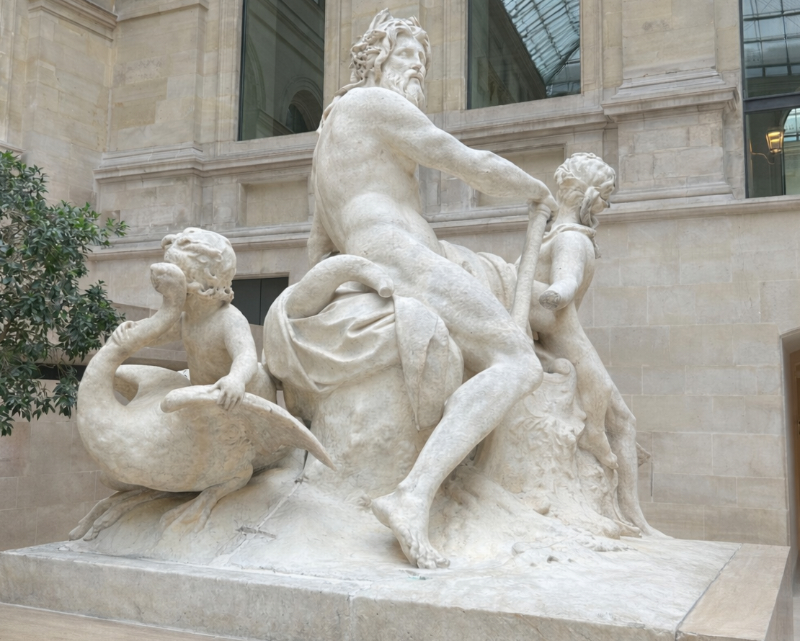
The Cour Puget is more contained and more focused. It is organised around a central work, Pierre Puget’s Milo of Croton.[2]
The figure stands almost three metres high. Puget does not show Milo in triumph. He shows him at the moment when strength fails. The body remains powerful, but the outcome is already decided. The scene is not about victory. It is about reversal.
That moment of reversal is essential. It reflects a broader tendency in seventeenth-century French sculpture. The aim is not only ideal form, but narrative tension. The body is used to express a situation, not just an appearance.[2]
Both courtyards reward a slower visit. In the morning, the light is clearer and more even. It moves across the marble and reveals the carving with greater precision. Details appear that are less visible later in the day.
What these spaces offer is rare at the Louvre. Sculpture is no longer reduced to an object. It becomes something that occupies space and engages the viewer directly. It regains the presence it originally had.[1]
| Under glass, French sculpture recovers the scale and presence it once had outdoors. |
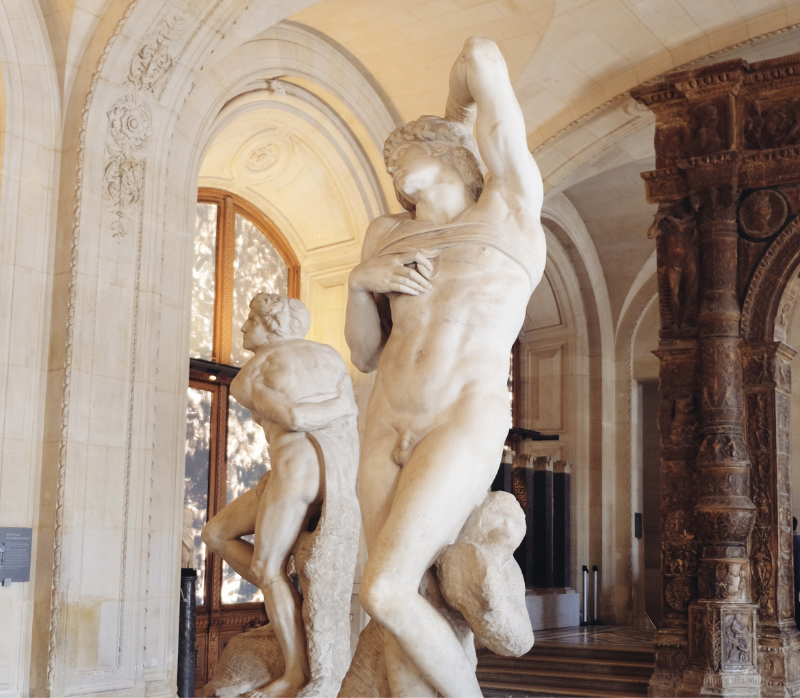
Few sculptures in the Louvre attract attention as quickly as Michelangelo’s two Slaves. But why do they hold the eye so immediately? Their importance goes beyond fame. It lies in what they reveal about Michelangelo’s way of thinking. The body. The stone. The tension between what emerges and what remains held back.[3]
Why they matter
The Dying Slave and the Rebellious Slave stand in Room 4 of the Denon wing’s ground floor. Michelangelo carved them between 1513 and 1515 for the tomb of Pope Julius II. The project was never completed. The sculptures left their original context.[3]
What became of them? They were given to Roberto Strozzi. Then offered to Francis I. Eventually absorbed into the French royal collections.[3] Today, they remain the only finished sculptures by Michelangelo outside Italy.
Is that what makes them important? Partly. But not entirely. What matters more is the tension within the figures. Each body appears caught between release and resistance. Nothing is fully at rest. Everything seems in the process of becoming.[5]
How to look at the Dying Slave
The Dying Slave measures just over two metres in height. The body follows a gentle spiral. The right arm rises behind the head. A gesture that has been studied repeatedly in Western sculpture.[5]
From the front, the figure appears calm. But is it really? Move to the side. The torsion becomes clearer. The calm gives way to tension. The movement is not immediate. It reveals itself gradually.
Can it be understood from a single angle? No. The sculpture is built for movement. Walking around it is essential. The form unfolds step by step.
The idea behind the forms
Both figures are often interpreted through a Neoplatonic framework. The body does not fully express the soul. It holds it. Matter resists. Form emerges from that resistance.[3]
What does that change? The sculptures are no longer just bodies. They become reflections on sculpture itself. The figure is never entirely free. It remains tied to the block from which it comes.
That tension defines their presence. The sculptures are not fully resolved. They remain open. That is what gives them their force.
| Michelangelo’s figures are not fixed. They emerge, resist, and never fully resolve. |
These rooms are among the quietest in the museum. And also among the most rewarding. Why are they so often overlooked? Perhaps because they do not offer spectacle. They offer something else.[1]
Here, the Louvre moves away from court sculpture. It returns to carved forms made for churches, abbeys, portals, and sacred interiors. The context changes. So does the way sculpture is read.[1]
A collection shaped by the Revolution
The medieval French sculpture galleries, located on the lower ground floor of the Richelieu wing, span roughly from the eleventh to the fifteenth century. Their strength lies in concentration. Not isolated works, but a dense continuity of carved material.[4]
How did these works arrive here? Much of the collection entered the Louvre during and after the Revolution. Ecclesiastical property was dismantled. Buildings were emptied. The process was destructive.[4]
But it also preserved. By bringing these works into institutional custody, the state ensured their survival. Without that transfer, many would likely have disappeared.[4]
What makes these rooms exceptional
Romanesque capitals. Gothic fragments. Saints. Reliefs. Architectural elements. They appear here in sequence, almost without interruption.
What does that change? Sculpture is no longer seen as a series of isolated masterpieces. It becomes part of a larger visual system. A world once embedded in stone architecture.[1]
These works were not made to be admired at a distance. They were made to be integrated. Into walls. Into columns. Into spaces of belief.
The rooms are rarely crowded. That matters. It allows a different kind of attention. Slower. More direct. Without pressure. Without spectacle.
Is this where sculpture becomes less visible? Or more essential? In these galleries, it loses theatrical effect. But it gains something else. Structure. Duration. Presence.[1]
| In these quieter galleries, sculpture is no longer staged. It returns to its role as part of a larger architectural and spiritual order. |
A good visit to the sculpture collections depends on order, pace, and attention. These rooms are generous, but they only reward visitors who resist the urge to pass through too quickly.
Begin with the courtyards
Start on the Richelieu ground floor with the Cour Marly and the Cour Puget. Morning is best, because the light across the marble surfaces is clearer and the courtyards are often quieter. Go first to the Horses of Marly. Their scale can be underestimated in photographs, but in person the carving rewards sustained looking.
Then move to Denon
After Richelieu, continue to Room 4 of the Denon wing’s ground floor for Michelangelo’s Slaves. Give the Dying Slave at least five minutes, and circle the work fully. The spiral of the body, which generates much of its expressive force, only becomes obvious from changing viewpoints.
Keep time for the medieval rooms
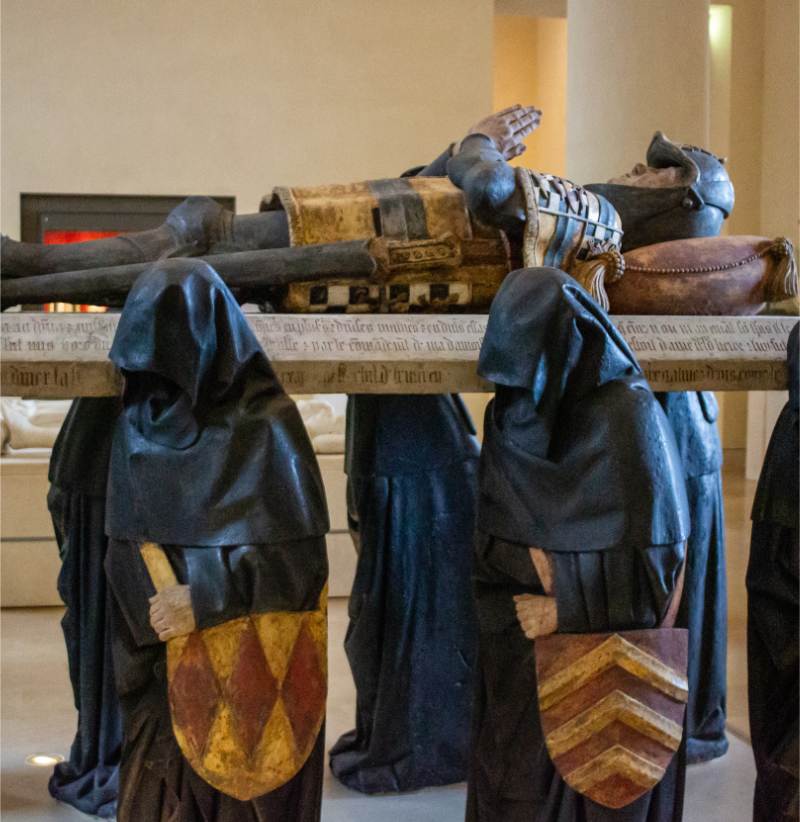
Finally, return to the lower ground floor of the Richelieu wing for the medieval French sculpture galleries. If the painting rooms are overcrowded, these spaces offer a quieter experience without any loss of seriousness or quality. In fact, they often make the visit feel larger and more balanced.
| The sculpture galleries ask for slower looking, but they repay it more generously than almost any other part of the museum. |
Author’s note: This text was written with the intention of sharing and transmitting knowledge, not as an academic work. Its author is not a historian. Some details or interpretations may not reflect current historiographical consensus. For a rigorous approach, please refer to the sources listed at the end of this document
[1] Jean-René Gaborit, La sculpture française, Paris, Réunion des musées nationaux, 1993.
[2] Geneviève Bresc-Bautier (dir.), Sculpture française. Renaissance et temps modernes, Paris, Réunion des musées nationaux, 1998.
[3] Michel-Ange. Les Esclaves, Musée du Louvre.
[4] Catalogue des sculptures du Moyen Âge, de la Renaissance et des temps modernes, Musée du Louvre.
[5] Geneviève Bresc-Bautier (dir.), Les sculptures européennes du Musée du Louvre, Paris, 2006.
OUR BEST TOURS