LOUVRE PALACE GUIDE
A Royal Palace at the Heart of Paris

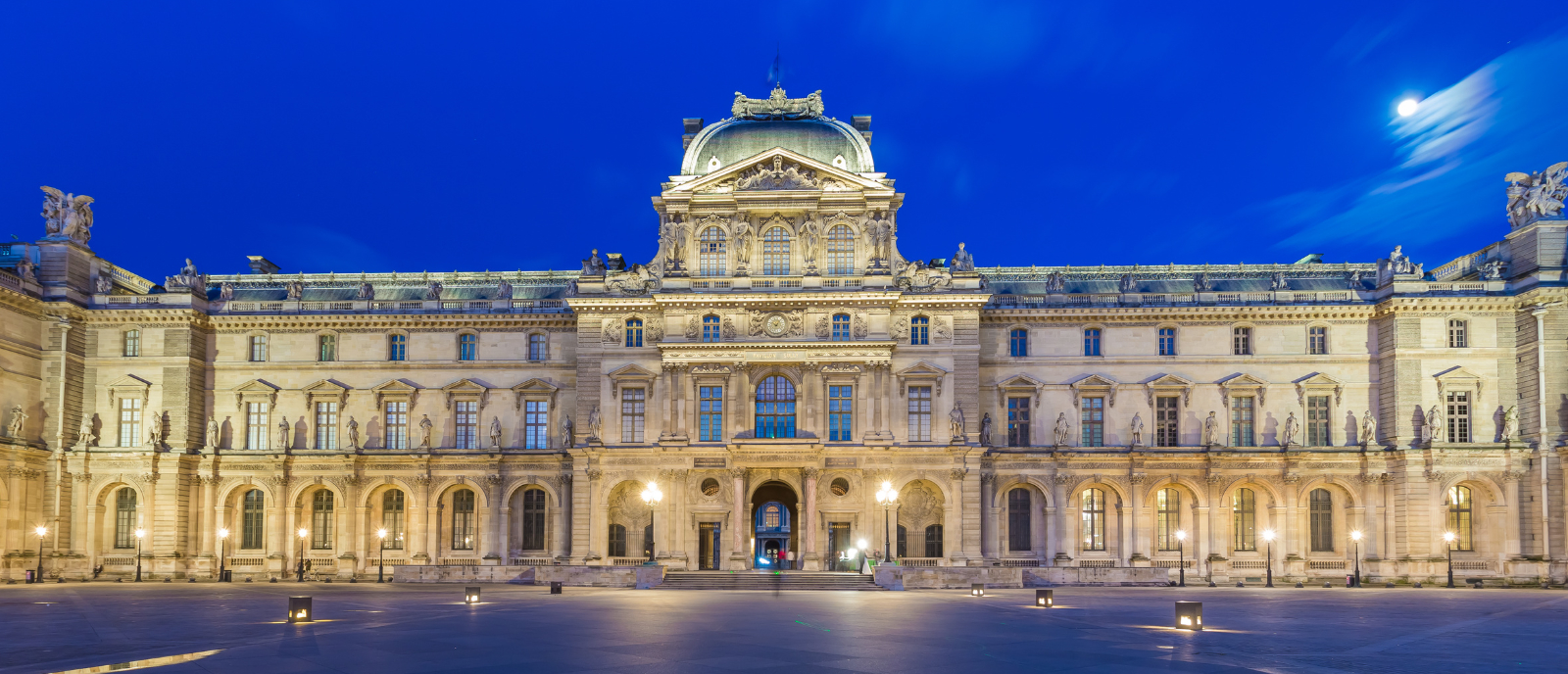
Before looking at the works inside the Louvre, it is worth looking at the building that holds them.
Because the Louvre is not only a museum. It is a former palace, expanded, corrected, interrupted, and transformed over centuries. Every courtyard, façade, gallery, and wing tells part of that story.
The mistake is to treat the palace as a background. It is not. The architecture shapes the whole visit before the first artwork appears.
The Cour Carrée shows order. The Cour Napoléon opens the palace to the modern museum. The Galerie d’Apollon turns decoration into power. The Napoleon III Apartments reveal how interiors can stage authority.
So how should the Louvre be approached when the building itself becomes the subject?
By reading it like a layered monument. Not as one single palace, but as a sequence of choices, ambitions, and historical moments still visible in stone, glass, gold, and space.
The Louvre becomes easier to understand once its three wings stop being simple names on a map. Denon gives the museum its icons. Sully gives it depth. Richelieu gives it space.[1]
Seen that way, orientation no longer feels purely practical. It becomes architectural. Each wing offers a different way of reading the palace.
The Denon Wing
Denon runs along the southern side of the palace, facing the Seine. It takes its name from Dominique Vivant Denon, the first director of the Musée Napoléon.[2]
This is the Louvre at its most recognisable. And often at its most intense.
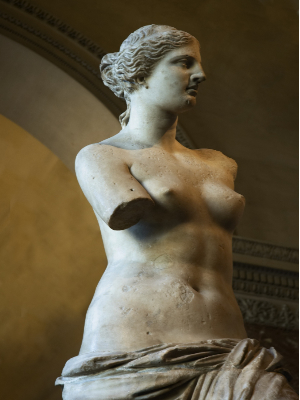
Why does it feel so crowded? Because so many of the museum’s most famous works pull visitors in the same direction. Italian painting. Spanish painting. The large nineteenth-century French canvases. The Venus de Milo. The Winged Victory of Samothrace. The Mona Lisa.
Denon gives the Louvre its immediate impact. It dazzles quickly. It can also overwhelm. This is where many visitors first feel the power of the museum before they understand its structure.
The Sully Wing
Sully occupies the eastern part of the palace. It surrounds the Cour Carrée, one of the architectural cores of the old Louvre.[1]
It takes its name from the Duke of Sully, minister to Henri IV. The name already points toward the long political history of the building.
This wing feels different. Less like a rush toward icons. More like a descent into the museum’s depth.
Egyptian antiquities fill the lower floors. French painting from the fourteenth to the seventeenth centuries rises above. In the basement, the remains of the medieval Louvre bring the palace back to its earliest layers.[3]
In Denon, the Louvre dazzles. In Sully, it remembers.
The Richelieu Wing
Richelieu runs along the northern side of the palace, parallel to rue de Rivoli.
For a long time, this part of the palace was not fully available to the museum. It was occupied by the Ministry of Finance. That changed with the Grand Louvre project, and the Richelieu wing fully opened to the public in 1993.[2]
Today, it contains Northern European painting, Islamic art, French sculpture in the covered courtyards, and the decorative arts of the Ancien Régime.
But what makes Richelieu especially valuable is not only what it contains. It is how it feels.
The crowds often thin out here. The rhythm slows. The rooms feel more spacious. For visitors willing to move beyond the most famous routes, Richelieu can be one of the most rewarding parts of the museum.
| Together, the three wings do more than divide the museum. They offer three different ways of entering the Louvre: spectacle, memory, and space. |
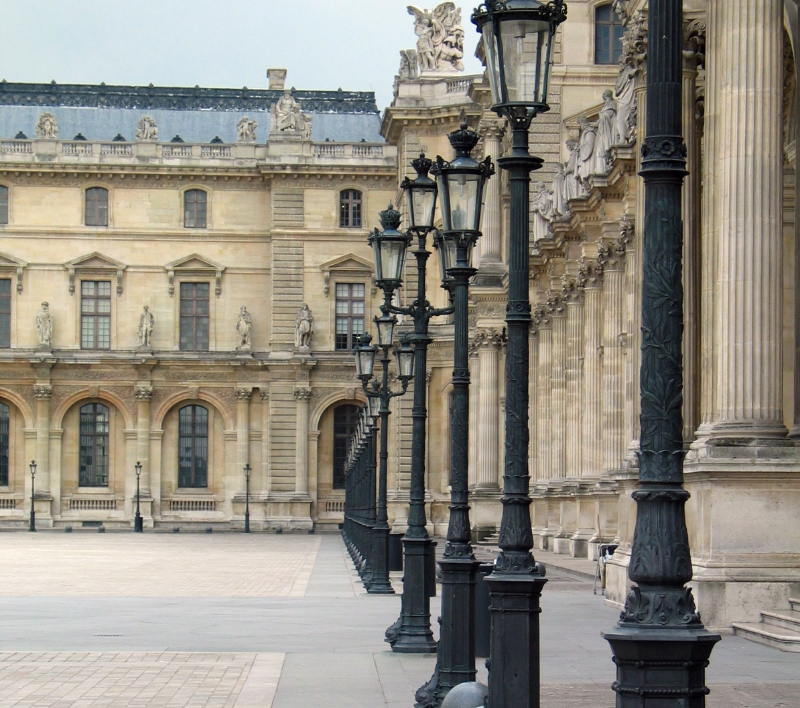
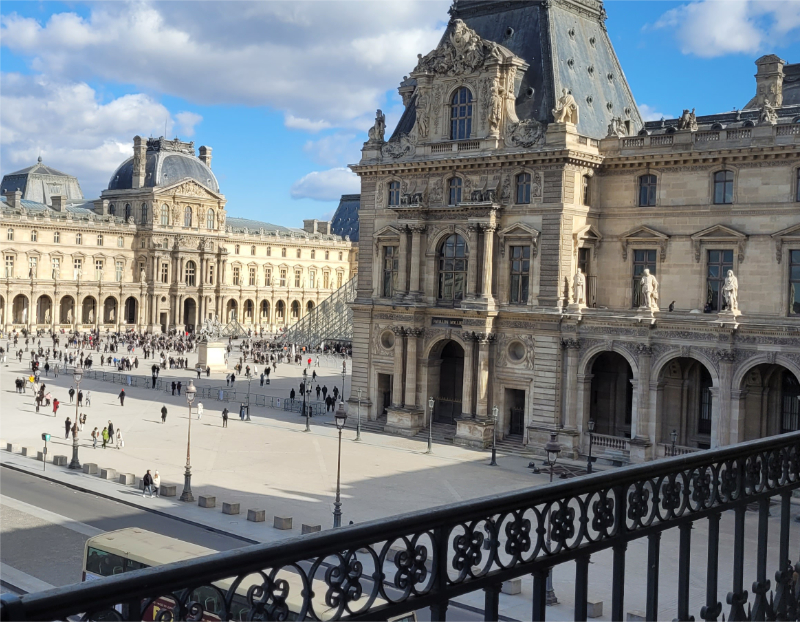
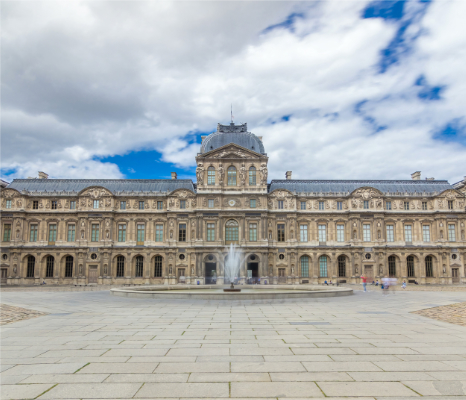
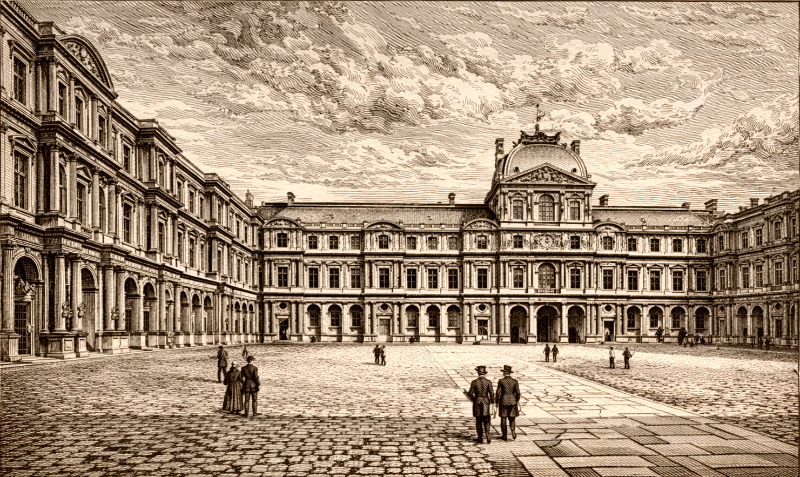
If the palace has a true centre, it is here. The Cour Carrée makes the old Louvre readable. More than almost any other space.
Stand in the middle. The building begins to organise itself. Renaissance. Classical order. Royal ambition. All in one courtyard.[1][3]
Why does it matter? Because this is where the Louvre stops feeling like a maze. It starts feeling like a palace.
A courtyard built over centuries
The Cour Carrée measures roughly 170 metres on each side. At first, it looks unified. Balanced. Almost obvious.
But it was not built all at once. Its four sides bring together several major phases of the Louvre’s architectural history.[1]
Pierre Lescot gives the courtyard its earliest surviving Renaissance core, beginning in 1546.
Jacques Lemercier extends that language under Louis XIII in the seventeenth century.
Claude Perrault later completes the eastern range. With it, French classicism gains one of its most famous façades.[1][3]
So what is the Cour Carrée? Not a single project. A sequence. A controlled accumulation.
Different centuries are brought into order. They are made to speak the same architectural language.
Why it matters
Most visitors enter through the pyramid. Many never cross into the Cour Carrée. That is a mistake.
The courtyard is open from outside the museum. Free of charge. Easy to reach. And easy to miss.
Precisely because it asks for no ticket. No queue. No spectacle.
And yet, it explains the Louvre with remarkable clarity.
Lescot. Lemercier. Perrault. Three names. Three moments. Three ways of turning royal power into architecture.[1][3]
Few places teach architecture this directly.
In ten minutes, the courtyard shows what long explanations can make too abstract.
The Louvre was not built in one gesture. It was layered. Extended. Corrected. Reimagined.
| Before the museum pulls visitors inward, the Cour Carrée teaches them how to read the palace. |
The Cour Napoléon is where the modern Louvre finds its centre.
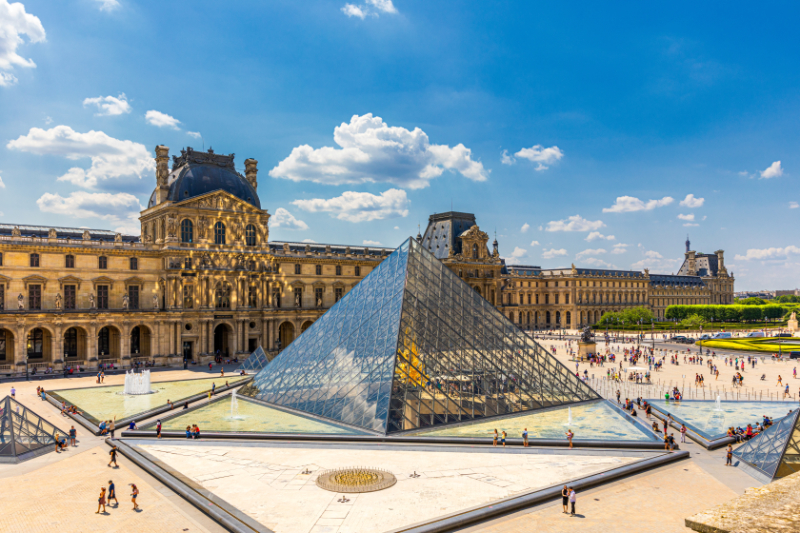
Denon to the south. Richelieu to the north. Sully to the east. From here, the scale of the palace becomes fully visible.[1][2]
This is not just an entrance court. It is the place where the Louvre begins to read as a whole.
A courtyard shaped by scale
The Cour Napoléon gives distance to the façades. That matters. Without distance, the palace can feel like a sequence of long wings. From the courtyard, it becomes an ensemble.
The open square lets the architecture breathe. It gives the visitor time to understand the proportions. The wings are no longer separate edges of a museum. They become parts of one monumental composition.[1]
What changes here? Scale becomes readable. The palace stops being only a building one enters. It becomes a space one can measure with the eye.
Why the pyramid changed everything
At the geometric centre stands I. M. Pei’s glass pyramid, inaugurated in 1989.[2]
It rises 21.6 metres high. It measures 34 metres across at the base. Its structure is made of 603 rhombus-shaped panes and 70 triangular panes set in a steel frame.[2]
Those numbers are precise. But they are not the real point.
The real transformation happens below. The Hall Napoléon reorganised the museum around a single operational centre. From there, visitors reach Denon, Sully, and Richelieu directly.[2]
That is why the pyramid matters. It does not simply decorate the Louvre. It gives the palace a new threshold. A new centre. A new logic of movement.
Once that is understood, the pyramid stops being only a symbol. It becomes an architectural answer.
| The moment the Cour Napoléon becomes readable, the pyramid stops being a gesture and becomes a piece of architectural logic. |
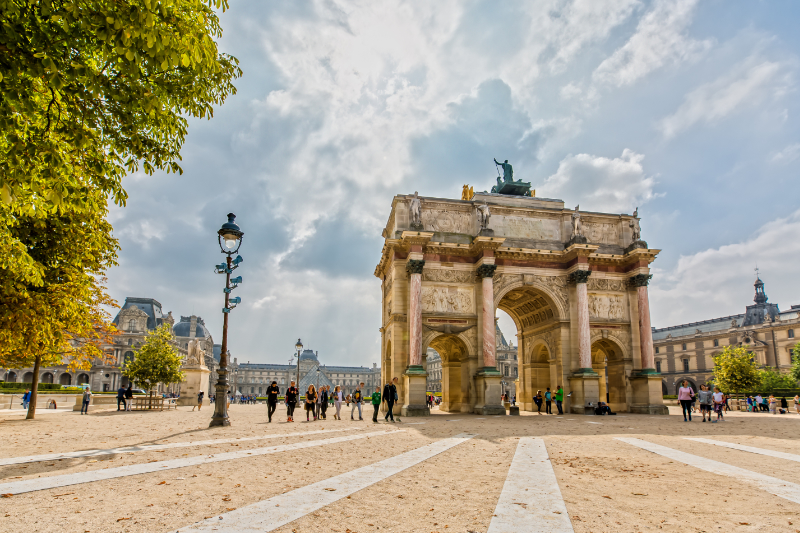
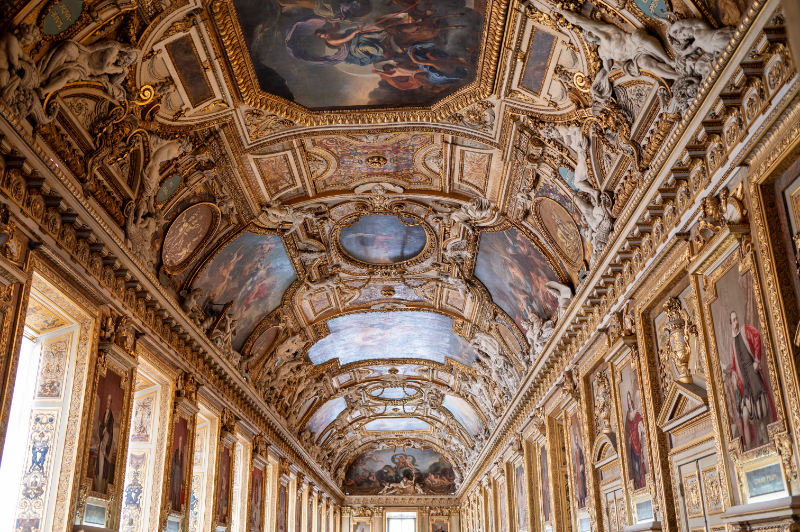
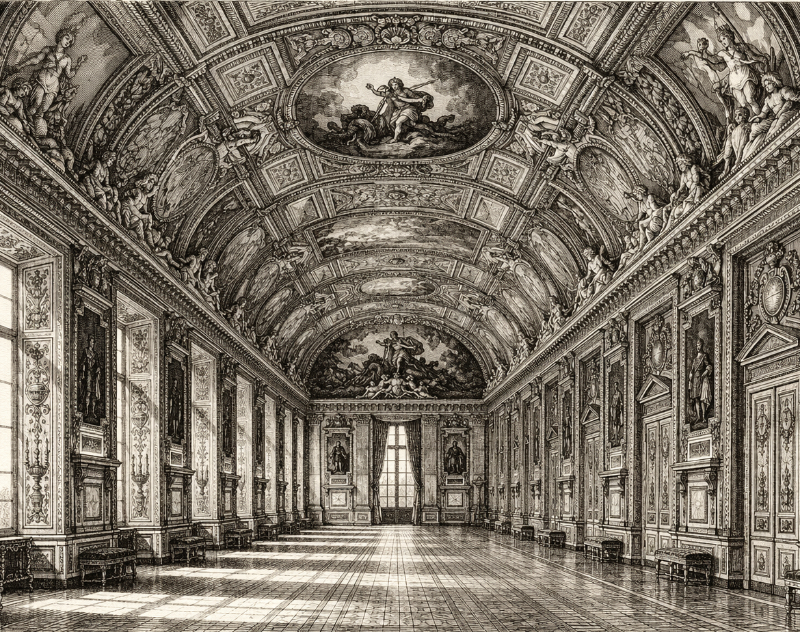
The Galerie d’Apollon is one of the most dazzling rooms in the Louvre.
It is also one of the clearest examples of royal display transformed into museum space.
Nothing here is modest. That is the point.
The room was designed to impress. To elevate. To make power visible.
A gallery made for grandeur
Set on the first floor of the Denon wing, overlooking the Seine, the gallery was rebuilt after a fire in 1661.[1][3]
Its decorative programme was centred on Apollo. That choice was not innocent. Apollo meant light, order, and solar power. It also echoed Louis XIV’s own royal image.
Charles Le Brun first directed the decoration. The result is not simply a beautiful interior. It is a political language made visible.
Every surface pushes the same message forward. Light. Glory. Authority. Magnificence.
This is decoration, but decoration with a purpose. The gallery does not simply embellish the palace. It explains what monarchy wanted to look like.[3]
What to look at
The ceiling is the first thing to notice. Many visitors walk in and look straight ahead. That is a mistake.
Look up first.
The great central oval remained unfinished for almost two centuries. Eugène Delacroix completed it in 1850 and 1851 with Apollo Vanquishing Python.[3]
That detail matters. The gallery is not frozen in one century. It carries several moments of French art and royal memory in the same space.
Then look down.
Today, the Galerie d’Apollon also houses the French Crown Jewels. Among them is the Regent Diamond, acquired in 1717 and still one of the most important diamonds in French royal history.[3]
The room only makes full sense when both levels are read together. Above, the mythology of royal power. Below, the material signs of monarchy.
Ceiling and jewels are not separate attractions. They speak the same language. One shows glory as image. The other shows glory as possession.
| In the Galerie d’Apollon, decoration becomes architecture, and architecture becomes theatre. |
Few interiors in Paris show official splendour with such confidence.
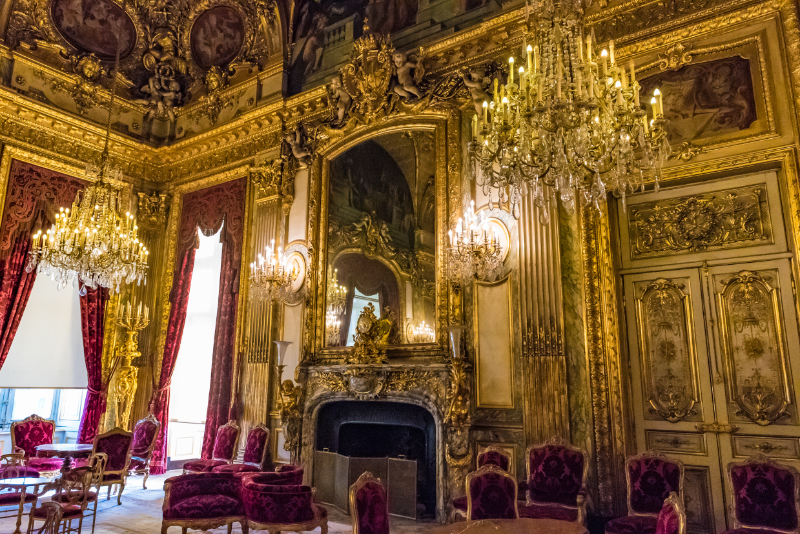
The Apartments of Napoleon III preserve the Second Empire at full intensity.
They are also one of the most under-visited triumphs of the Louvre.
Why do they matter? Because they show the museum not only as a place of objects, but as a place of interiors, ceremony, and power.[2][3]
Second Empire at full intensity
Located in the northern range of the Richelieu wing, these reception rooms were decorated between 1856 and 1861 for Napoleon III’s Minister of State.[2][3]
The effect is immediate. Gilded coffered ceilings. Crimson and gold damask. Portrait medallions. Candelabra. Mirrors. Carved furniture.
Nothing is quiet here. Nothing is accidental.
Every surface insists on the same idea: authority must be seen before it is spoken.
This is not domestic comfort. It is official display. A room designed to impress before a conversation even begins.
Why they matter
The rooms opened to the public in 1993, when the Richelieu wing became part of the modern Louvre experience.[2]
They still surprise many visitors. Denon offers the icons. Sully offers the old palace. Richelieu, here, offers something different: the Louvre as nineteenth-century official theatre.
What does that theatre reveal? Display. Ceremony. Hierarchy. The careful staging of power through interior decoration.
No single label is really needed to understand the message. The room speaks first. Gold, mirrors, fabric, scale. Everything is part of the argument.
That is why these apartments are essential. They remind visitors that the Louvre is not only built from façades, wings, and courtyards. It is also built from rooms designed to shape behaviour.
| The Apartments of Napoleon III prove that the Louvre is not only a museum of objects. It is also a museum of interiors. |
The Louvre becomes more manageable the moment the visit is narrowed. Instead of trying to absorb everything, choose where to slow down and why.
Start with the palace, not the crowd
Enter the Cour Carree before descending through the pyramid. The detour takes only a few minutes, but it changes the rest of the visit. Once the facades of Lescot, Lemercier, and Perrault have been read in sequence, the museum becomes easier to understand. Then, if time is short, choose one wing and one floor rather than attempting a rushed survey of the whole building.
Rooms worth protecting time for
In Denon, give the Galerie d’Apollon at least two deliberate minutes, and look up before doing anything else. In Richelieu, go to the Apartments of Napoleon III even if they are not on your original route. Because Richelieu is often quieter, it also rewards a slower pace. Finally, use the Hall Napoleon only as an orientation point, not as part of the visit itself. The palace begins once you leave it behind.
| The Louvre is too large to conquer in a day. It becomes far more rewarding when the palace, rather than the checklist, sets the rhythm. |
Author’s note: This text was written with the intention of sharing and transmitting knowledge, not as an academic work. Its author is not a historian. Some details or interpretations may not reflect current historiographical consensus. For a rigorous approach, please refer to the sources listed at the end of this document
[1] Andrew Ayers, The Architecture of Paris: An Architectural Guide, Stuttgart, Edition Axel Menges, 2004.
[2] Jean-Marie Pérouse de Montclos, Le Grand Louvre, Paris, Éditions du Moniteur, 1989.
[3] Musée du Louvre, Le Palais du Louvre, Paris, Musée du Louvre.
OUR BEST TOURS