EGYPTIAN ANTIQUITIES GUIDE
Ancient Empires, Sacred Cities, and the Origins of Writing

The Egyptian Antiquities galleries are not a quiet side route through the Louvre. They are one of the places where the museum suddenly changes scale.
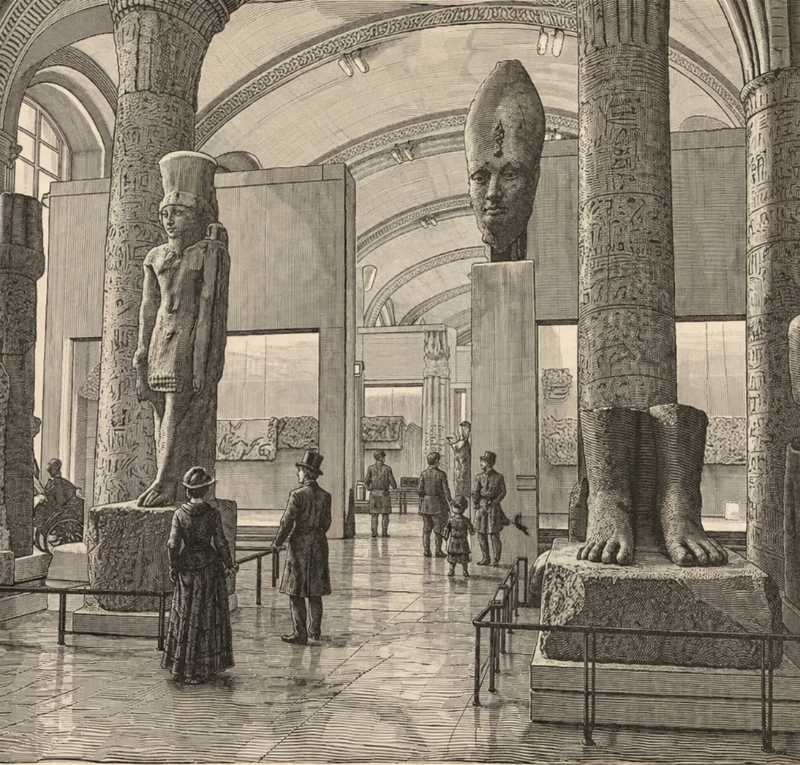
Here, the visit moves away from paintings and royal interiors into something older, denser, and more mysterious. Colossal statues. Sarcophagi. Inscriptions. Funerary objects. Everyday materials. Fragments of temples, tombs, rituals, and administration.
What makes this department so compelling is not only the age of the objects. It is the world they reconstruct. Ancient Egypt appears here through power, writing, death, belief, craft, and daily life.
Before moving through the rooms, it helps to understand one thing: this is not just a collection of antiquities. It is one of the Louvre’s great journeys into how a civilisation organised itself, imagined eternity, and left its memory in stone.
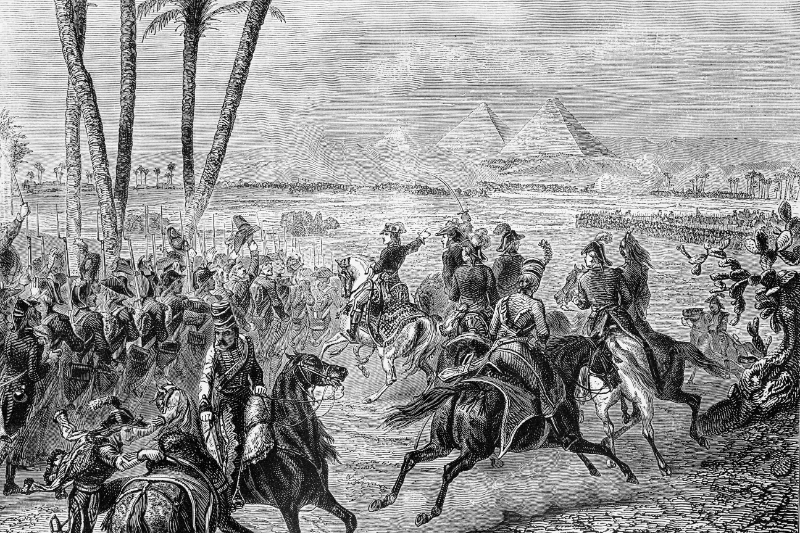
The Louvre’s Egyptian collection begins with conquest, but also with documentation. Napoleon Bonaparte’s campaign in Egypt, from 1798 to 1801, was not only a military expedition. It was also an intellectual operation.[1]
Why does that matter? Because the army did not travel alone. It was accompanied by scholars, scientists, artists, engineers, and draftsmen. Their task was to observe. To measure. To copy. To record.
Temples. Inscriptions. Monuments. Objects. Landscapes. Everything became material for study.
The result was the monumental Description de l’Égypte, published between 1809 and 1828. It changed Europe’s understanding of ancient Egypt. It also helped create the conditions for Egyptology as a modern discipline.[1]
So before the Louvre’s Egyptian department becomes a museum collection, it begins as a problem of knowledge. How do you record a civilisation that Europe was only beginning to understand?
Champollion and the department itself
The second origin is even more decisive. In 1826, the French government acquired a major collection assembled by Jean-François Champollion after his travels and collecting activity in Egypt.[2]
Champollion was not just another collector. In 1822, he deciphered Egyptian hieroglyphs through his work on the Rosetta Stone. That discovery changed everything. Egypt was no longer only visible. It became readable.[2]
That is why his role at the Louvre matters so much. Champollion became the first curator of the museum’s Egyptian department and remained central to its early identity until his death in 1832.[2][3]
The collection was therefore not shaped by chance. It was shaped by one of the founding figures of Egyptology. A scholar who did not only gather objects, but gave them a language.
That changes the way the department should be seen. It is not only a display of ancient Egypt. It is also the result of a nineteenth-century effort to understand, classify, and read Egypt through its monuments, images, and texts.
| Before the collection teaches visitors ancient Egypt, it quietly shows how Europe first learned to read it. |
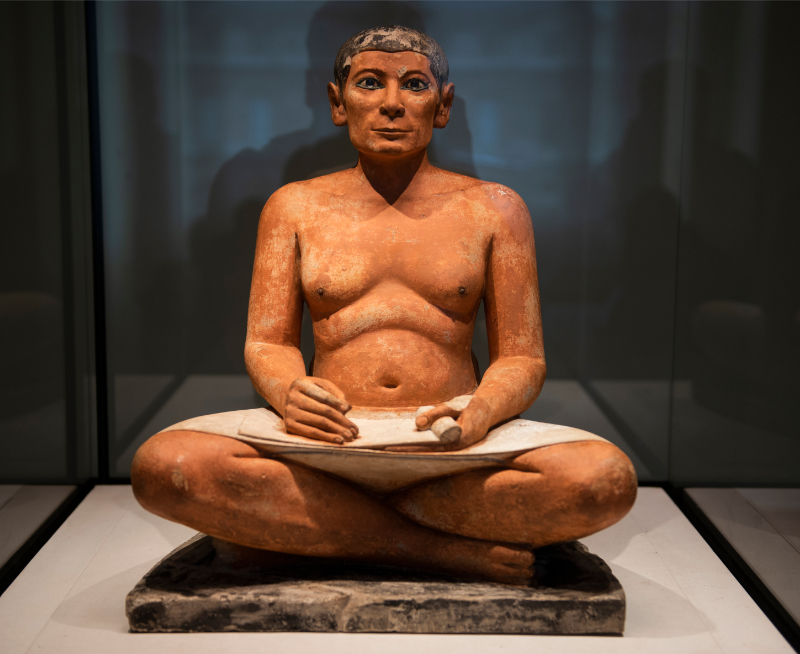
The Seated Scribe
The Seated Scribe, displayed in Room 22 on the first floor of the Sully wing, is one of the works that most rewards careful looking. It does not dominate by size. It does not rely on theatrical staging. Its force is quieter, but more unsettling. The figure sits cross-legged, holding a half-open papyrus on his lap, as if caught in a moment of attention rather than display.[3]
Carved during the Old Kingdom, probably in the 4th or 5th Dynasty, around 2620 to 2350 BCE, the sculpture measures 53.7 centimetres in height. It is made of painted limestone, with inlaid eyes of rock crystal, alabaster, and copper. Those eyes are the crucial detail. They do not simply complete the face. They animate it.[3]
Why does the figure feel so present? Because the body remains still while the gaze seems alert. The scribe does not act. He receives. He waits. He appears ready to listen, to write, to record. In a department filled with kings, gods, tombs, and monumental symbols, this smaller figure creates a different kind of encounter.
That is why the Seated Scribe matters so much. It does not show power in its most obvious form. It shows knowledge as presence. Administration as attention. Writing as a human function before it becomes a monumental sign. The object feels intimate, but its meaning is wide. It reminds visitors that ancient Egypt was not only built by pharaohs and priests, but also by those who counted, copied, recorded, and preserved memory.[2][3]
The Great Sphinx
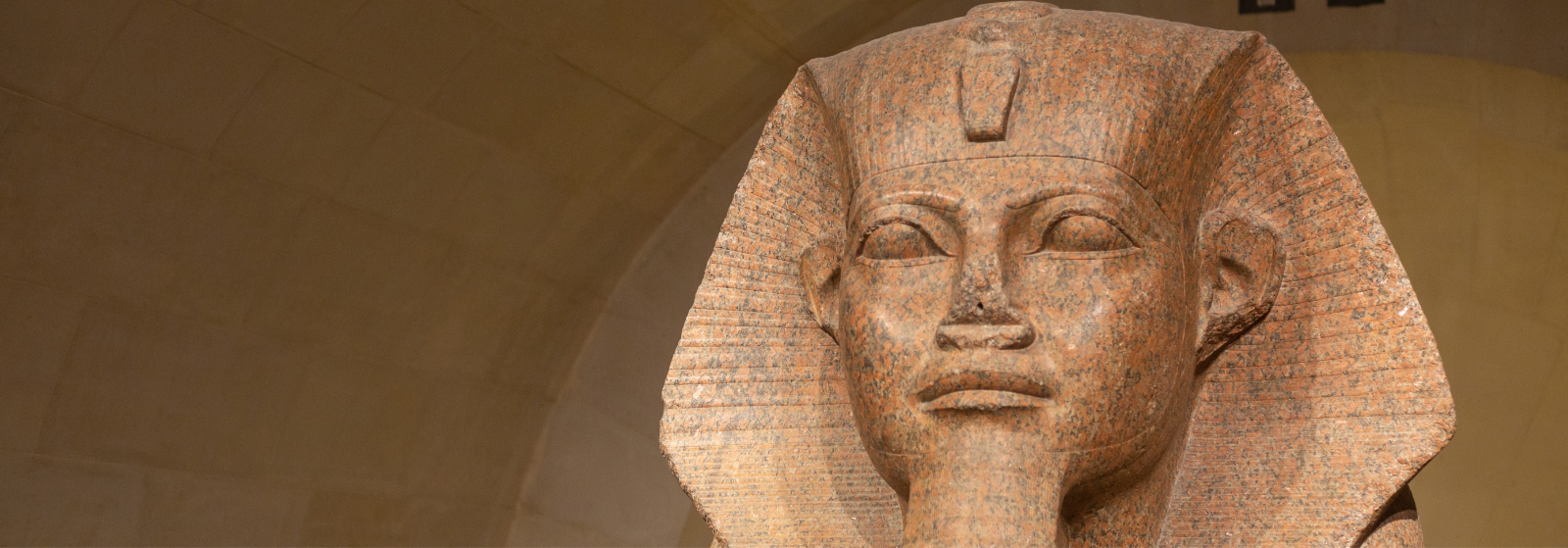
The Great Sphinx, in the crypt below the Sully wing, changes the scale of the experience. After the intensity of the scribe, the sphinx works differently. It does not look alive in the same way. It dominates by mass, by permanence, by the authority of a form that seems older than the room around it.
Carved in pink granite and dating to around 2600 BCE, it measures 183 centimetres high and 480 centimetres long. It is the largest sphinx outside Egypt in any museum collection.[3]
Why does that matter? Because the sphinx is not simply an animal form. It is a royal form. A body that joins human authority to animal force. The figure does not need movement. It needs weight. It makes power feel fixed, ancient, and almost geological.
If the Seated Scribe works through psychological presence, the Great Sphinx works through permanence.
The Akhenaten colossal head
The colossal head of Amenhotep IV, better known as Akhenaten, belongs to a very different moment. Here, the collection stops feeling continuous. It breaks.
The head belongs to the Amarna period, the revolutionary episode of the 14th century BCE when royal art moved away from older Egyptian conventions.[5]
The face is not ideal in the usual Egyptian sense. The forms are elongated. The features are more exposed. The image feels less stable, more experimental. That is what makes it important.
In a civilisation often associated with continuity, Akhenaten marks rupture. Religious rupture. Political rupture. Artistic rupture. The object matters because it shows that ancient Egypt was not frozen. It could change. It could test new images of kingship. It could make power look strange.
| The masterpieces draw visitors in first. Then the deeper logic of the department begins to appear. |
The Two Circuits: Thematic and Chronological
The Thematic circuit
The Egyptian department can feel overwhelming at first. Too many rooms. Too many objects. Too many centuries. The best way to avoid getting lost is to understand one simple thing: the department is built around two circuits.
The first circuit is thematic. It unfolds on the ground floor of the Sully wing and groups objects by function: architecture, writing, funerary practice, daily life, and the divine.[3] This matters because it changes the way the visit begins. You are not asked to follow time immediately. You are first asked to understand use.
What was this object for? Where did it belong? Who used it? A statue is not only a statue. A sarcophagus is not only a coffin. A hieroglyph is not only an image. Each object belonged to a system of gestures, beliefs, spaces, and needs.
That is the strength of the thematic route. It gives the visitor a grammar. It shows how Egyptian civilisation organised the body, the tomb, the temple, writing, work, ritual, and the relationship between the living and the divine. Before chronology begins, the visitor learns how to read.
The chronological circuit
The second circuit changes the question. It begins on the first floor and follows Egyptian history in sequence, from the Predynastic period to the Late Period.[3][5] Here, the visitor no longer asks only what an object was used for. The question becomes: when did this form appear, and how did it change?
That shift is important. Ancient Egypt is often imagined as fixed, almost outside time. The chronological rooms correct that impression. Forms repeat, yes, but they also move. Royal images evolve. Funerary objects become more complex. Writing, ritual, and artistic conventions travel across centuries.
This circuit gives time back to Egypt. It shows continuity without turning it into immobility. It shows tradition, but also adjustment, invention, and transformation.
The two systems are therefore not interchangeable. One teaches function. The other teaches time. Together, they give the department its real structure.
The best order for most visitors
For most visitors, the best order is simple: begin downstairs with the thematic circuit, then go upstairs to the chronological rooms. That order works because it builds understanding step by step.
The ground floor gives the framework first. The upper floor then gives that framework a timeline. Suddenly, the collection stops feeling like an endless mass of ancient objects. It becomes readable.
Ritual, writing, kingship, death, daily life, and history begin to connect. The visit becomes less about seeing everything and more about understanding how a civilisation organised itself, endured, and changed.
| Once the galleries become legible, the quieter rooms begin to reveal their full importance. |
A quieter ending, a larger history
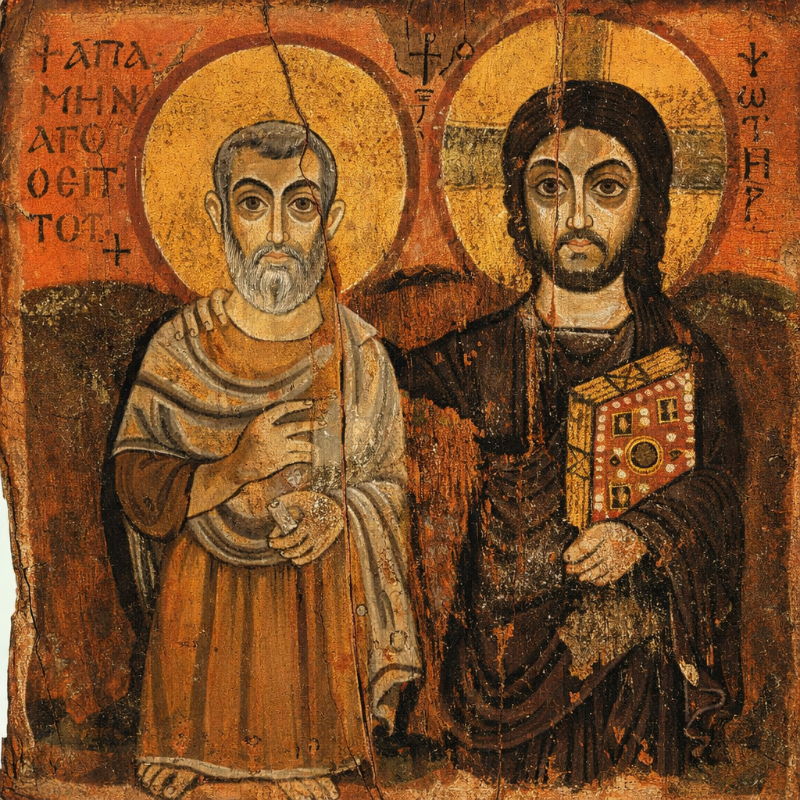
The Coptic Gallery comes near the end of the first-floor circuit. By then, many visitors are tired. They have seen statues, sarcophagi, gods, kings, and inscriptions. It would be easy to pass through quickly.
That would be a mistake.
This is one of the least visited parts of the Egyptian department. It is also one of the most revealing. The rooms cover the Christian period in Egypt, roughly from the 3rd to the 7th century CE, and they change the ending of the visit completely.[3][5]
Why? Because they show that Egyptian history does not simply stop with pharaohs, temples, and tombs. It continues. It changes language. It changes religion. It changes images.
Here, the visual world of ancient Egyptian religion begins to meet the imagery of early Byzantine Christianity. The shift is not abrupt. It is layered. Motifs survive. Materials continue. Forms are adapted.
That is what gives the gallery its importance. It does not simply extend the department. It complicates it.
Why it matters
For anyone interested in the passage from the ancient world to the medieval world, this section is essential. It shows continuity where one might expect rupture.
Textiles, funerary objects, inscriptions, and Christian imagery open another Egypt. Less monumental, perhaps. Less immediately spectacular. But historically powerful.
The Coptic rooms remind visitors that civilisations rarely end cleanly. They transform. They absorb. They translate themselves into new beliefs and new forms.
That is why this quiet ending matters. It shifts the whole department. Ancient Egypt no longer appears as a closed world. It becomes part of a longer Mediterranean and Christian history.
| And that is often how this department works: just when it seems to be narrowing, it opens onto a much larger history. |
Start on the ground floor
Begin in the Sully wing with the thematic circuit rather than going straight upstairs. That first sequence makes the rest of the department much easier to understand. Reversing the order is the most common structural mistake visitors make in this section.Give the Seated Scribe real time
Five minutes is not too much. The inlaid rock crystal eyes are the key detail, and the guide recommends leaning in to around 50 centimetres from the face if the room allows. Most people stand back, look quickly, and miss what makes the sculpture unforgettable.
Do not skip the crypt
The Great Sphinx is not always included on standard audioguide routes, yet it changes the scale of the visit immediately. Access is from Room 1 of the thematic circuit. The large works in the crypt create a physical relationship with ancient material that the upper floor cannot replicate.
Allow enough time
Allow at least 90 minutes if you want to cover both circuits properly. Weekday afternoons, especially between 2 PM and 4 PM, are usually the least crowded period.
| The best visits here are not the fastest. They are the ones that give the collection enough time to arrange itself in the mind. |
Author’s note: This text was written with the intention of sharing and transmitting knowledge, not as an academic work. Its author is not a historian. Some details or interpretations may not reflect current historiographical consensus. For a rigorous approach, please refer to the sources listed at the end of this document
[1] Description de l’Égypte, Paris, Imprimerie impériale, 1809-1828.
[2] Jean-François Champollion, Précis du système hiéroglyphique des anciens Égyptiens, Paris, 1824.
[3] Christiane Ziegler, Les Antiquités égyptiennes au Louvre, Paris, Musée du Louvre / Réunion des musées nationaux.
[4] Christiane Ziegler, Le Scribe accroupi, Paris, Musée du Louvre / Réunion des musées nationaux.
[5] Ian Shaw, ed., The Oxford History of Ancient Egypt, Oxford, Oxford University Press.
[6] Erik Hornung, The Ancient Egyptian Books of the Afterlife, Ithaca, Cornell University Press.
OUR BEST TOURS