HISTORY OF THE LOUVRE
From medieval stronghold to one of the world’s greatest museums

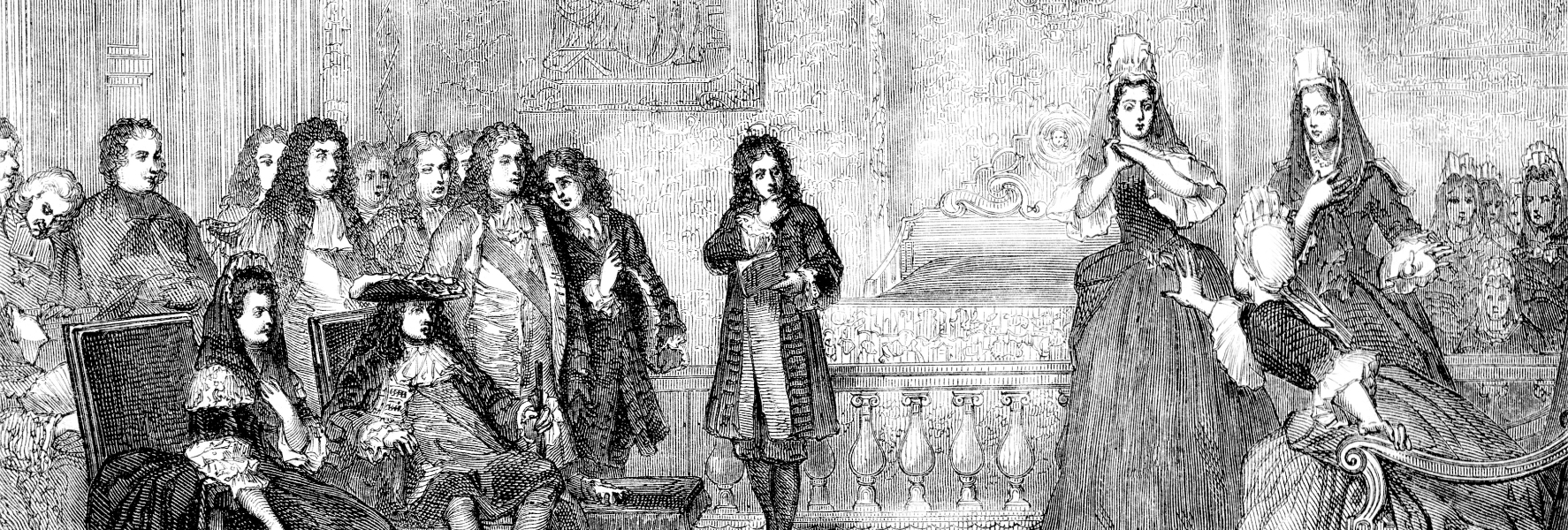
Before entering the most famous museum in the world, let us immerse you in the immense history of the Louvre. When we think of the Louvre, images of the Mona Lisa, the glass pyramid, and thousands of visitors naturally come to mind. And that is perfectly normal. Yet to truly journey through the Louvre, we first need to understand its history, its transformations, and everything this monument has lived through.
This is the journey through time we invite you to take with us.
Because the Louvre has not always been a museum. Before becoming such an iconic place, it was a fortress, a royal residence, a palace of power; in short, nothing really suggested that it would one day become one of the greatest museums in the world. Over more than eight centuries, the building changed its shape, its function, and its meaning, following the rhythm of kings, revolutions, political ambitions, and the great transformations of Paris.
Together, we will gradually follow the thread of its history, not as a simple list of dates, but as an immersion into the many lives of the Louvre. At each stage, the monument transforms, and with it, a part of French history is revealed. So before the masterpieces, before the collections, before the galleries visitors walk through today, let us return to the very beginning.
The Louvre does not begin with masterpieces. It does not begin with a palace, galleries, visitors, or even the idea of a museum.
It begins with a very practical question: how to protect Paris?
1190: a fortress, not a monument
At the end of the twelfth century, the city is vulnerable. Philippe Auguste is preparing to leave for the Third Crusade, and Paris cannot be left exposed in his absence. To the west, the threat is real. Normandy belongs to the English crown, and an attack from that direction remains entirely possible.
The king’s answer is direct: build a fortress. On the right bank of the Seine, he orders the construction of a large stone keep, surrounded by walls and a moat connected to the river.[1]
This is how the Louvre is born: not as a monument, a residence, or a museum, but as a military structure.
Its function is clear. Watch. Defend and Hold.
That starting point matters. The Louvre is not prestigious from the beginning. It becomes so. It is not first designed to be admired, but to serve.
When Paris catches up with the Louvre
At first, the fortress stands on the edge of the city. It protects Paris from its western limit.
But Paris keeps growing. Neighbourhoods expand. Boundaries move. What once stood on the outskirts gradually becomes part of the city itself.
The Louvre does not yet fully change in appearance, but its role already begins to shift.
A fortress placed at the edge of a city is made to defend. A fortress absorbed by the city can become something else: a point of support for power.
This is where the first transformation begins. The Louvre changes function before it truly changes form.
What you can still see today
That origin has not disappeared. Beneath the Cour Carrée, in the medieval Louvre, the foundations of Philippe Auguste’s fortress can still be seen.[1]
This is not the most spectacular part of the museum. No gilding. No grand perspective. No immediate visual effect.
Only stone. Massive, sober, defensive.
And yet these remains say something essential. They show the Louvre before the Louvre. Before the royal builders. Before the classical façades. Before the collections. Before the pyramid.
They remind us that the museum was built through successive transformations: first a fortress, then a royal residence, then a palace of power, then a public museum.
Perhaps this is the best way to begin the history of the Louvre: not with what it became, but with what it first had to do.
Protect a city.
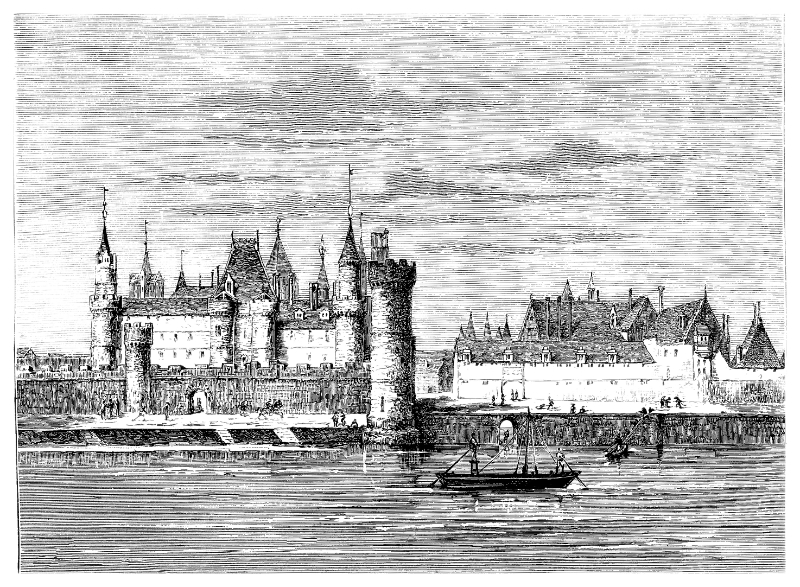
The Royal Residence: Charles V and the Fourteenth Century
The Louvre does not become a royal residence simply because it is convenient.
It becomes one because Charles V needs another place from which to rule.
And that need begins with violence.
1358: a day Charles V could not forget
In 1358, Charles is still only the Dauphin. He is sixteen years old when he witnesses one of the most brutal moments of the Parisian revolt led by Étienne Marcel, the powerful provost of the merchants.[1]
At the Palais de la Cité, men close to Étienne Marcel burst in and kill two of Charles’s advisers in front of him.[1]
The young prince survives. But the lesson is direct.
Power is not abstract. It has rooms. Doors. Corridors. Places where fear attaches itself.
That kind of memory matters. It changes how a ruler looks at a building.
1364: choosing another place to rule
When Charles becomes king in 1364, returning to the Palais de la Cité is no longer a neutral choice.
The place is still central. Still prestigious. Still politically important.
But it is also marked.
Charles V chooses the Louvre instead. Not because it is already the great palace of French monarchy, but because it can become something different.[1][2]
The old fortress offers distance. Security. A new setting.
And under Charles V, the Louvre begins to change.
The castle is renovated. Turrets are added. Gardens are laid out. Windows are opened to bring in more light. The defensive structure starts to take on the qualities of a residence.[1][2]
This is not yet the Renaissance palace. Not yet the museum. But it is already no longer just the fortress of Philippe Auguste.
The library and the first intellectual Louvre
Charles V also gives the Louvre another identity: a place of books, knowledge, and royal culture.
He installs his library there, in the Tour de la Fauconnerie. With nearly a thousand volumes, it becomes one of the most important princely libraries in Europe at the time.[1]
That detail is important.
The Louvre is no longer only a place that protects the king’s body. It also begins to hold the instruments of his authority: books, learning, memory, administration.
The transformation is subtle, but decisive. A fortress becomes a residence. A residence begins to carry culture.
An intimate choice with historic consequences
This is how the Louvre enters more deeply into French royal history.
Not through a grand architectural statement at first. Not through the desire to impress Europe.
Through a more personal decision: a king chooses another place to live and rule, after violence has made the old one impossible to inhabit in the same way.
That is what makes this stage so revealing. The Louvre changes because history changes around it, but also because memory changes the way power uses space.
The Louvre is now a royal residence. But a residence is not yet a palace in the full sense. For that, it will take the sixteenth century, a king fascinated by Italy, and a new idea of what royal architecture should express.
| With Charles V, the Louvre stops being only a defensive structure. It becomes a place where royal life, memory, and knowledge begin to settle. |
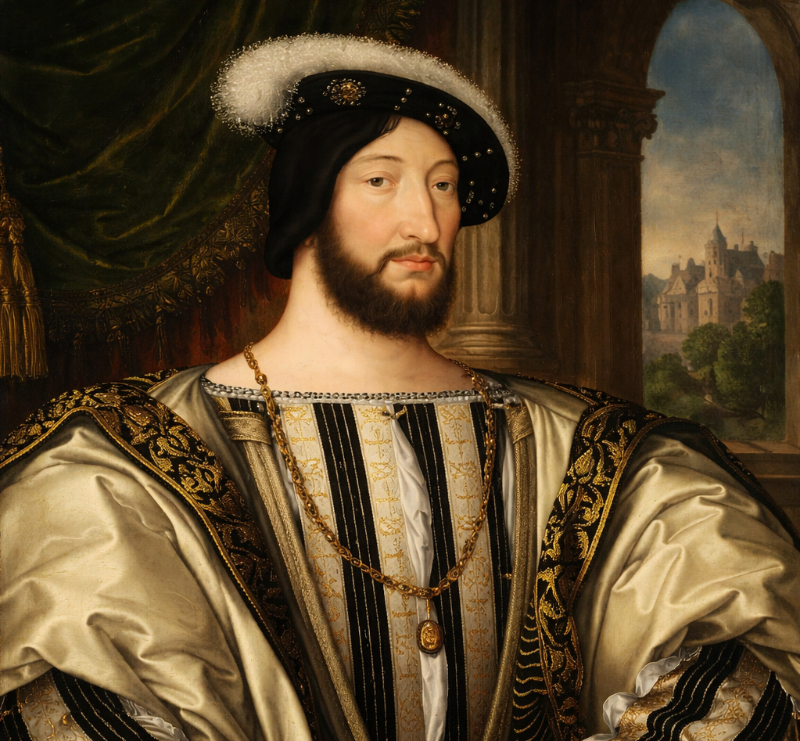
The Palace: François I and the Sixteenth Century
Before François I, the Louvre still carries the image of a medieval fortress. It has changed since the time of Philippe Auguste, but its silhouette remains heavy, defensive, and turned inward.
Then comes 1528.
François I orders the demolition of the great keep. This is not a small adjustment. It is a clear break with the old Louvre. The medieval tower disappears, and with it, part of the fortress logic that had shaped the building for centuries.[1][2]
The Louvre is no longer meant only to protect. It must now represent.
The king wants a modern palace, organised around a courtyard and inspired by the Italian Renaissance. The change is architectural, but also political. The Louvre begins to leave behind the world of the castle and enter the world of royal display.[2]
Pierre Lescot and the French Renaissance
From 1546 onwards, François I entrusts part of the reconstruction to Pierre Lescot. The model comes from Italy, where the king has seen how architecture can express prestige without relying on defensive mass.[1][2]
With Lescot, the Louvre changes language.
The façade becomes lighter, more regular, more refined. With the sculptures of Jean Goujon, stone is no longer only a material of protection. It becomes rhythm, decoration, and political image.[2][3]
This is not yet the Louvre as a museum. But it is already a Louvre that one can recognise.
Henri II continues the project after François I. The south-west wing of the Cour Carrée still preserves this essential moment: the point where the Louvre stops looking back to the fortress and begins to speak the language of the Renaissance palace.[1][3]
Leonardo da Vinci and the Mona Lisa
François I also transforms the Louvre through art.
In 1516, he invites Leonardo da Vinci to France. Leonardo settles at the Château du Clos Lucé, near Amboise, and brings several works with him.[4]
Among them is the Mona Lisa.
At that moment, it is not yet the global icon known today. No crowds. No bulletproof glass. No room built around the pressure of its fame.
It first enters the French royal collections.[4]
That detail matters. Under François I, Italian art becomes part of French royal prestige. The king does not collect only from personal taste. He understands that art can give form to power.[4]
A palace that speaks through art
Under François I, the Louvre changes its way of expressing authority.
Power is no longer shown only through thick walls, towers, and defensive strength. It is shown through façades, sculpture, imported models, artists, and collections.[2][3]
This is the important shift. The Louvre becomes more than a residence. It becomes a place where architecture and art begin to work together as instruments of royal image.
Not yet a museum. Not yet a public space. But already a palace where art plays a central role.
This is why the sixteenth century matters so much in the Louvre’s history. It gives the building a new face, and it gives French monarchy a new way to appear.
But the sixteenth century is not only the century of Renaissance elegance. Behind the new façades, the kingdom is becoming increasingly fragile. Religious tensions are rising, and the Louvre is about to enter a much darker chapter of French history.
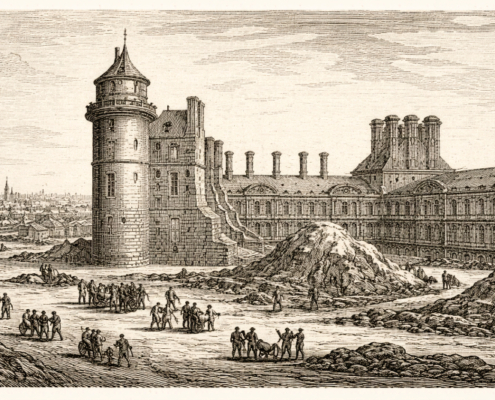
The Fracture and the Grand Design: 1572-1610
At the end of the sixteenth century, the Louvre becomes more than a royal residence.
It becomes a place where the tensions of the kingdom are concentrated, and then, only a few decades later, the starting point of one of the most ambitious architectural projects in its history.[1]
That contrast matters. The same palace is linked to one of the darkest episodes of the Wars of Religion, and then to a project designed to give royal power a new scale in Paris.
24 August 1572: the St Bartholomew’s Day Massacre
In 1572, the Louvre is supposed to be the setting for reconciliation.
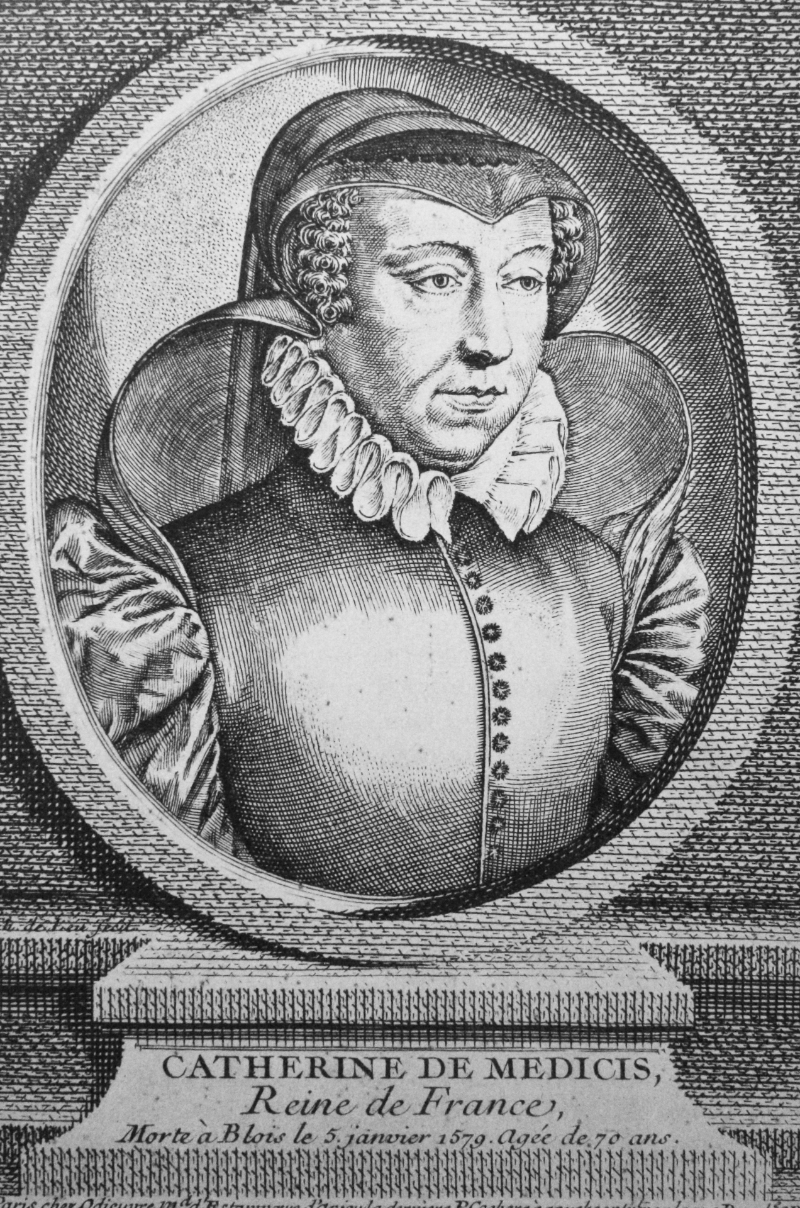
Catherine de’ Medici arranges the marriage of her daughter Marguerite de Valois to Henri de Navarre, one of the leading Protestant princes. The aim is clear: ease the tensions between Catholics and Protestants in a kingdom already deeply divided.[1]
But the balance is too fragile.
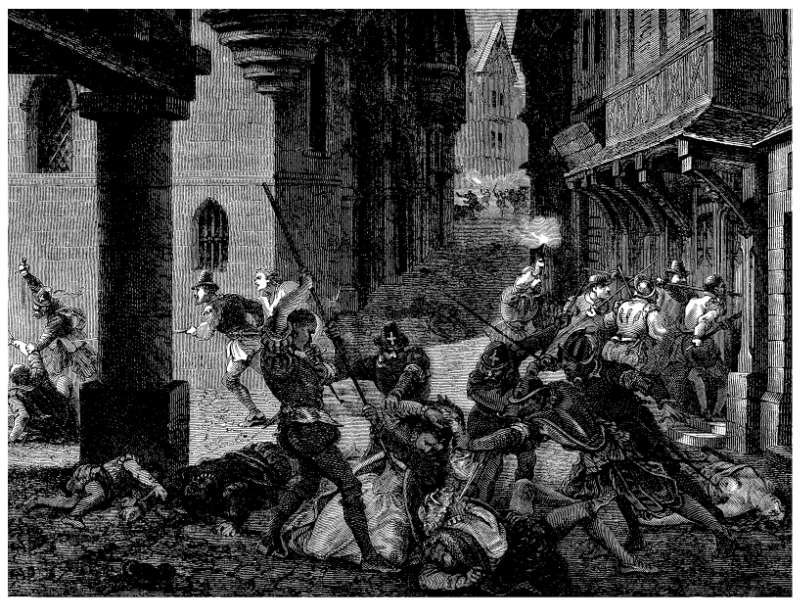
A few days after the wedding, the attempted assassination of Admiral Coligny, one of the main Protestant leaders, turns the situation into a crisis. Charles IX then orders the killing of Protestant leaders gathered in Paris for the occasion.[1]
The violence begins close to the Louvre, then spreads rapidly through the capital. What had been meant as a dynastic compromise becomes the starting point of a massacre.[1]
This is a memory the Louvre also carries.
Not only the Louvre of ceremonies, façades, collections, and royal display. Also the Louvre of crisis, where politics, religion, and monarchy collide violently.
That detail makes the palace harder to simplify. Behind the prestige of the building, there is also this history.
Henri IV and the Grand Design
Henri de Navarre survives this period of violence. He later becomes king as Henri IV, and with him the Louvre changes direction again.[1]
After the Wars of Religion, the question is not only how to rule. It is how to rebuild, stabilise, and make royal authority visible again.
In Paris, Henri IV launches a major architectural project: enlarge the Louvre, complete the Tuileries, and connect the two palaces into a single royal ensemble.[1][2]
This is the Grand Design.
The idea is simple. The ambition is enormous.
The Louvre must no longer stand apart. It has to stretch toward the Tuileries, run along the Seine, and become a continuous presence in the city.[2][3]
Henri IV raises the Petite Galerie, extends the Tuileries toward the Seine with the Pavillon de Flore, and begins the long wing along the river, nearly five hundred metres long, which will become the Grande Galerie.[2][3]
This changes everything.
With the Grande Galerie, the Louvre is no longer only a palace. It becomes an urban project. A line drawn through Paris. A way of making royal power visible at the scale of the city.
Relinking the Louvre and the Tuileries is not just a matter of building more. It gives the monarchy a longer horizon, a clearer axis, and a new architectural language of authority.
A project that survives the king
Henri IV is assassinated in 1610, not far from the Louvre.[1]
But the Grand Design survives him.
That is what makes this period decisive. The king disappears, but the architectural idea remains. For more than two centuries, the history of the Louvre will keep returning to the same ambition: extend, connect, complete, and organise the palace as a vast royal ensemble.[2][3]
The seventeenth century could have become the century of completion. The direction seemed clear.
But history does not always follow the logic of buildings.
Just as the Louvre begins to take on a new monumental scale, royal power starts to look elsewhere.
| The Louvre is no longer only a palace of residence. It becomes a palace of memory, crisis, expansion, and unfinished ambition. |
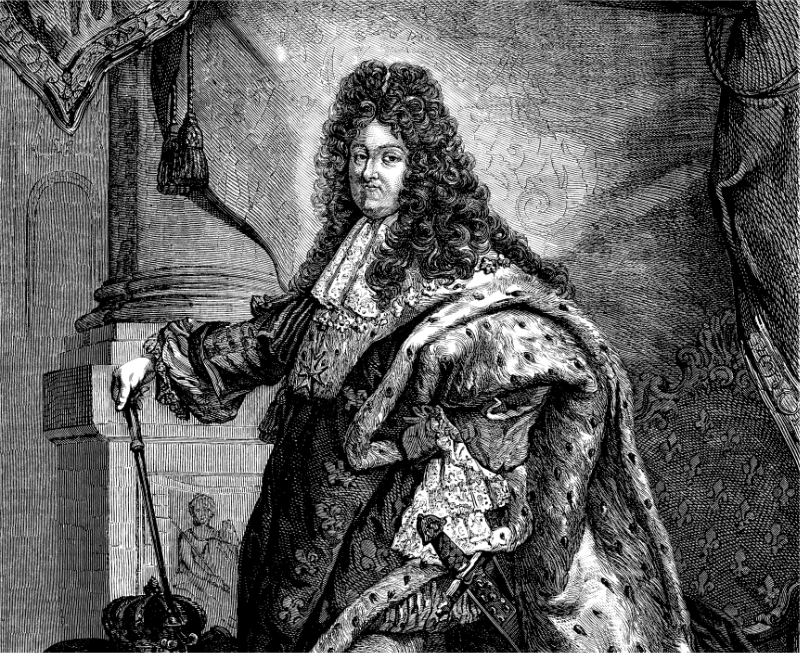
The Unfinished Palace: Louis XIV and the Awakening
Under Louis XIV, the Louvre does not disappear from history.
It changes role.
That is what makes this period so interesting. The king gives the palace some of its most powerful architectural forms, but he also leaves it unfinished. The Louvre loses its position as the main centre of royal life, and yet this loss opens the way to something new.[1][2]
The colonnade and the Galerie d’Apollon
Louis XIV resumes the works with ambition. For Colbert, architecture is not only a matter of building. It is a way to make royal power visible, ordered, and national in scale.[2][3]
After the fire of 1661, the Galerie d’Apollon is redecorated with a clear programme. Apollo, the sun, light, order: the imagery points directly toward Louis XIV and the royal identity he is constructing.[1][3]
The room is not simply decorative. It is political.
At the same time, the eastern façade of the Louvre takes one of its most famous forms. The colonnade, associated with Le Vau, Le Brun, and Claude Perrault, becomes one of the great statements of French classicism.[2][3]
Here, the Louvre speaks a new language: order, symmetry, distance, authority.
It is no longer the fortress. It is no longer only the Renaissance palace. It becomes a monument of royal representation.
1678: the departure that changes everything
But Louis XIV does not make the Louvre the centre of his reign.
Paris feels too close, too dense, too politically charged. Versailles offers something different: space, control, distance, and a setting entirely shaped around the king.
In 1678, the government settles permanently at Versailles. The Louvre is left unfinished.[1][2]
At first, this looks like a failure.
But the effect is more complicated. By losing its central royal function, the Louvre becomes available for other uses. Academies move in. Artists set up studios. The Cour Carrée becomes more active, more mixed, more lived in.[1]
The palace is no longer only a residence of power. It begins to develop an artistic life.
Before the museum, the Salon
This change matters more than it first appears.
In 1699, Louis XIV authorises the Académie royale de peinture et de sculpture to exhibit its artists in the Grande Galerie.[1]
Then, from 1725, the Salon is held in the Salon Carré. Visitors come to the Louvre to see works of art. Not in the modern museum sense yet, but something has clearly shifted.[1][3]
The public begins to enter.
Works are displayed, discussed, judged, admired. The Louvre is still a royal palace, but it is no longer closed in the same way.
This is the important point: the museum does not appear suddenly in 1793 from nowhere. Its habits begin earlier. Its spirit starts forming inside an unfinished palace.
A palace waiting for another role
For centuries, the Louvre had been a place of power. One did not simply walk in. One was invited, admitted, tolerated, or kept outside.
With the academies and the Salons, that logic begins to loosen.
The Louvre remains unfinished as a royal palace. But that unfinished state becomes part of its future. It allows artists, exhibitions, and public looking to take root inside the building.
Louis XIV leaves the Louvre behind for Versailles. Yet, almost in spite of that decision, the palace begins moving toward its next identity.
Not yet a museum.
But already a place where art is beginning to meet the public.
| The Louvre remains unfinished as a palace, but that incompletion helps prepare its future as a museum. |
From Palace to Museum: the Revolution and the Nineteenth Century
The Louvre does not become a museum simply because a decree says so.
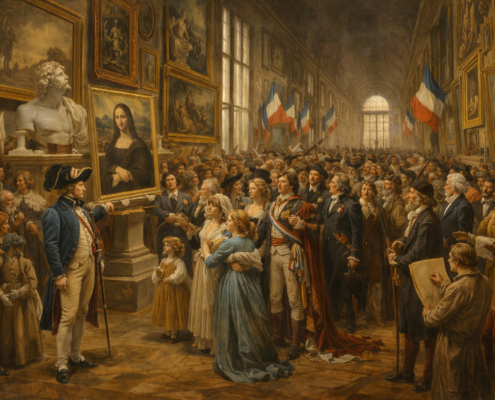
It becomes one because the meaning of art is changing. What had once belonged to kings, courts, and private collections is increasingly being understood as something that should be seen, studied, and shared.
That is why 1793 matters. The Revolution does not invent the museum from nothing. It gives political form to an idea that had been growing throughout the eighteenth century.[1]
10 August 1793: art becomes public heritage
On 10 August 1793, exactly one year after the storming of the Tuileries, the Louvre opens to the public as a museum.[1]
The date is not neutral. A palace once linked to royal power is now presented as a place where the nation can encounter its artistic heritage.
In the Grande Galerie, along the Seine, 537 paintings from the former royal collection are displayed. Entry is free.[1]
This changes the nature of the building.
Ordinary visitors can now walk through rooms that, only a few years earlier, would have been closed to them. The Louvre is still a palace in stone, but its function has shifted. It is no longer only a place that holds power. It is becoming a place that redistributes access to culture.
Napoleon, Denon, and the museum of empire
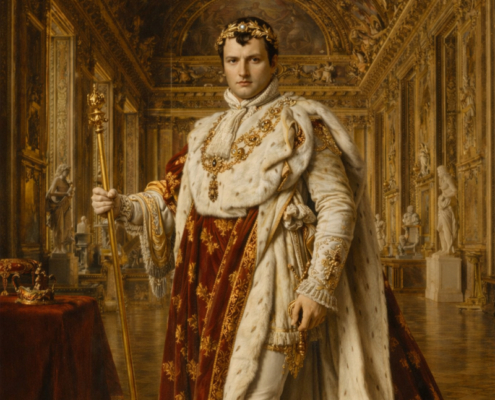
Napoleon pushes this transformation much further.
In 1803, the museum is renamed the Musée Napoléon. Under Dominique Vivant Denon, it receives thousands of works brought back from military campaigns in Italy, Egypt, and across Europe.[1][2]
This is where the story becomes more complicated.
The Louvre is open to the public, but it is also being shaped by conquest. It becomes both a national museum and an imperial instrument. A place of access, but also a place where power gathers the art of others.
After 1815, many seized works are returned. Yet the Louvre has already changed scale. It is no longer only a French museum. It has become a European reference point, admired, contested, and imitated.[1][2]
Venus de Milo, Champollion, Winged Victory
During the nineteenth century, the Louvre also begins to build its own mythology.
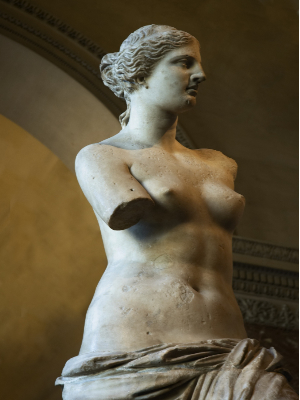
In 1821, the Venus de Milo enters the collection. It quickly becomes one of the museum’s great ancient icons.[1]
In 1826, Champollion becomes curator and helps structure the Louvre’s first Egyptian collection, giving the museum a new historical depth.[1]
In 1883, the Winged Victory of Samothrace is installed at the top of the Daru staircase, where its setting turns sculpture, architecture, and movement into a single experience.[1]
These works do more than enrich the museum. They give it symbols. The Louvre is no longer only expanding its collections. It is creating the images by which it will be remembered.
Napoleon III and the almost final form
Under Napoleon III, the old dream of the Grand Design returns with force.
Between 1854 and 1857, the palace takes on a new scale. The northern Richelieu wing and the southern Denon wing are built, and the Louvre finally approaches the general structure still visible today.[2][3]
The decoration is abundant. The façades are dense with sculpture, ornament, imperial references, and architectural confidence. The Louvre is no longer an unfinished royal dream. It becomes a vast palace-museum, shaped by monarchy, empire, and public culture all at once.
But the completion is not total.
In 1871, during the Paris Commune, the Tuileries Palace is set on fire. Its blackened ruins remain for more than ten years before being demolished.[1][3]
That destruction changes the Louvre’s silhouette permanently. The great royal ensemble loses its western end. What remains is the open space and long perspective that still define the site today.
A museum with a new memory
By the end of the nineteenth century, the Louvre is much closer to the museum we recognise.
It has public collections. It has great icons. It has historical departments. It has a monumental architectural frame.
But it also carries contradictions. Revolutionary access, imperial accumulation, archaeological discovery, architectural ambition, and political destruction all remain part of the same story.
That is what makes this period so important. The Louvre does not simply become a museum. It becomes a museum with a memory.
And that memory will matter even more in the twentieth century, when the Louvre becomes not only a French institution, but a global symbol.
| By the nineteenth century, the Louvre is no longer only a palace transformed into a museum. It is a public institution built from revolution, empire, discovery, and loss. |

The Grand Louvre: Mitterrand’s Pyramid
The Louvre does not become fully modern simply because time passes.
It becomes modern when a decision is made to reorganise it completely.
Before the Grand Louvre project, the museum is already famous. But it is also difficult to read. Too large, too fragmented, and still partly occupied by functions that do not belong to a modern museum.[2]
The pyramid will eventually become the visible symbol of that transformation. But the story begins earlier, with moments that reveal both the Louvre’s fragility and its ability to reinvent itself.
1911: the theft of the Mona Lisa
On 21 August 1911, the news causes a sensation: the Mona Lisa has been stolen.[1]
The painting does not reappear for two years. It is eventually found in the possession of Vincenzo Peruggia, a former Louvre worker who had removed it from the museum and kept it hidden in his apartment.[1]
The most surprising detail is almost practical: it takes more than twenty-four hours for the theft to be officially noticed.
That delay says a lot. The Louvre is already a great museum, but not yet a fully modern institution in terms of security, circulation, and control.
The theft exposes a weakness. But it also changes the painting’s destiny. The Mona Lisa was famous before 1911. After the theft, it becomes a global mystery, a newspaper event, and eventually the most recognisable painting in the world.
This is one of the strange lessons of the Louvre: reputation is not built only by display. Sometimes, absence creates the myth.
1939: saving the works before the war
On the eve of the Second World War, the Louvre faces another kind of danger.
This time, the threat is not theft. It is destruction.
Jacques Jaujard organises the evacuation of thousands of works in only a few days. Convoys leave Paris for Chambord, then for other châteaux across France.[1]
When the German army arrives, the galleries are almost empty.
That image matters: the Louvre surviving not by showing its treasures, but by making them disappear.
The museum is protected through anticipation, method, and discipline. Its survival depends not only on walls, but on decisions made before the crisis becomes visible.
This episode gives the Louvre another dimension. It is not only a place of masterpieces. It is an institution responsible for protecting memory.
1981: refounding, not simply renovating
By the early 1980s, the Louvre is world famous, but it still does not function as a complete museum.
The Richelieu wing is still occupied by the Ministry of Finance. Visitors arrive through a palace that impresses them, but also disorients them. The building is magnificent, yet its organisation is not clear enough for the scale of the public it now receives.[2][3]
This is where François Mitterrand’s decision changes everything.
The Ministry of Finance is transferred to Bercy, and the whole palace can finally be returned to the museum.[2]
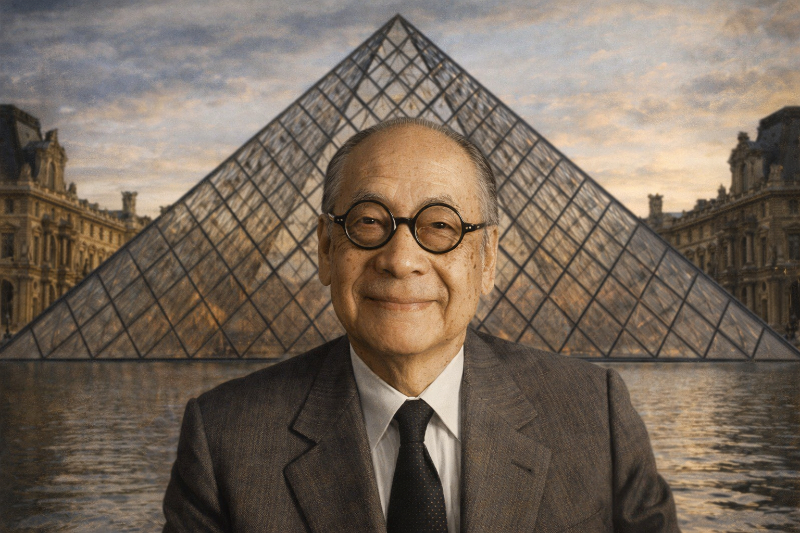
Mitterrand then gives I. M. Pei a clear but difficult mission: create a new entrance and reorganise the visitor’s arrival.
Pei’s answer is simple in principle and bold in appearance: a glass pyramid at the centre of the Cour Napoléon, opening onto an underground hall from which the three wings can be reached: Richelieu, Sully, and Denon.[3]
That is the real point.
The pyramid is not only an object in the courtyard. It is the visible sign of a deeper reorganisation. It gives the museum a centre.
This is not renovation at the margins. It is a refounding.
Rediscovering the past before building the future
Before the main works begin, archaeologists uncover the remains of the medieval keep and parts of Charles V’s city wall.[1][2]
That detail is important.
The future of the Louvre first requires a return to its buried past.
The modern entrance does not erase the old palace. It is built above layers of history that the project helps make visible again.
This is why the Grand Louvre is more subtle than the debate around the pyramid sometimes suggests. It does not simply add modern architecture to an old site. It reorganises the museum while reconnecting it to its origins.
1989: the shock, then the obvious
When the pyramid is inaugurated in 1989, it divides opinion sharply.[3]
For some, it is too modern. Too foreign to the palace around it. Too abrupt in the middle of a royal courtyard.
The criticism is fierce. But that reaction also proves the strength of the intervention. A project that truly changes a place rarely leaves people indifferent.
With time, what once seemed shocking becomes almost self-evident.
The pyramid gives the Louvre what it had long lacked: a single, legible, human-scaled point of entry for a museum of immense size.[3]
It does not compete with the palace by imitating it. It gives the palace a threshold.
1993: the Richelieu wing opens
On 18 November 1993, the Richelieu wing opens to the public, exactly two centuries after the museum’s first opening in 1793.[2]
The symbolism is clear. The Louvre finally recovers a major part of the palace and becomes a more complete museum.
This is not simply a question of additional rooms. It is a question of coherence.
After the Grand Louvre, the building can be understood differently. The museum is no longer scattered through a palace. It is organised through one.
A change of era
The Grand Louvre is therefore not only the story of a pyramid.
It is the story of a museum learning how to inhabit the whole scale of its palace.
Before Pei, the Louvre was still, in some ways, a palace containing a museum.
After the Grand Louvre, it becomes a museum that fully inhabits a palace.
Open to the world. Organised for the public. Still marked by its past, but finally able to function at the scale of its own fame.
| The pyramid does not make the Louvre modern by erasing its history. It makes it modern by giving all that history a clear point of entry. |
Author’s note: This text was written with the intention of sharing and transmitting knowledge, not as an academic work. Its author is not a historian. Some details or interpretations may not reflect current historiographical consensus. For a rigorous approach, please refer to the sources listed at the end of this document
[1] Geneviève Bresc-Bautier, Histoire du Louvre, Paris, Musée du Louvre Éditions / Fayard, 2016.
[2] Jean-Marie Pérouse de Montclos, Le Grand Louvre, Paris, Éditions du Moniteur, 1989.
[3] Andrew Ayers, The Architecture of Paris: An Architectural Guide, Stuttgart, Edition Axel Menges, 2004.
[4] Germain Bazin, Le Louvre, Paris, 1988.
[5] Vincent Delieuvin, La Joconde, Paris, Musée du Louvre Éditions, 2019.
[6] I. M. Pei, Louvre Pyramid, New York, The Monacelli Press, 2000.
OUR BEST TOURS