
Tipping in Paris: What You Really Need to Know
Table Etiquette in Parisian Restaurants
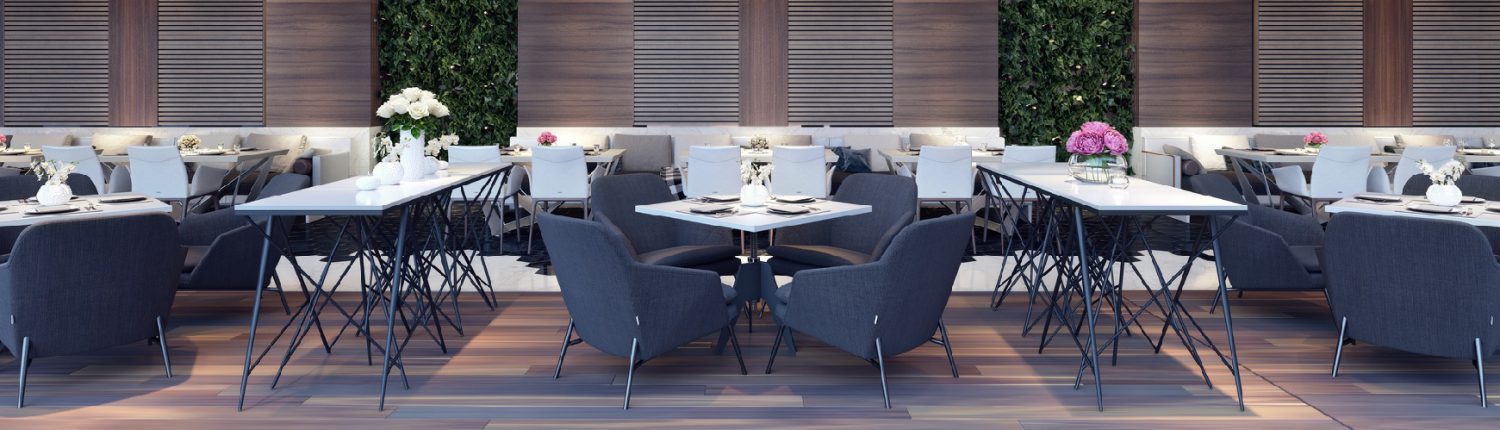
At the table
- Wait to be seated: in many restaurants, a waiter will show you to your table. Don’t seat yourself unless it’s a casual café.
- Hands on the table: keep your hands visible, resting lightly on the table (not in your lap). This is part of French dining etiquette.
- Bread: place it directly on the table or on a small side plate, not on your main plate. Tear it with your hands, never cut it with a knife.
- Pace: meals are meant to be enjoyed slowly. Don’t rush – in Paris, lunch or dinner is a social moment.
Ordering & Service
- Water: if you ask for water, specify “une carafe d’eau” (tap water), otherwise you’ll likely receive bottled water.
- Wine: it’s common to share a bottle rather than order by the glass, especially at dinner.
- Menu changes: Parisians rarely ask to customize dishes , it’s better to choose something as it is on the menu.
During the meal
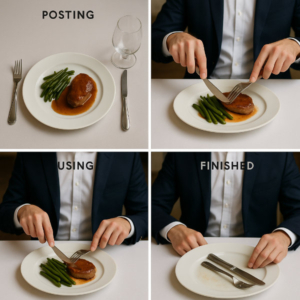
- Utensils: keep your fork in the left hand and knife in the right. Do not switch hands after cutting.
- Salad: fold the leaves with your fork instead of cutting them with a knife (a French quirk!).
- Cheese: served before dessert, not after coffee.
The bill & tipping
- The bill is not brought automatically: ask politely “L’addition, s’il vous plaît”.
- Tipping: service is already included in the price. Leaving a small extra (5–10% or rounding up) is optional but appreciated for excellent service.
What not to do
- Don’t call the waiter by shouting or snapping fingers – eye contact or a small hand gesture is enough.
- Don’t complain about slow service – in France, meals are designed to last. If you’re in a hurry, mention it when ordering.
- Don’t ask for a doggy bag in traditional restaurants (though it’s slowly becoming more accepted).
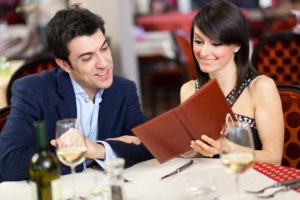
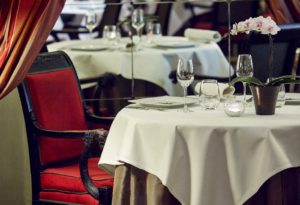
In upscale Parisian restaurants, table manners are refined but not complicated once you know the basics.
General rules
- Start from the outside: if there are several forks and knives, use the ones farthest from your plate for the first course, and work your way inward with each new dish.
- Fork in the left hand, knife in the right: this is the European style, and it is preferred in France. Do not switch hands after cutting.
- Cut only one bite at a time: avoid cutting all your meat or food at once.
Position of cutlery
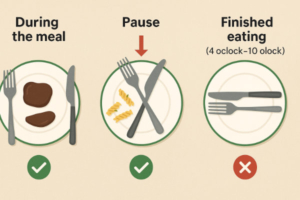
- During the meal: rest your knife and fork on the edge of the plate, not on the tablecloth.
- Taking a pause: place your knife and fork in an inverted V (tips apart) on the plate. This shows the waiter you are not finished.
- Finished eating: place knife and fork parallel on the plate, handles at 4 o’clock, tips pointing to 10 o’clock. This discreetly signals the waiter you are done.
Other tips
- Soup: spoon away from yourself, quietly, without slurping.
- Bread: tear small pieces with your hand, don’t bite directly into the slice.
- Cheese: cut a small wedge from the whole piece, never scoop from the center.
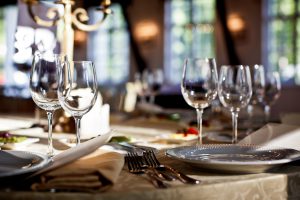
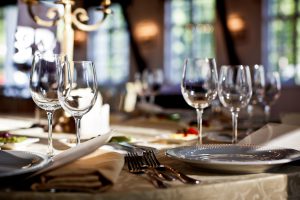
In fine dining, glasses are placed in order of use and size. Knowing which one to take avoids confusion.
Placement on the table
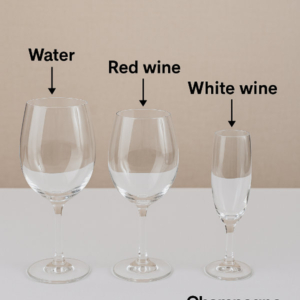
- Glasses are usually arranged from right to left, in a diagonal line above your plate.
- The largest glass (for water) is placed closest to the right, above the knife.
- Next comes the red wine glass (slightly larger).
- Then the white wine glass (smaller and slimmer).
- If champagne is served, a flute is often placed behind or slightly to the left.
How to use them
- Always start with the glass closest to the plate (water).
- Use the wine glasses according to the wine served with the dish:
- Red wine → larger glass, rounder shape.
- White wine → smaller glass, narrower opening.
- Champagne → flute.
- Hold the glass by the stem, never by the bowl (to avoid warming the wine and leaving fingerprints).
Extra etiquette
- Don’t clink glasses loudly when toasting a gentle raise of the glass and eye contact is enough.
- Don’t overfill: wine glasses are usually served to one-third or half full.
- If you don’t want more wine, leave your glass slightly full an empty glass invites a refill.
Dressing for a Chic Restaurant in Paris
Parisian fine dining is not only about the food it is also about elegance. While there is no need to overdress, style and refinement are expected.
For Women
- Dress: a classic black dress or a simple, well-tailored outfit (skirt with blouse, or elegant trousers).
- Shoes: closed-toe heels or chic flats. Avoid sneakers or sandals.
- Accessories: a discreet handbag, simple jewelry, and a scarf if you like less is more.
- Makeup: keep it natural with a touch of lipstick for the evening.
For Men
- Suit or blazer: a dark blazer with a shirt and trousers is perfect. A tie is optional but appreciated in very formal restaurants.
- Shoes: polished leather shoes no sneakers or sports shoes.
- Details: a good watch or belt adds elegance without being flashy.
What to Avoid
- Sportswear (jogging pants, hoodies, sneakers).
- Shorts, flip-flops, or beachwear.
- Clothes with large logos or neon colors.
- Overly extravagant outfits Parisians prefer discreet chic.
The Rule of Thumb
It’s better to be slightly overdressed than underdressed. In Paris, dressing well is a sign of respect for the place and the people.
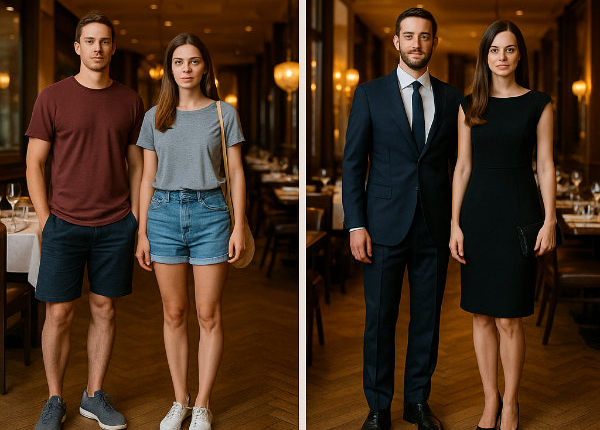
Incorrect Correct
In the end, understanding restaurant etiquette in Paris is more than a set of rules it’s the key to enjoying a truly authentic dining experience. By taking the time to reserve, greeting the staff politely, embracing the unhurried rhythm of French meals, and leaving a small tip as a gesture of appreciation, visitors can savor not only the food but also the Parisian art of living.
Whether you’re dining in a classic brasserie, a neighborhood bistro, or a Michelin-starred restaurant, following these French dining customs transforms every meal into a memorable and genuinely Parisian moment. With these simple tips on restaurant etiquette in Paris, your culinary experience becomes smoother, richer, and far more enjoyable.
RECOMMENDED BY