
Please note that all tips, observations, and cultural insights shared here reflect personal experience and general guidance. They do not represent every Parisian or every situation. These suggestions are meant to help travelers, not to generalize or speak on behalf of the entire population.
VAT Refund Paris – Tax Free Guide, Tips & CDG Airport Process for Tourists

The VAT refund system in France allows travellers who reside outside the European Union to recover part of the tax included in the price of goods purchased in France. The principle is straightforward: goods exported outside the European Union are not intended to be taxed as domestic consumption.
This refund is not a commercial discount, but the removal of a tax that no longer applies once the product leaves the EU customs territory.
To be eligible, the traveller must reside outside the EU, spend at least €100 in the same store on the same day, and export the goods outside the European Union within three months of purchase.
Services are never eligible for VAT refunds, as a service cannot be exported.
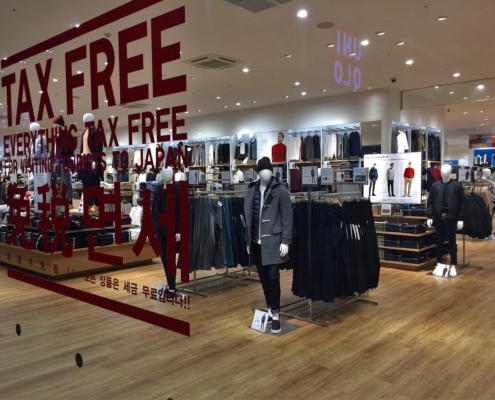
VAT refunds in France apply only to physical goods purchased at retail and intended to be exported outside the European Union by the traveller in their personal luggage.
Eligible items include, in particular:
- Clothing and fashion items
- Cosmetics and beauty products
- Perfumes and fragrances
- Watches and jewellery
- Bags, accessories, and leather goods
- Electronic devices
- Alcohol bottles (subject to transport and import regulations)
- Art objects, stationery, souvenirs, and artisanal products
These goods must be purchased for personal or family use. Purchases made in commercial quantities or intended for resale are not eligible.
VAT refunds never apply to services, including hotels, restaurants, transportation, guided tours, shows, or beauty treatments, as these services are consumed in France and cannot be exported.
To qualify for a VAT refund, the goods must be exported within the required timeframe and the VAT refund form must be validated through the PABLO system before departure.
Although the standard VAT rate in France is 20%, the amount actually refunded to the traveller is generally lower, typically ranging between 10% and 13% of the total purchase price.
This difference is due to the service fees charged by authorised VAT refund operators, such as Global Blue or Planet, which act as intermediaries between the traveller, the retailer, and the tax authorities. These operators manage the entire refund process, including the issuance of VAT refund forms, electronic transmission of data, verification of customs validation, and the execution of international payments.
Their fees also cover administrative costs, currency exchange services, banking charges, and the financial and operational risks associated with cross-border transactions, refunds in multiple currencies, and potential non-validation of VAT refund forms.
As a result, while VAT represents 20% of the retail price, the effective refund received by the traveller is lower, reflecting the costs of providing a secure, efficient, and internationally compliant refund system.

When several purchases are made in the same store on the same day, the retailer may group them into a single VAT refund form, provided that the total purchase amount exceeds €100 including VAT. This allows travellers to simplify the refund process by reducing the number of forms to be validated.
However, it is important to note that purchases made in different stores can never be combined, even if the stores belong to the same brand or shopping area. Each retailer operates under a separate fiscal registration, and VAT refund forms must be issued store by store.
Large department stores, such as Galeries Lafayette or Printemps, are an exception to this rule. Although purchases may be made at different counters, brands, or departments within the store, they may issue a single VAT refund form, as the entire department store functions as one single fiscal entity.
Despite this grouping possibility, each VAT refund form must still be validated individually at the airport or train station through the PABLO system before departure. Validation confirms the export of the goods and is a mandatory step to trigger the refund.
Travellers are therefore advised to keep track of all VAT refund forms, verify that the required minimum purchase amount has been met, and ensure that every form is validated to avoid any loss of refund.
Shopping in the city is generally more advantageous for fashion, luxury goods, watches, niche fragrances, pharmacy cosmetics, and artisanal products.
Small independent boutiques often offer a better refund, as their management fees are lower and VAT refund commissions are reduced.
Department stores (such as Galeries Lafayette, Printemps, or BHV) offer many advantages: they bring together a wide range of brands in one location, provide a centralised VAT refund service, offer multilingual assistance, tourist-dedicated areas, and structured support (sales advisors, simplified VAT refund procedures, and sometimes immediate refunds). They also provide a high level of purchase security and a wide availability of sizes and models.
Important : Mandatory PABLO Validation for All VAT Refund Purchases
All VAT refund purchases, whether made in a small boutique, a department store, or any other retail outlet, must be declared and validated via the electronic PABLO system at the time of departure from France.
In the case of department stores, the procedure is fully digital, and PABLO validation is mandatory, even when an immediate or advance refund is offered in-store.
Without PABLO validation, the refund may be refused, or any amount already advanced may be charged back at a later stage.
Duty Free shops located at the airport sell goods tax-free. They are particularly advantageous for alcohol and tobacco, and sometimes for classic perfumes.
However, Duty Free is rarely advantageous for fashion, luxury goods, watches, niche fragrances, or artisanal products, as prices are often similar to or higher than those found in the city after VAT refund.

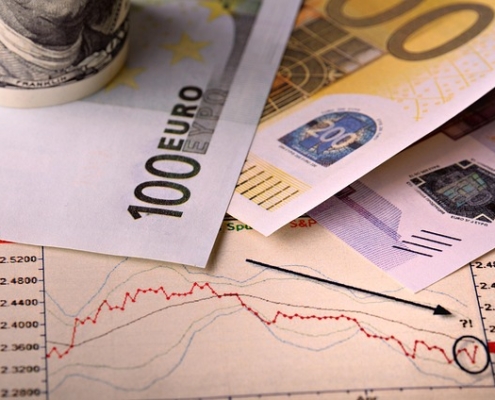
To better understand how VAT refunds affect the final price of purchases, the following examples illustrate the difference between shopping in the city and purchasing at Duty Free, depending on the type of product.
A perfume priced at €150 when purchased in the city costs approximately €132 after the VAT refund. The same perfume purchased at Duty Free generally costs between €125 and €140, depending on the airport, brand, and retailer. In this case, the price difference is relatively small, and either option may be equally attractive.
A bottle of champagne priced at €55 in the city comes down to approximately €48 after the VAT refund. At Duty Free, the same bottle is typically offered for around €42 to €45, making Duty Free more advantageous for alcoholic beverages.
A fashion jacket purchased for €350 in the city costs approximately €310 after the VAT refund. In contrast, the price at Duty Free usually remains unchanged, as fashion items and luxury apparel rarely benefit from lower pricing at airport shops.
These examples highlight the importance of choosing the right place to shop depending on the product category. While Duty Free can offer savings on alcohol and certain standard perfumes, shopping in the city is generally more advantageous for fashion, luxury items, and niche products, especially when combined with VAT refunds.
1. Is There a Maximum Limit in France?
No. There is no official maximum limit in France on the value of purchases eligible for a VAT refund.
A traveller may therefore make high-value purchases (such as luxury items), provided that all legal VAT refund conditions are met.
2. High-Value Purchases and Customs Controls
Even though no maximum limit exists, high-value purchases may be subject to increased customs controls.
In the event of a customs inspection (electronic or manual validation):
- physical presentation of the goods is mandatory,
- failure to present the goods results in cancellation of the VAT refund form,
- a fine may be imposed.
Practical advice: keep VAT-refund purchases together in one easily accessible piece of luggage, and keep invoices and VAT refund forms readily available.
3. Pay Attention to the Rules of the Destination Country
Although France does not impose a maximum limit, each destination country applies its own import allowances.
A French VAT refund never exempts travellers from local customs regulations.
Examples of common allowances:
- United States: USD 800
- Canada: up to CAD 800 (depending on length of stay abroad)
- United Kingdom: GBP 390
- Australia: AUD 900
- Singapore: SGD 500 (under certain conditions)
- South Korea: USD 800
- Japan: specific thresholds depending on the type of product
- China: variable thresholds, with frequent controls on luxury goods
- Hong Kong: generally no tax on luxury goods for personal use
Beyond these allowances, you will be required to:
- declare your purchases upon arrival,
- pay any applicable customs duties and local taxes,
- present invoices and supporting documents.
4. Practical Example: Purchasing a €4,000 Luxury Bag
A luxury bag purchased in Paris for €4,000 (VAT included) is fully eligible for a VAT refund, with no maximum purchase limit.
- Estimated VAT refund in France: approximately €400 to €520
- Mandatory PABLO validation before departure
- Declaration likely required upon arrival in most countries
The fact that VAT has been refunded in France does not prevent the application of import taxes in the destination country.



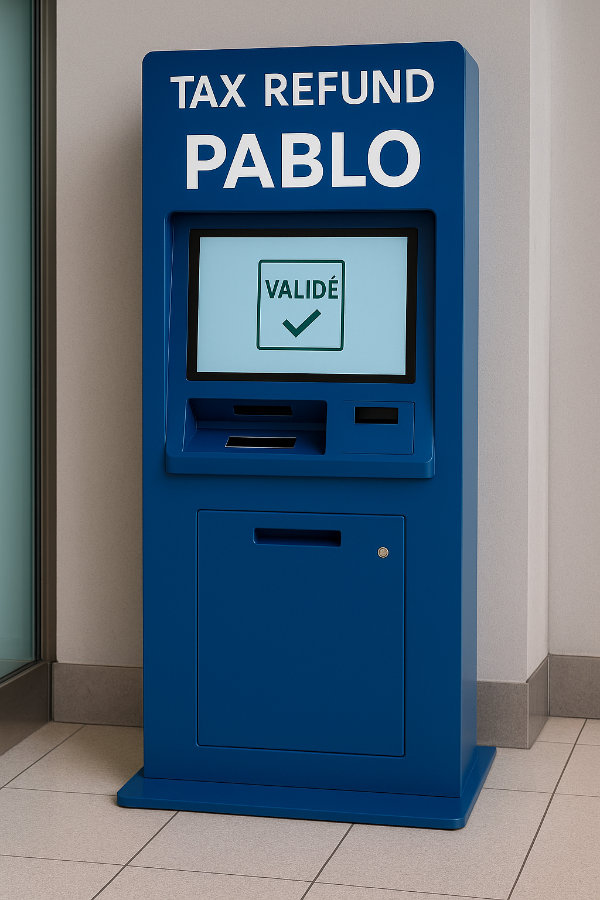
As part of the electronic PABLO validation system, the VAT refund procedure is fully computerised.
Validation must be completed at the time you leave France, whether you are departing by air or by international train.
- If you leave France by air, validation must be completed at the departure airport.
- If you leave France by international train (for example Eurostar or other international rail services), validation must be completed at the departure station, at the designated facilities.
Important advice
It is strongly recommended to arrive early at the airport or train station in order to locate the PABLO terminalsand validate your VAT refund forms without rushing. PABLO terminals are generally located near customs counters, but their exact location may vary depending on the terminal or station.
In case of heavy traffic, a customs inspection, or technical issues, additional time may be required.
PABLO validation must always be completed before baggage check-in and before security screening, in order to allow for the possible presentation of goods.
We therefore recommend that you:
- allow extra time before departure,
- locate the PABLO terminals as soon as you arrive,
- keep your goods, VAT refund forms, and invoices easily accessible.
This organisation will help you avoid last-minute stress and ensure the proper validation of your forms, which is essential for obtaining your VAT refund.
How to validate your VAT refund form
Before departure, you must present the barcode shown on your VAT export form to a PABLO terminal equipped with an optical scanner, located near customs counters in the relevant airports or train stations.
The scanner allows, in the language of your choice via the touchscreen, verification of the information contained in the barcode as issued by the VAT refund operator at the time of purchase.
The message displayed on the screen serves as official customs validation:
- the message “OK – Form validated” confirms the export of the goods, equivalent to a customs stamp.
Once validation is completed, confirmation is transmitted daily by electronic means to the relevant VAT refund operator.
You no longer need to send a paper copy of the form to the retailer, as the electronic validation is transmitted directly.
If you leave France by another means of transport, we recommend consulting the official French government website, where you will find up-to-date information and procedures specific to your situation.
Please refer to the official link for further information :
https://www.douane.gouv.fr/fiche/eligibility-vat-refunds-pablo
Important reminder and customs controls
The French Customs and Excise Administration is responsible for ensuring compliance with the VAT refund procedure.
It verifies the actual export of goods purchased under the VAT refund scheme, but does not process VAT refunds, which are handled exclusively by the retailer and the VAT refund operator.
Attention: in the event of a customs inspection during form validation (manual or electronic), physical presentation of the goods is mandatory.
Failure to present the goods may result in cancellation of the VAT refund form and, in some cases, the payment of a fine.
Practical advice: we recommend keeping all VAT-refund purchases together in a single suitcase or bag, to avoid having to open and search through multiple pieces of luggage in the event of an inspection.
The VAT refund is never issued by the French Customs authorities.
It is processed by the retailer or by an authorised VAT refund operator (such as Global Blue, Planet, etc.), only after mandatory validation of the refund form through the PABLO system.
1. Available Refund Methods
a) Refund to a Bank Card (most common)
- The VAT refund amount is credited to the bank card indicated at the time of purchase.
- The processing time is generally 3 to 15 business days, depending on the operator and the bank.
- This is the simplest and most secure refund method and is recommended for all purchase amounts.
b) Cash Refund
- Offered only by certain operators.
- May be paid in-store or at dedicated counters at the airport.
- Higher service fees often apply.
- Cash refunds are usually capped.
- PABLO validation remains mandatory.
In the case of an advance cash refund, failure to validate the form via PABLO will result in cancellation of the refund or a chargeback of the amount paid.
c) Immediate Refund (Advance in Store)
- Common in department stores and some luxury boutiques.
- The retailer advances the estimated VAT refund amount at the time of purchase.
- This refund is conditional and becomes final only after PABLO validation.
- If validation is not completed, the amount is automatically charged back.
2. How to Proceed Depending on the Type of Store
Case 1: Purchase from a Small Retailer (Independent Boutique)
At the time of purchase
- Request the VAT refund before paying.
- Present your passport.
- The retailer issues a VAT refund form (paper or electronic).
- You choose the refund method (most commonly a bank card).
Before leaving France
- Keep your goods, invoices, and refund forms accessible.
- Validate each refund form at a PABLO terminal at the airport or train station.
- In the event of a control, you must physically present the goods.
After validation
- The refund is processed by the VAT refund operator.
- The amount is automatically credited according to the chosen method.
Case 2: Purchase from a Department Store (Galeries Lafayette, Printemps, BHV…)
At the time of purchase
- Make your purchases at the various counters within the department store.
- Go to the central VAT refund counter with:
- your purchased items,
- your receipts,
- your passport.
- The department store issues a single, fully digital VAT refund form.
- An advance refund may be offered.
Before leaving France (mandatory)
- You must imperatively validate the form at a PABLO terminal.
- This validation is required for all purchases, even when an immediate refund has been provided.
After validation
- If PABLO validation is completed, the refund is confirmed.
- If validation is not completed, the advanced amount is automatically charged back.
Practical advice
- All VAT refund purchases must be validated through PABLO, without exception
- Customs never issue VAT refunds
- The refund is processed by the retailer or the VAT refund operator
Practical tip: we strongly recommend choosing a bank card refund, which is simpler, more reliable, and particularly suitable for high-value purchases.
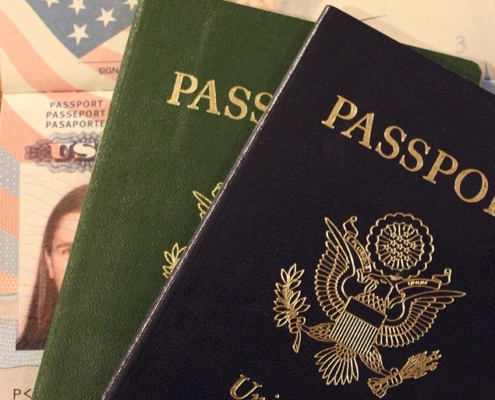
Although PABLO validation completes the customs procedure in France, travellers may still be required to declare their purchases upon arrival in their country of residence.
In the United States, the customs allowance is set at USD 800.
In Canada, the allowance is USD 750.
Each country applies its own customs regulations, which may apply even when VAT has already been refunded in France.
For practical, numerical examples, particularly by major destination countries, please refer to CHAPTER 7.
It is strongly recommended to check the declaration requirements and allowances applicable in your destination country before departure, in order to avoid any inconvenience upon arrival.
Understanding how the VAT refund system works in France allows travellers to plan their purchases more effectivelyand avoid common mistakes.
Paris is an ideal destination for shopping, particularly for fashion, luxury goods, niche fragrances, cosmetics, and artisanal products, while Duty Free shopping is mainly advantageous for alcohol and tobacco.
It is important to remember that services are never eligible for VAT refunds, that all VAT refund purchases must be validated through the PABLO system, and that the actual refund usually represents around 10% to 13% of the total purchase price.
Finally, a VAT refund obtained in France does not exempt travellers from the customs regulations of their destination country. Purchases may still need to be declared upon arrival, and local taxes or duties may apply.
By following these guidelines and anticipating the required procedures, travellers can fully enjoy their stay in Paris, make informed purchasing decisions, and take advantage of the unique shopping opportunities the city has to offer.

Texte : GV Paris Webservices – Photos : Adobe stock / PIxabay
RECOMMENDED BY