THE SECOND FLOOR & LE JULES VERNE GUIDE
Where the Best City Views Meet One of Paris’s Great Dining Rooms

Where the Best City Views Meet One of Paris’s Great Dining Rooms
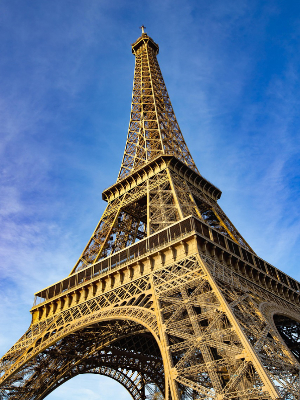
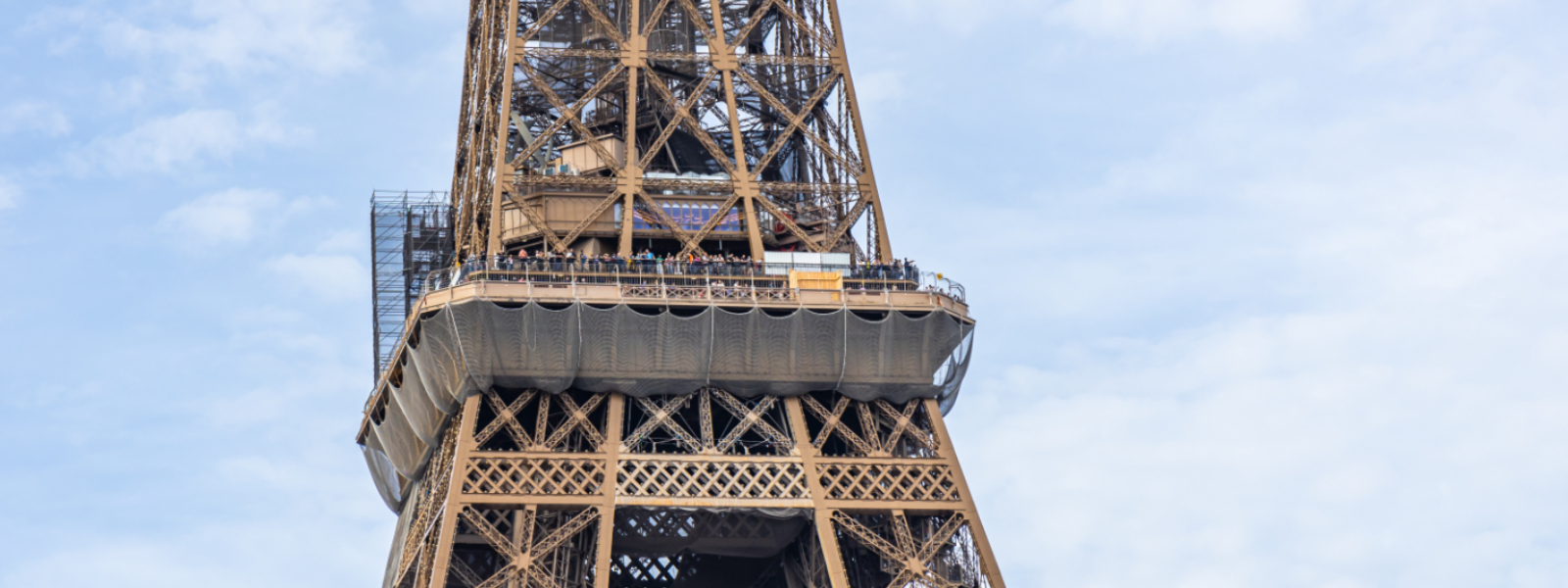
The second floor of the Eiffel Tower, at 125 metres, is often the level that regular guides recommend most confidently. The summit may carry the prestige, and the first floor may hold the densest interpretive material. Yet the second floor is where the structure and the city come into balance. It is high enough to deliver scale, but still low enough to keep Paris fully legible.
That is what makes this level so useful. Here, the city no longer feels immediate in the way it does on the first floor, yet it has not dissolved into atmosphere as it often does at the summit. The result is a viewpoint that teaches orientation. It helps visitors understand how Paris is laid out before they rise higher. It also happens to contain one of the most sought-after restaurant experiences in France
Before the summit turns Paris into panorama, the second floor teaches you how the city is put together.
A height that keeps the city legible
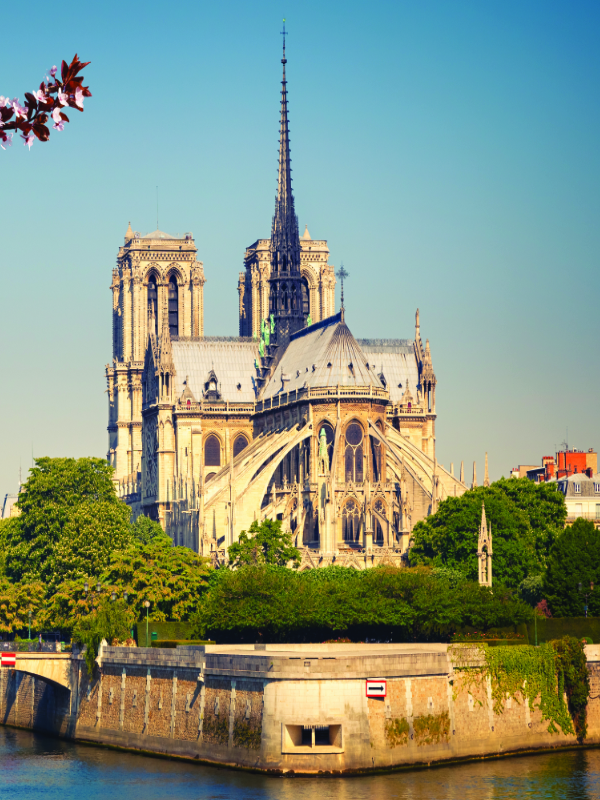
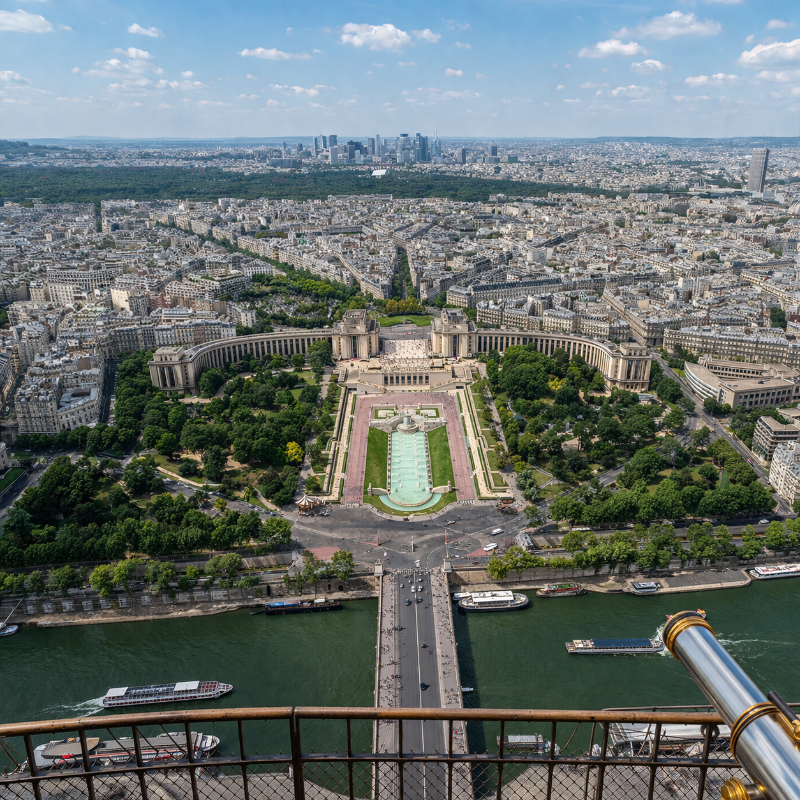
At 125 metres, the second floor occupies a precise middle position between the rooftop intimacy of the first floor and the atmospheric panorama of the summit. That middle position matters. At this height, individual monuments remain easy to identify, the Haussmann boulevards can still be followed with the eye, and the Seine reads clearly as a structuring line rather than a distant ribbon. Notre-Dame, the Arc de Triomphe, Sacré-Cœur, the Panthéon, Les Invalides, and the Montparnasse Tower can all be located without difficulty on any reasonably clear day.
Why experienced visitors often prefer it
The second floor tends to reward visitors who want to understand Paris rather than simply admire it. From here, the city reads analytically. You can trace how the arrondissements connect, see how the nineteenth-century boulevard system cuts across older neighbourhoods, and understand the relationship between the great east-west and north-south axes of the capital. Many visitors report that the summit becomes more meaningful after time spent here, because they arrive above with a mental map already in place.
A quieter way of looking
This level also benefits from a different rhythm. Although it is busy, it is often easier to stop and look here than at the summit. The terraces are broad, the viewing conditions are more stable, and the crowd pressure is usually lower. As a result, the second floor often gives the most satisfying overall reading of Paris, especially for first-time visitors who want the city to make visual sense.
| Before the summit widens the horizon, the second floor teaches you how Paris fits together. |
At this level, the Eiffel Tower stops being only a monument and becomes, briefly, an address.
A restaurant with its own way in
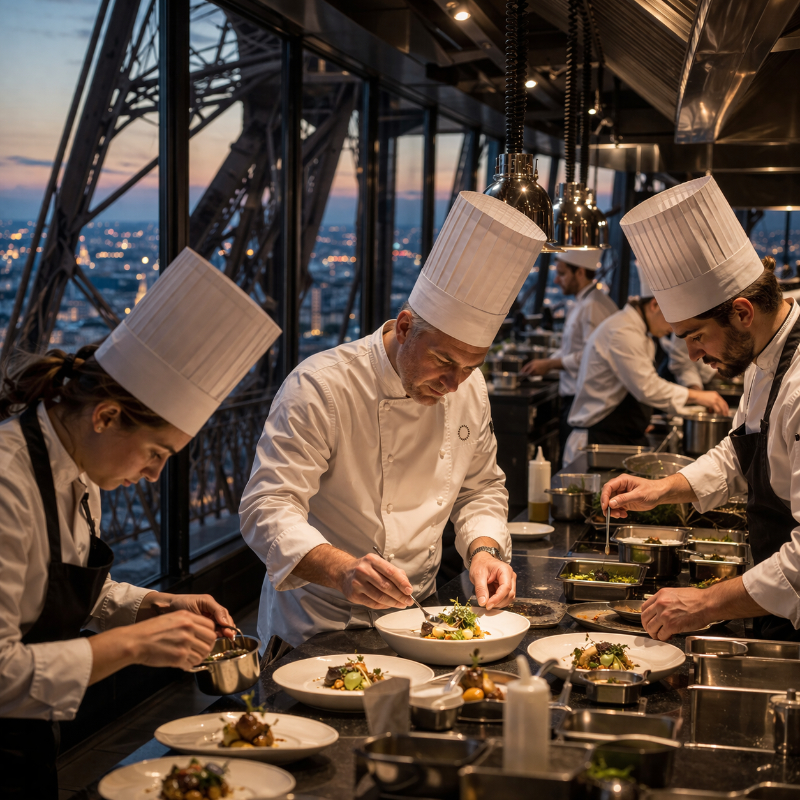
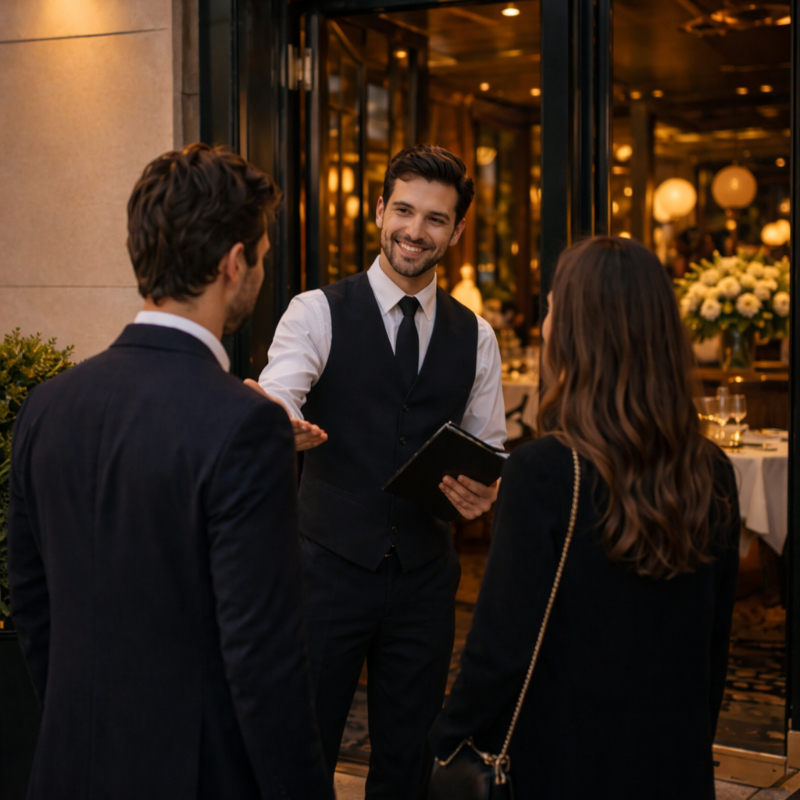
Le Jules Verne occupies the south pier of the second floor and has been part of the Tower’s identity since 1983. One of the details that immediately sets it apart is access. Guests arrive through a dedicated private lift entered at ground level on the south side of the structure. This bypasses the ordinary visitor flow entirely and creates a different experience from the beginning: a direct ascent to the restaurant without the usual queues, checks, and circulation patterns associated with a standard Tower visit.
Frédéric Anton and the rise to two stars
Since 2019, the kitchen has been directed by Frédéric Anton, one of the most decorated chefs in contemporary French gastronomy. Anton already held three Michelin stars at Le Pré Catelan, his restaurant in the Bois de Boulogne, before taking over Le Jules Verne. Under his direction, the restaurant gained its first Michelin star in 2020 and a second in March 2024. That second star marked the first time in the restaurant’s history that it reached this level of recognition.
What the dining experience feels like
The cuisine at Le Jules Verne is exacting, classical, and highly controlled. It is rooted in French technique and built around seasonal produce from named suppliers. The result is not experimental for the sake of effect, nor nostalgic for the sake of comfort. Instead, it is a polished version of contemporary French haute cuisine, served in a setting where the view, the approach, and the service all reinforce the sense of occasion. Lunch is generally the more accessible reservation, while dinner remains one of the most competitive bookings in Paris.
Dress code and practical expectations
A dress code applies, and it is worth taking seriously. Shorts, sportswear, and flip-flops are not permitted. More broadly, Le Jules Verne works best when approached as a destination in its own right, not simply as an extra during a Tower visit. Visitors who treat it that way tend to enjoy it far more.
| Before the meal becomes memorable, the ascent already begins to change the evening. |
At Le Jules Verne, planning matters almost as much as appetite.
Book at the moment availability opens
The most reliable strategy is simple: book exactly three months ahead, on the day your preferred date becomes available. Tables are released at midnight Paris time on the official booking platform. Summer weekend dinners are the hardest reservations to obtain, and they often disappear quickly. For that reason, visitors hoping for an evening table in high season should plan precisely rather than approximately.
The easiest slots to target
For travellers who want the full experience with a better chance of success, Tuesday or Wednesday lunch is usually the best target. These midweek lunch services offer the same culinary standards in a less competitive booking environment and at more approachable prices. In practical terms, they are often the most sensible way to experience the restaurant without months of uncertainty.
What to do if the first attempt fails
A failed first attempt does not necessarily mean the plan is lost. Checking the booking platform every forty-eight hours is worthwhile, particularly seven to fourteen days before the intended date. That is often when cancellations reappear. A reservation includes Tower access and the private lift, so no separate ticket is required.
| At this height, good planning is part of the experience itself. |
Not every meal at altitude needs to be formal, and the second floor handles that difference well.
Comptoir Gustave
Comptoir Gustave is the most practical food option on the second floor for visitors who want something substantial without advance planning. It offers hot and cold dishes, sandwiches, drinks, and a more flexible pace than Le Jules Verne. For many visitors, it is the best compromise between convenience and setting: a meal high above Paris without the structure of a formal reservation.
The Pierre Hermé counter
The Pierre Hermé bar serves macarons and pastries for takeaway during Tower opening hours. Pierre Hermé’s name alone gives the counter a particular draw, but the appeal is also practical. It offers a recognisably Parisian treat in one of the city’s most recognisable settings, and it does so without requiring more planning than a brief pause.
Which one to choose
Visitors who want a full meal should generally head to Comptoir Gustave. Those looking for something lighter, or simply for a pastry and a pause with a view, will likely prefer Pierre Hermé. Together, the two counters make the second floor more flexible than many people expect.
| Even on the Eiffel Tower, altitude can be either ceremonial or casual. |
A few decisions on this level change the visit more than most people realise.
Stay here before going higher
Do not rush straight to the summit. The second floor and the summit offer genuinely different experiences, and the second floor almost always improves the upper view rather than repeating it. Spending time here first gives the panorama above more structure and more meaning.
Use lunch strategically
For Le Jules Verne, midweek lunch remains the smartest target. It is easier to secure, more affordable than dinner, and in no sense a diminished version of the experience. The kitchen, service, and setting remain fully intact.
Use the terraces for space
If you want room to stop, look, and take in the city without the compression that often defines the summit, the second-floor terraces are usually the better choice. They are often less crowded and more comfortable for sustained viewing.
Choose the practical food option deliberately
Comptoir Gustave is less visible than the Pierre Hermé counter and, for that reason, often less crowded. Visitors who want a hot meal at altitude without a reservation should make a point of looking for it rather than defaulting to the first counter they see.
| A better visit here depends less on rushing higher than on learning when to pause. |
Author’s note: This text was written with the intention of sharing and transmitting knowledge, not as an academic work. Its author is not a historian. Some details or interpretations may not reflect current historiographical consensus. For a rigorous approach, please refer to the sources listed at the end of this document
Références : Tour Eiffel, Découvrir le 2ème étage ; Tour Eiffel, What’s on each level of the Eiffel Tower? ; Tour Eiffel, Restaurants, bars and stores at the Eiffel Tower ; Tour Eiffel, L’histoire des restaurants de la tour Eiffel ; Tour Eiffel, Le nouveau visage du restaurant Le Jules Verne ; Guide MICHELIN, Le Jules Verne – Paris ; Tour Eiffel, Spotlight on Pierre Hermé Paris macarons at the Eiffel Tower ; Tour Eiffel, Ticket to the 2nd Floor via the Lift ; Tour Eiffel, Ticket to the 2nd Floor via the Stairs.
OUR BEST TOURS