
Please note that all tips, observations, and cultural insights shared here reflect personal experience and general guidance. They do not represent every Parisian or every situation. These suggestions are meant to help travelers, not to generalize or speak on behalf of the entire population.
Public Toilets in Paris – Where to Find Toilets & Tips for Tourists

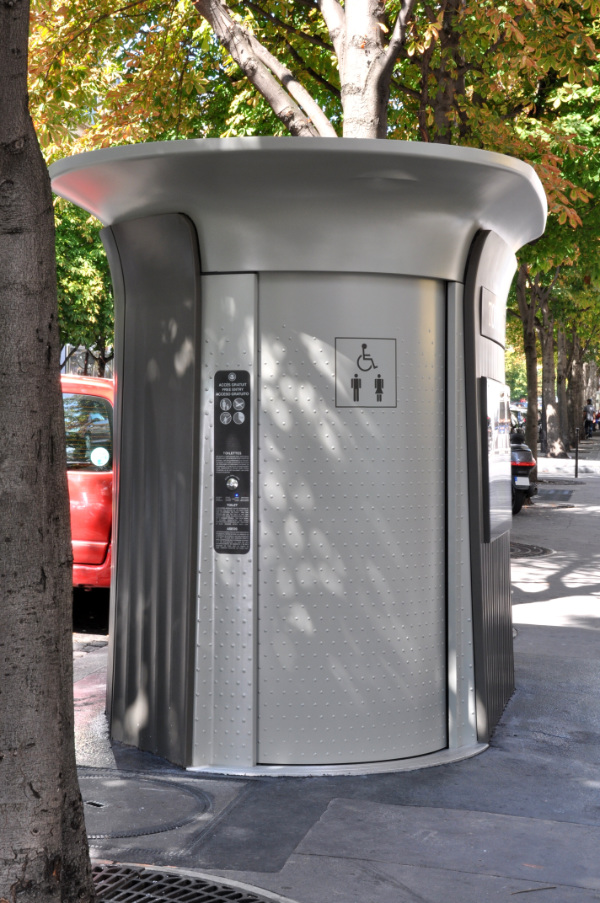
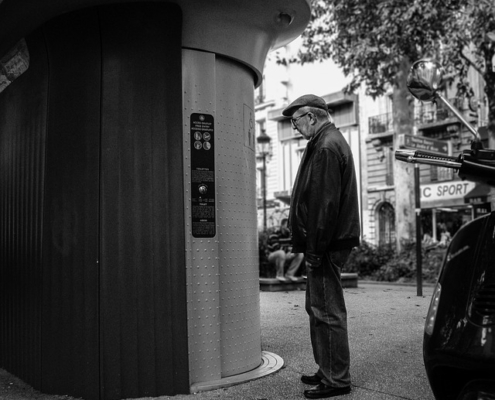
In Paris, there are officially 436 automatic public toilets, known as Sanisettes, spread across all 20 arrondissements. On paper, this number may seem reassuring. In reality, their operation is highly inconsistent.
These toilets are free of charge and available in many neighborhoods, which makes them a theoretically convenient option for visitors. However, their reliability is a frequent issue. It is very common to encounter Sanisettes that are out of order, stuck in cleaning mode, closed without clear explanation, or simply unusable at the moment they are needed.
Our Experience on the Ground
In practice, public toilets cannot be considered a guaranteed solution. It is very common to find that:
- the door does not open,
- the system is blocked,
- the cabin is out of service,
- the cleaning cycle lasts unusually long,
- or the toilet simply does not work.
In these situations, our drivers and tour leaders sometimes find themselves moving from one Sanisette to another in order to locate one that actually works. This is part of our daily reality, especially in highly touristy areas and during peak hours.
Improvements in Progress
It is important to note that the City of Paris is aware of these difficulties. New models of Sanisettes are currently being tested, with the goal of improving reliability, cleanliness, and speed of operation. These newer installations are expected to gradually replace older models, although this rollout will take time.
What This Means for Visitors
Even though the number of public toilets is relatively high, visitors should never rely on a single Sanisette. It is always advisable to have an alternative nearby, as the toilet you have located may not be operational when you need it.
Practical Advice
Public toilets can be helpful, but they should be viewed as one option among others, not as a 100% reliable solution. When a Sanisette works, it is very convenient. When it does not, the best approach is to move immediately to a plan B.
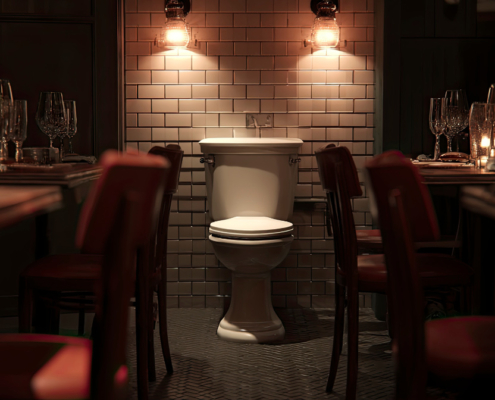

In Paris, cafés and restaurants are one of the most common ways to find a toilet. However, access follows a simple and very French rule: restrooms are reserved for customers.
Contrary to what some visitors may assume, this is neither a lack of hospitality nor a personal refusal. Cafés and restaurants must manage a constant flow of customers, cover water and maintenance costs, and often operate in limited spaces. Allowing unrestricted access to toilets would simply be unmanageable, especially in highly touristic areas.
What We Observe on the Ground
In practice, cafés remain an effective solution as long as local customs are respected. That said, the following issues are common:
- access may be refused if no purchase is made,
- toilets are often located upstairs or in basements, sometimes in narrow spaces,
- queues form during peak hours,
- cleanliness varies depending on the establishment and time of day.
In very busy areas, some cafés become quickly saturated, and restroom conditions can be less comfortable toward the end of service.
What Works Best
The simplest and most effective approach is to:
- enter calmly,
- order a small coffee (an espresso),
- use the restroom,
- leave without difficulty.
This is a common practice in Paris, used both by locals and informed visitors.
What This Means for Visitors
Cafés are a good option, but they should not be viewed as free public facilities. Accepting that a small purchase is part of the local system usually results in quick and uncomplicated access.
Practical Tips
- Choose cafés slightly away from the main tourist streets, which are often calmer.
- Hotel cafés generally offer cleaner and more spacious restrooms.
- Avoid peak service times (12:00–2:00 pm and 7:00–9:00 pm).
- Always have an alternative option in mind.
Parisian museums are often seen as one of the best options for finding toilets. Overall, they do tend to offer more comfortable facilities than public toilets. However, access depends heavily on crowd levels, internal layout, and the type of museum.
In most cases, restrooms are reserved for ticket holders, with the exception of certain free municipal museums. Waiting lines, distance, and overcrowding are therefore part of the reality, especially in the most visited sites.
The Louvre Museum
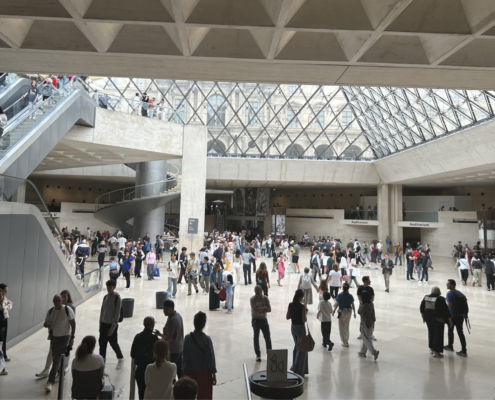
The Louvre has several restroom blocks spread across its different wings (Denon, Sully, Richelieu). Despite this, the museum’s massive visitor numbers often make access difficult.
On-the-ground reality:
- frequent queues, especially under the Pyramid,
- restrooms sometimes far from the exhibition areas,
- difficult to locate without consulting the map,
- cleanliness varies depending on time of day and crowd levels.
The museum receives 30,000 to 50,000 visitors per day, putting significant pressure on its facilities.
Practical solutions:
- locate restrooms on the museum map as soon as you enter,
- avoid the restrooms under the Pyramid,
- use facilities in the Denon, Sully, or Richelieu wings,
- take a restroom break during the visit, not at the end,
- before entering: use the toilets at the Carrousel du Louvre shopping area
|
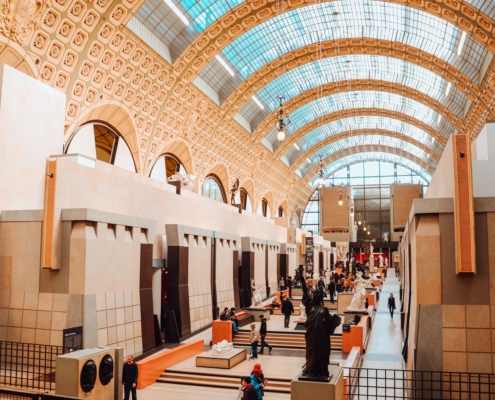
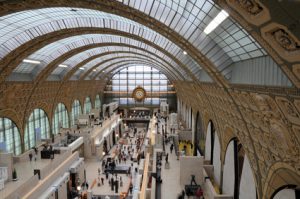
Musée d’Orsay The Musée d’Orsay has restrooms on several levels. Management is generally adequate, but crowds can create waiting times. Reality:
|
Solutions:
|
|
Centre Pompidou The Centre Pompidou offers multiple restroom locations throughout the building, with capacity generally better distributed than in some larger museums. Reality:
|
Solutions:
|
|
Free Municipal Museums Paris has many municipal museums with permanent free entry (Carnavalet Museum, Museum of Modern Art, Victor Hugo House, etc.) Reality:
|
Solutions:
|
| What This Means for Visitors |
|
| Simple Rules to Remember |
|
| In very busy museums and monuments: |
|
| Universal Rule |
|
Parisian monuments are among the most visited places in the city. Unlike museums, toilet options are often more limited, and access depends heavily on security checks, ticketing, and crowd levels.
In most cases, restrooms are located inside the monument, meaning they are only accessible after passing security and ticket control. During peak periods, this can quickly become restrictive and uncomfortable for visitors.


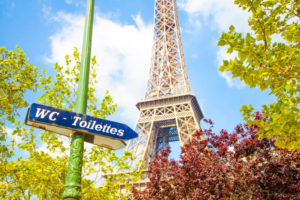
| The Eiffel Tower
The Eiffel Tower does have toilets, but access is strictly linked to visiting the monument. |
On-the-ground reality:
|
Practical solutions:
|
| Arc de Triomphe
The Arc de Triomphe has toilets, but visitors often fail to anticipate their use. |
On-the-ground reality:
|
Practical solutions:
|
| Notre-Dame de Paris (surroundings)
Access to toilets around Notre-Dame has always been difficult, and this remains true today. |
On-the-ground reality:
|
Practical solutions:
|
| Montmartre and Sacré-Cœur
Montmartre is one of the most visited areas in Paris, but also one of the most challenging when it comes to toilets. |
On-the-ground reality:
|
Practical solutions:
|
| The Champs-Élysées
The Champs-Élysées concentrates several iconic locations but offers very few immediate restroom options. |
On-the-ground reality:
|
Practical solutions:
|
|
What This Means for Visitors In Paris monuments:
Monuments should be considered a planned solution, not an emergency fallback. |
|
Simple Rule to Remember Always use the toilets before entering a monument. |
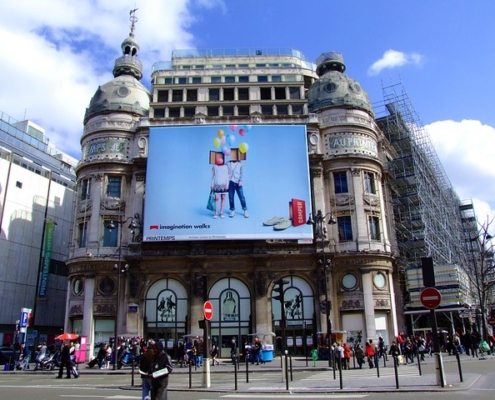
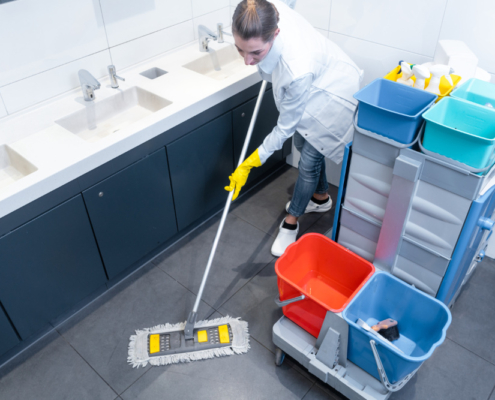
In Paris, when it comes to finding easily accessible toilets, department stores and shopping centers play a key role, one that is often underestimated by visitors. Many tourists instinctively think of public toilets or cafés, without realizing that department stores frequently offer a much simpler, more comfortable, and more reliable solution.
Unlike public toilets, which may be out of order or closed, and cafés, where access is usually reserved for customers, department stores are designed to handle a constant and heavy flow of visitors. They have appropriate infrastructure, regularly maintained restrooms, and clear signage. For this reason, they often represent the best balance between accessibility, cleanliness, and peace of mind.
From a practical standpoint, this is a solution we use very frequently with our groups. In highly touristic areas such as Opéra, the Marais, the Louvre area, Saint-Germain, and the Champs-Élysées department stores help avoid the stress caused by malfunctioning public toilets or crowded cafés refusing access. They are especially appreciated by families, seniors, and groups, for whom comfort and reliability are essential.
It is also important to note that, in most cases, no purchase is required to access the toilets in department stores. Entry is free, spaces are large, and restrooms can usually be reached quickly by following the signs. This is a major advantage in a city where every break often needs to be anticipated.
For all these reasons, department stores should be among your top reflexes in Paris. Knowing where they are and when to use them can turn a potentially stressful situation into a simple pause in your day.
In the following section, you will find a clear list of the main department stores and shopping centers, with precise addresses, to help you locate them easily and save time when the need arises.
Department Stores & Shopping Centers – Quick Addresses
Galeries Lafayette Haussmann
40 boulevard Haussmann, 75009 Paris
Metro: Chaussée d’Antin – La Fayette
Galeries Lafayette Champs-Élysées
60 avenue des Champs-Élysées, 75008 Paris
Metro: Franklin D. Roosevelt
Printemps Haussmann
64 boulevard Haussmann, 75009 Paris
Metro: Havre-Caumartin
Le Bon Marché Rive Gauche
24 rue de Sèvres, 75007 Paris
Metro: Sèvres-Babylone
BHV Marais
52 rue de Rivoli, 75004 Paris
Metro: Hôtel de Ville
La Samaritaine
9 rue de la Monnaie, 75001 Paris
Metro: Pont Neuf
Carrousel du Louvre (shopping center)
99 rue de Rivoli, 75001 Paris
Metro: Palais Royal – Musée du Louvre
Westfield Forum des Halles
101 porte Berger, 75001 Paris
Metro/RER: Châtelet-Les Halles
Beaugrenelle Paris
12 rue Linois, 75015 Paris
Metro: Charles Michels
Italie Deux
30 avenue d’Italie, 75013 Paris
Metro: Place d’Italie
Bercy Village
28 cour Saint-Émilion, 75012 Paris
Metro: Cour Saint-Émilion


Why They Are One of the Most Reliable Solutions in Paris.
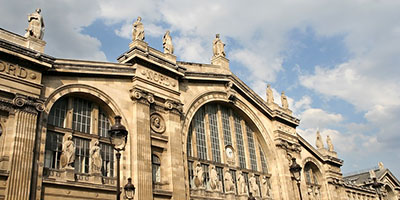
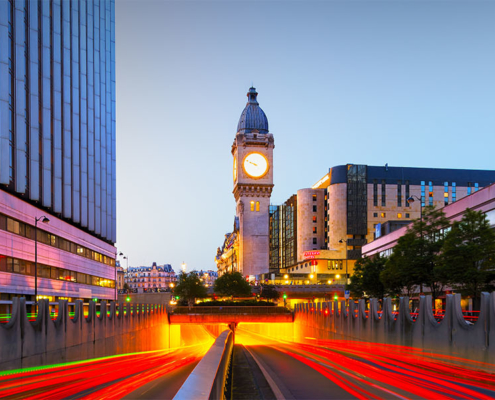
Parisian train stations occupy a unique place in the daily life of the city. They are constant transit hubs, used by both travelers and locals. As such, they play a discreet but essential role when it comes to finding toilets in Paris, especially in situations where other options become complicated or overcrowded.
For many visitors, train stations are associated with departure stress, crowds, and complex layouts. Yet Parisians know that stations offer one of the most predictable and well-managed environments for restrooms. Unlike public toilets, which can be unreliable, or cafés, where access is limited to customers, stations provide supervised, regularly maintained facilities designed for heavy use.
It is important to understand that station toilets are not intended as a spontaneous or free solution. They are part of an organized service, usually paid, but one that guarantees a certain level of reliability. Parisians have accepted this reality for a long time: in certain situations, paying to save time and avoid stress is simply the most rational choice.
Train stations therefore become a preferred option when you are in a very busy area, when department stores are closed, or when you need a quick, functional solution especially for families, seniors, or travelers with reduced mobility. They are also used strategically before a journey, to avoid any urgency during transit.
This section explains how and when to use station toilets intelligently, taking into account how they actually function, their advantages, and their limitations. Understanding these habits allows you to integrate stations into your overall strategy, just like department stores or museums, and move around Paris with greater peace of mind.
In Paris, train stations are among the most reliable places to find toilets. They are not the most pleasant or the most economical option, but they have one decisive advantage: they almost always work. That is why Parisians naturally include them in their strategy, especially when there is no room for error.
Stations handle a continuous flow of travelers, sometimes 24 hours a day. As a result, their restrooms are designed for intensive use, with supervision, frequent cleaning, and clear rules. This creates a very different experience compared to freely accessible public toilets.
Main Paris Train Stations
All major Paris train stations have restrooms accessible to the public:
- Gare du Nord
- Gare de Lyon
- Gare Saint-Lazare
- Gare Montparnasse
- Gare de l’Est
- Gare d’Austerlitz
- Gare de Bercy
These stations cover the entire city and are often located in very busy neighborhoods where alternatives are limited.
| How Station Toilets Work |
Restrooms in train stations generally follow the same principles:
For Parisians, payment is not seen as a constraint, but as the price of reliability and time saved. |
| Where Toilets Are Located Inside Stations |
Depending on the station, restrooms may be located:
In very large stations, they are not always immediately visible. Parisians take a few seconds to locate the signage upon arrival rather than searching in a rush.
|
|
When to Use Station Toilets |
Train stations are particularly useful:
They are often used as a planned, strategic solution. |
| Best Times to Go |
As everywhere in Paris, timing makes a difference. Generally calmer periods:
More challenging periods:
Anticipating these moments helps avoid queues.
|
| For Families, Seniors, and Travelers with Reduced Mobility |
Station toilets are often better adapted than standard public toilets:
They are a reliable option for families with children, seniors, and travelers with reduced mobility, especially when other solutions are crowded or unavailable. |
| What Parisians Actually Do |
Parisians do not try to avoid paying at all costs. Their logic is simple:
They use station toilets before urgency sets in, then continue their day calmly. |
| Limitations to Keep in Mind |
Even though they are reliable, station toilets are not perfect:
This is why stations should be considered one option among others, not the only solution.
|
| Key Takeaways |
Insider’s Phrase When everything else is uncertain, train stations remain the safest option. |
Why This Issue Is Even More Important
Traveling in Paris is a wonderful experience, but for some visitors, the question of toilets can quickly become a source of stress. For families with children, seniors, and travelers with reduced mobility, this is not a minor logistical detail it is a key factor in comfort, daily rhythm, and sometimes even safety.
Contrary to what one might assume, the difficulties do not come only from a lack of toilets, but mainly from a lack of truly adapted options. Narrow staircases, heavy doors, small spaces, long queues, noisy or malfunctioning automatic toilets these are situations we regularly encounter on the ground with our travelers.
For children, waiting too long can quickly become difficult. For seniors, standing in line or navigating steep staircases can be tiring or even risky. For travelers with reduced mobility, a toilet advertised as accessible is not always accessible in practice. These realities are well known to guides and tour leaders, but are rarely explained clearly to visitors.
This is precisely why this section exists. It does not simply indicate where toilets are located; it explains which solutions actually work depending on your situation, and above all, why some options are more reliable than others. It is based on daily field experience, traveler feedback, and real situations encountered throughout Paris.
The goal is simple: to help you anticipate rather than endure. By knowing in advance which places are best suited department stores, accessible museums, supervised restrooms you can organize your day more calmly, take breaks at the right time, and prevent the toilet issue from becoming an obstacle to your visit.
In the following sections, you will find solutions tailored to each profile, with useful addresses, practical links, and clear advice. Whether you are traveling with children, need extra comfort, or require accessible facilities, this page is designed to help you enjoy Paris with peace of mind.
Families with Children: The Most Suitable Solutions
With children, needs often arise unexpectedly. Waiting too long or searching for a solution at the last minute can quickly become complicated. Priority should be given to places that are easy to access, spacious, and reliable.
Department Stores and Shopping Centers
Department stores are the most effective solution for families. They offer large spaces, numerous restrooms, easy access for strollers, and do not require a purchase.
Useful addresses:
- Galeries Lafayette Haussmann, 40 boulevard Haussmann, 75009
- Le Bon Marché Rive Gauche, 24 rue de Sèvres, 75007
- Westfield Forum des Halles, 101 porte Berger, 75001
- Beaugrenelle Paris, 12 rue Linois, 75015
- Italie Deux, 30 avenue d’Italie, 75013
Family-Friendly Museums
Some museums offer more comfortable and better-distributed facilities:
- Musée d’Orsay
- Centre Pompidou
- Musée du Quai Branly – Jacques Chirac
- Petit Palais
It is advisable to use the toilets in the middle of the visit, before urgency sets in.
Points to Watch
Automatic public toilets can be noisy and intimidating for children. It is also best to avoid waiting until the end of a visit or a long walk to look for a solution.
Seniors: Comfort and Accessibility First
For seniors, the main difficulties are related to stairs, prolonged waiting, and narrow spaces. Comfort and ease of access should be the priority.
Places to Prioritize
Department stores offer step-free access, elevators, and more spacious restrooms.
Especially suitable options:
- Le Bon Marché Rive Gauche
- La Samaritaine
- BHV Marais
Museums with Elevators
The following museums are generally well equipped:
- Musée du Quai Branly
- Musée d’Orsay
- Centre Pompidou
It is recommended to locate elevators and restrooms as soon as you enter.
Train Stations
Restrooms in major train stations are paid, but supervised, maintained, and often more accessible. They can be a reliable solution in certain neighborhoods.
Travelers with Reduced Mobility
Not all toilets advertised as accessible are accessible in practice. It is therefore important to prioritize places that are genuinely adapted.
Most Reliable Options
Department stores and shopping centers remain the best solution, with large, clearly signposted facilities.
Recently renovated or modern museums usually offer accessible restrooms, including:
- Musée du Quai Branly
- Musée d’Orsay
- Centre Pompidou
- Petit Palais
Accessible Public Toilets
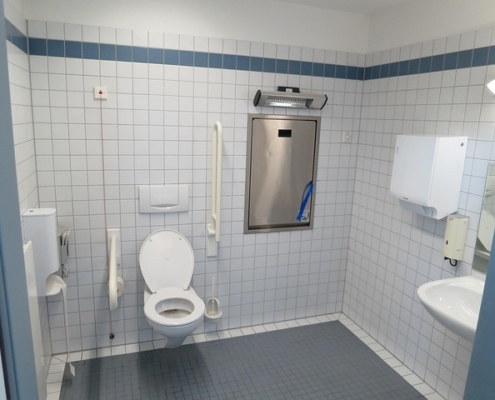
Some newer Sanisettes are adapted for travelers with reduced mobility, but their availability is not guaranteed. It is strongly recommended to check locations in advance.
Useful link:
Official map of public toilets in Paris
https://opendata.paris.fr/explore/dataset/sanisettesparis/
Alternative map, easier to use on mobile:
https://pariswc.com/
It is always best to plan an alternative nearby.
General Advice
Anticipating breaks before urgency, locating toilets as soon as you arrive at a place, and never relying on a single option are the keys to a stress-free visit. Large, supervised spaces generally offer the best conditions.
Key Takeaways
For families, seniors, and travelers with reduced mobility in Paris:
- department stores are the most reliable solution,
- accessible museums provide a good level of comfort,
- public toilets should be considered a backup option,
- anticipation makes all the difference.
How to Navigate Toilets in Paris Like a True Insider
Paris is a city that never fully reveals itself at first glance. Beyond its monuments, legendary cafés, and world-famous museums, the capital also runs on a series of small, invisible habits—learned through daily life rather than explained in guidebooks. Managing toilets is one of those everyday realities that visitors often discover… too late.
Many travelers arrive in Paris assuming that finding a toilet will be easy, as it is in some other major cities. Very quickly, they realize this is not always the case. Public toilets may be out of order, cafés reserve their restrooms for customers, museums become saturated at peak hours, and some theoretical solutions turn out to be impractical in real life. This gap between expectation and reality can turn a minor issue into a real source of stress.
Parisians, however, have learned how to work around these difficulties. They know it is not about finding “the best toilet,” but about choosing the right option at the right moment. They do not wait for urgency, they do not insist on solutions that are not working, and they instinctively know where to go without wasting time. These habits are rarely explained, simply because they are part of everyday life.
This chapter was designed to share those insider reflexes. It is not a theoretical list, but a set of simple, effective habits, used daily by people who live, work, or guide groups in Paris. These tips come from real field experience, repeated mistakes, and concrete situations encountered both in the busiest areas and in quieter neighborhoods.
Here, you will learn how to turn a potentially stressful search into a smooth, natural routine. By understanding the unspoken rules, the best timing, and the places to prioritize, you will gain confidence and autonomy. The goal is not only to know where to go, but to think like a Parisian, so that the question of toilets never disrupts your day.
In the pages that follow, these local secrets will help you move around Paris with greater ease, anticipate instead of react, and enjoy the city fully—without unnecessary stress.
1. Thinking Ahead: The Reflex That Changes Everything
In Paris, the real secret is not finding toilets, but never waiting until they become urgent. Parisians have integrated this constraint into the way they move around the city. They use toilets as soon as a reliable opportunity presents itself, even if the need is not yet pressing.
Entering a department store, arriving at a museum, passing by a hotel, or entering a major train station are all strategic moments. This reflex may seem excessive to visitors, but it avoids nearly all uncomfortable situations. In Paris, an early break is always better than a rushed search.
2. Never Insist on One Option
When a solution does not work immediately, Parisians do not insist. A blocked Sanisette, a long queue, or a refusal in a café are clear signals: move on.
The unspoken rule is simple. If an option does not resolve quickly, change plans without frustration. This flexibility saves time and energy in already stressful situations.
3. Department Stores as Anchors
In busy neighborhoods, department stores form a kind of backbone for Parisians. These spaces are designed to absorb large flows of people and provide accessible services.
Entering a department store, following the signs, using the toilets, and leaving is part of everyday habits. It is discreet, efficient, and rarely problematic. This reflex is especially useful around Opéra, the Marais, the Louvre, and the Champs-Élysées.
4. Museums: Comfort, but With Method
Parisians recognize the quality of museum facilities, but they also know that timing is crucial. Toilets are used at the beginning or in the middle of a visit, never at the end, when crowds converge.
This small detail makes a big difference. By anticipating, queues are avoided and a constraint becomes a simple, integrated pause.
5. Understanding the Café Rule
In Paris, café restrooms are reserved for customers. This rule is not negotiable, but it is easy to respect. Ordering a coffee, paying quickly, and politely asking for access is a daily gesture for Parisians.
An espresso is enough. This practice is socially accepted and avoids tension or awkwardness.
6. Hotels: A Discreet and Effective Solution
Hotels—especially mid-range to higher-end ones—are a valuable resource. The correct reflex is to enter calmly and head directly toward the bar, coffee bar, or lounge when one exists. In these spaces, restrooms are usually visible or clearly signposted.
There is no need to go through reception or explain yourself. This trick does not work in hostels or youth hostels, where restroom access is restricted to guests.
7. Public Toilets: Useful, but Secondary
Sanisettes are part of the Parisian landscape, but Parisians know they are unpredictable. They are used when timing allows, never as the only option. An alternative should always be identified nearby.
8. Step Out of the Main Tourist Flow
Moving just a few minutes away from a major tourist axis can dramatically improve the situation. Turning into a side street or entering a more residential area often reveals simpler, less crowded options.
Parisians naturally integrate this movement into their routes.
9. Timing Makes All the Difference
Time of day strongly affects toilet accessibility. Mornings and mid-afternoons are generally calmer. Lunch hours and late afternoons concentrate most of the difficulties, especially in tourist areas.
10. Attitude: The Final Secret
Finally, attitude plays a key role. In Paris, entering a place with calm confidence and discretion is often more effective than asking repeatedly. Parisians observe, follow signs, and act simply.
Conclusion
Paris, Without Stress and With Confidence
Finding toilets in Paris is not a matter of luck, nor of the sheer number of facilities. It is above all a question of reflexes, timing, and understanding local habits. This guide was not designed to list places abstractly, but to transmit a way of thinking and moving through the city—the one Parisians apply naturally every day.
By understanding why some solutions work better than others, knowing when to use them and how to approach them, you turn a potential inconvenience into a minor detail of your day. Anticipating instead of reacting, always having an alternative, stepping out of the main flow when necessary, and maintaining a calm, confident attitude—these are the real keys.
Paris is a demanding city, but it rewards those who observe it and adapt. Once these reflexes are acquired, the toilet issue stops being a problem. It becomes a managed part of your journey, just like transportation, breaks, or visits.
Whether you are traveling alone, with family, with seniors, or with travelers with reduced mobility, these tips are here to help you enjoy the city fully, without unnecessary stress. Paris is better experienced when you understand its codes—and this guide has shared one of the most discreet, yet most useful ones.
All that remains is to walk, explore, and enjoy the city—with complete peace of mind.
Texte : GV Paris Webservices – Photos : Adobe stock / PIxabay
RECOMMENDED BY