
Please note that the tips, observations, and cultural insights shared here are based on personal experience and general guidance when traveling in Paris with children. Every family, child, and situation is different, and these suggestions may not apply in all cases. They are intended to help parents and caregivers feel more prepared—not to generalize, replace personal judgment, or speak on behalf of all Parisians or families.
Paris with Kids

Traveling to Paris with children can be a beautiful experience, but it is often very different from what families imagine before they arrive. Paris is a vibrant, dense city with its own rhythm, distances, transportation rules, and daily life and these realities can be surprising, especially when traveling with children.
With over 20 years of experience working with families traveling to Paris, we have seen many tourists arrive unprepared or genuinely surprised by how certain things work here. These surprises often lead to fatigue, stress, or misunderstandings, not because Paris is difficult, but because it requires a different approach when children are involved.
Most travel guides and websites provide lists of “must-see” attractions. What they rarely explain is whether these places are truly adapted to children, and how age plays a crucial role in shaping the travel experience.
Why Age Matters When Traveling with Children
Children do not experience a city the same way adults do, and age changes everything.
A day that works well for a 7-year-old will not work in the same way for a 15-year-old, just as the needs of a toddler are completely different from those of a pre-teen.
Based on our experience, each age group comes with its own challenges and expectations. This is why we have chosen to organize our guidance into three distinct chapters:
- Ages 1 to 6 – young children and toddlers
- Ages 7 to 12 – school-age children
- Ages 13 to 18 – teenagers
Each group faces different realities, different limits, and different sources of difficulty. What can be enjoyable and manageable for one age group can quickly become frustrating or exhausting for another.

A Practical and Realistic Approach
Our goal is not to generalize or label children. Every child is unique, and maturity varies greatly. However, after years of experience, we know that planning without considering age often leads to problems.
This guide is built on real-life situations, not theory:
- misunderstandings about transportation,
- underestimating walking distances,
- unrealistic daily schedules,
- and activities that simply do not match a child’s capacity.
By separating our advice into age-based chapters, we aim to help families:
- anticipate challenges,
- make informed choices,
- and enjoy Paris in a way that feels natural and comfortable for everyone.
A Family Trip Above All
Traveling with children means accepting that Paris may be discovered differently:
- more slowly,
- more simply,
- and sometimes less culturally but more humanly.
A successful family trip is not defined by how much you see, but by how well everyone experiences it.
Understanding your child’s age is the first step toward enjoying Paris together.
Understanding the Reality Before You Go
Traveling to Paris with young children can be a wonderful experience, but it is often very different from what families imagine before arriving. Paris is a lively, dense city with its own rhythm, distances, transportation rules, and daily constraints. When traveling with a child between 1 and 6 years old, these realities quickly shape the entire experience.
After many years accompanying families in Paris, we regularly see parents who are surprised or caught off guard. Not because they are unprepared as parents, but because traveling with young children in a foreign country requires a different way of thinking. Transportation, walking distances, crowds, waiting times, and even simple daily logistics can become challenging if they are not anticipated.
Most travel guides and websites offer lists of places to see. They rarely explain whether these places truly make sense for young children, or how to adapt a visit to a child’s rhythm. Our approach starts elsewhere: not with monuments, but with families, children, and real-life conditions.
Our Approach: Experience, Not Checklists
Our philosophy is simple. A successful family trip is not about seeing everything, but about living the journey well.
Based on years of experience, we focus on experiences that are realistic, tested, and adapted to everyday family life. The goal is to avoid unnecessary stress and fatigue, and to help parents enjoy Paris while their children feel comfortable and secure.
To do this, it is essential to understand how young children experience a city.
Understanding the Needs of Children Aged 1 to 6
Children between 1 and 6 years old require special attention. At this age, they are more sensitive to fatigue, easily affected by noise and crowds, less patient with long waits, and highly influenced by their environment.
A single day that is too long or poorly paced can quickly overwhelm a child and impact the whole family. That is why, in our experience, small decisions matter more than ambitious plans: choosing the right neighborhood, limiting transportation, planning fewer activities, and allowing time for rest.
This becomes particularly clear when considering museums.
Museums: A Beautiful Idea, Often a Difficult Reality
Parisian museums are extraordinary, but they are often physically demanding and crowded, and not designed for very young children. Long lines, large spaces to walk through, and limited places to rest make these visits difficult, especially for babies and toddlers.
For this reason, and based purely on experience and common sense, access for very young children is often limited on major visits such as the Louvre or the Palace of Versailles. This is not about exclusion, but about protecting the child’s well-being and preserving a positive experience for parents.
Once activities are adapted, the choice of accommodation becomes the next key factor.



Where You Stay Matters More Than You Think
Not all Paris neighborhoods are equally suitable for families. With young children, accommodation is not just a place to sleep; it becomes the anchor of the trip.
We recommend areas that are calm in the evening, well connected by public transportation, close to parks or green spaces, and surrounded by everyday shops such as bakeries, pharmacies, and supermarkets. Staying in the right neighborhood makes it easier to return for naps, manage daily needs, and maintain a reassuring routine.
Daily-life details often make a bigger difference than expected.
Everyday Practicalities That Make a Difference
If your child is not yet potty-trained or still needs diapers and baby products, being close to shops is essential. Easy access to supermarkets and pharmacies can turn a stressful situation into a simple one, especially late in the day.
Transportation follows the same logic: simplicity, anticipation, and flexibility.

Transportation: Where Many Families Are Surprised
Paris transportation can be efficient, but it can also be confusing for families unfamiliar with it. Choosing the right times, avoiding rush hours, limiting transfers, and sometimes walking instead of taking multiple lines can significantly reduce fatigue.
Over the years, we have encountered several situations where parents booked transportation or tours including transportation without mentioning that they were traveling with a baby. This is usually unintentional. Many parents assume that a baby can travel on a parent’s lap or that rules are flexible for short distances.
In France, this is not the case.
Babies, Transportation, and French Law
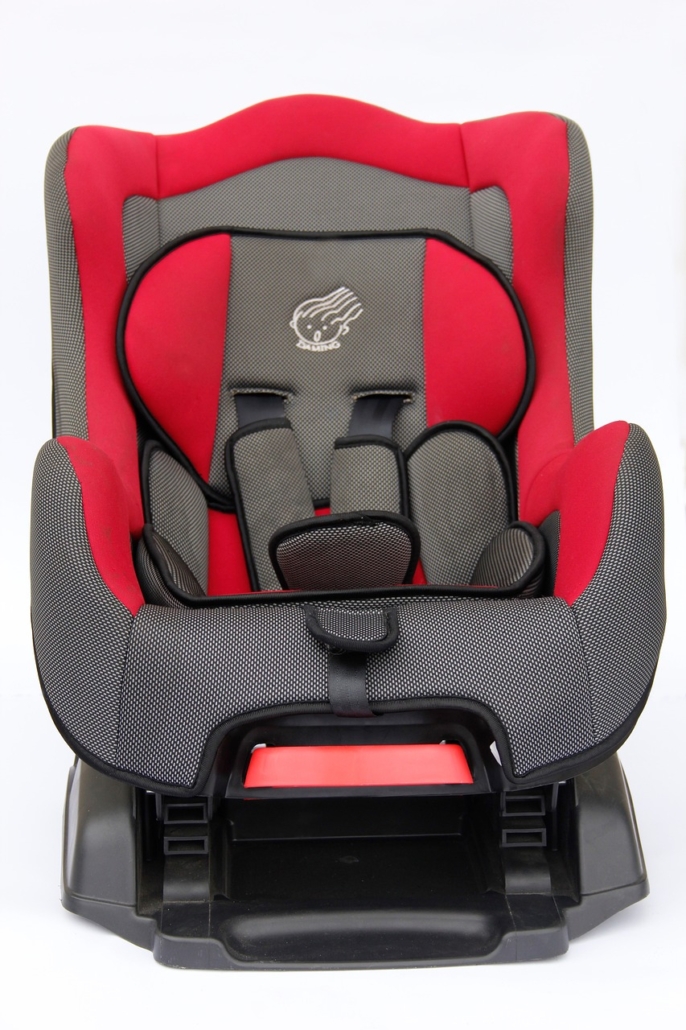
French regulations regarding child transportation are strict and non-negotiable. A baby or child may never travel on an adult’s lap, even for a short journey or in a private vehicle. A certified baby seat or booster seat is required, up to the age of 12 depending on the child’s size.
These rules apply to all vehicles, including taxis and ride services such as Uber or Bolt. Most of these vehicles do not provide baby seats, and without proper equipment, drivers are legally not allowed to transport a child.
When a baby has not been declared in advance, transportation must be refused. This can be very stressful for families, but it is a legal obligation.
Insurance: The Same Logic as Flying
Beyond legal rules, there is also an important insurance reality. If a baby is transported without proper declaration or without the required safety equipment, insurance coverage may not apply in case of an accident.
This situation is exactly the same as when you take a plane. A baby must be declared, safety rules must be respected, and insurance only applies if regulations are followed. Ground transportation in France works on the same principle.
Our Practical Recommendation
To avoid difficulties, we strongly recommend traveling with a stroller that also functions as a certified car seat. This solution complies with French law, ensures your child’s safety, and simplifies transportation, including taxis and ride services.
For families with children aged 1 to 6, it is often the most practical and reassuring option.
Traveling at Your Family’s Pace
Traveling with young children is not about speed or quantity. It is about slowing down, adjusting expectations, and creating a rhythm that works for everyone.
Paris can be intense, but when approached at a child’s pace, it becomes welcoming and deeply memorable. A successful family trip is not measured by the number of monuments visited, but by the quality of the moments shared and the memories everyone brings home.

Traveling to Paris with a Child Aged 1 to 6

Traveling to Paris with a child aged 1 to 6 is neither complicated nor magical.
It’s beautiful, sometimes exhausting, often unpredictable and it works wonderfully when you slow down.
What we share here is just one example of how an itinerary might look when traveling with young children. It’s not about doing everything, but about finding a rhythm that works for your family.
The goal is for parents to truly enjoy Paris, while children feel safe, comfortable, and respected in their own timing.
Day 1 – Arriving, Simply
On the first day, you visit nothing.
The child is disoriented. The parents are too.
You settle in, step outside to get some fresh air in the neighborhood, and eat close to your accommodation.
Even a short walk already becomes a discovery.
This day is about landing gently.
Day 2 – A Park Before Anything Else
Between the ages of 3 and 6, children do not need monuments.
They need space, movement, and freedom.
The Luxembourg Gardens are perfect for this.
Children run, play, and observe.
Parents sit down and finally take a breath.
In the afternoon, return for a nap or quiet time.
Doing less is often the key to doing it well.
Day 3 – Seeing Paris Without Walking Too Much
A Seine river cruise works extremely well at this age.
The child watches, asks questions, and tires very little.
After the cruise, keep the rest of the day light:
- an ice cream,
- a bench,
- returning early if needed.
Paris is also discovered in these simple moments.
Day 4 – Montmartre, but Gently
Montmartre is possible with a child aged 3 to 6 if done smartly.
- Use the funicular instead of the stairs,
- Keep the walk short,
- Take frequent breaks,
- Avoid peak hours.
As soon as the child disconnects, you leave without insisting.
Day 5 – A Day Truly for Them
The Jardin d’Acclimatation is ideal for children aged 3 to 6.
Everything is designed for them:
- rides,
- animals,
- green spaces.
On this day, parents let go.
And it shows.
Day 6 – Walk, Stop, Observe
The Marais and Place des Vosges are perfect for this age group.
It’s flat, beautiful, and easy.
You walk a little.
You stop often.
You observe daily life around you.
These simple moments often leave a stronger impression than major attractions.
Day 7 – Ending Gently
On the last day, you don’t add anything “to make it worth it.”
A short walk.
A small souvenir.
One last afternoon snack.
You end the trip the same way you began it: calmly.
A Final Word for Parents Traveling with Children Aged 1 to 6
Traveling to Paris with a child aged 1 to 6 is a choice a beautiful one but it also means accepting a different rhythm.
At this age, children do not remember monuments.
They remember how they felt: whether they were calm or overwhelmed, rested or exhausted, secure or unsettled.
Paris can be a wonderful city for young children when daily life is made simple. That is why the choice of where you stay matters so much.
We strongly recommend that families stay near:
- the Eiffel Tower / Champ de Mars,
- the Louvre / Tuileries,
- or the Luxembourg Gardens.
These areas offer a rare balance that is ideal with young children:
- nearby parks and green spaces for breaks and play,
- shops, bakeries, pharmacies, and supermarkets within walking distance,
- pleasant neighborhoods where it is easy to move around without rushing,
- and good transportation connections without feeling overwhelmed.
Being close to parks allows children to release energy and relax.
Being close to shops allows parents to handle daily needs or unexpected situations easily, without stress or long journeys.
Traveling with a young child is not about seeing everything.
It is about creating a safe, calm, and comfortable environment from which to explore the city little by little.
When children feel good, parents feel better too.
And when the trip is built around simplicity and comfort, Paris often becomes a city remembered with warmth not fatigue.
Paris with young children is not about performance.
It is about balance, presence, and shared moments.

Understanding This Key Transition Age
Traveling to Paris with children aged 7 to 12 often seems easier than traveling with younger children. At this age, children can walk longer, follow explanations, and show genuine curiosity about what they see. Many parents consider it the ideal moment for a cultural trip.
However, based on more than 20 years of experience working with families, we know that this age group is also one of the most misunderstood. Children between 7 and 12 are in a transition phase. They are no longer toddlers, but they are not yet teenagers. Their physical abilities increase faster than their emotional and mental endurance.
As a result, parents often overestimate how much their child can handle in a single day.
Attention, Fatigue, and What We Observe in Real Life
On our tours, we frequently see families leaving before the end, even when children are 10, 11, or 12 years old. This does not happen because the visit is poorly organized or uninteresting. It happens because the children are simply too tired.
Large cultural visits such as the Louvre or Versailles require:
- long periods of walking,
- standing still,
- listening quietly,
- processing a large amount of information,
- and dealing with crowds.
For many children in this age range, this becomes mentally and physically exhausting. What parents perceive as “culture,” children often experience as monotony when it lasts too long.
This reaction is completely normal.
Museums: Not a Rejection of Culture, Just a Question of Timing
Children aged 7 to 12 are capable of appreciating museums, but only under certain conditions.
From experience, museum visits work best when:
- they are short,
- they focus on a few highlights rather than everything,
- explanations are simple and story-based,
- and they are followed by outdoor time.
Trying to combine the Louvre and Versailles in the same trip or even on consecutive days is often too demanding. Even motivated children lose focus, and parents end up frustrated or disappointed.
This is why we regularly explain to families that interest in large museums often develops later, and that it is perfectly normal if a child of this age is not yet receptive.
What Children Aged 7-12 Truly Enjoy
Based on what we observe daily, children in this age group are generally far more enthusiastic about:
- Disneyland,
- amusement parks and fairs,
- interactive or playful environments,
- experiences that allow movement and freedom.
These places match their need for action, visual stimulation, and immediate engagement.
In Paris, the Eiffel Tower is often the one major monument that truly captivates them. Going up, seeing the city from above, feeling the height this is concrete, impressive, and memorable. For a child, it feels like an adventure.
Museums, by contrast, often feel abstract and disconnected from their everyday world.
The Impact of Screens Over the Last 10 Years
Over the past 10 years, we have seen a major change in how children aged 7 to 12 experience travel: the presence of smartphones and screens.
Many children are now accustomed to:
- fast-paced videos,
- games,
- constant visual stimulation,
- short attention cycles.
During visits, we often notice children:
- checking the time repeatedly,
- asking when the visit will end,
- mentally disconnecting even when explanations are good,
- comparing real-life experiences to what they see on screens.
This is not a discipline issue.
It is simply the reality of how children today process information.
When reality feels slower than a screen, fatigue and boredom arrive faster.
Why Balance Matters More Than Ever
For this age group, successful days are rarely the most ambitious ones. They are the days that mix:
- one main activity,
- outdoor time,
- movement,
- rest,
- and relaxed meals.
Trying to “fit everything in” often leads to tension, complaints, and early returns to the hotel.
Leaving time unplanned is not wasted time it is what allows children to reset and parents to enjoy the trip.
Transportation: Easier, but Still a Source of Fatigue
Children aged 7 to 12 handle transportation better than younger children, but that does not mean transportation is effortless.
Long metro rides, multiple transfers, stairs, and rush-hour crowds still take a toll. From experience, families are much happier when visits are organized by area, allowing more walking and fewer transfers.
Less time underground usually means:
- better moods,
- more energy,
- and fewer conflicts.
A Very Important Legal Point: Booster Seats Up to Age 12
There is also an essential legal aspect that parents must keep in mind.
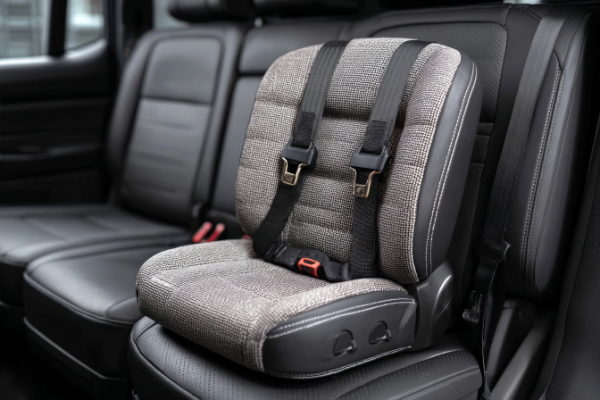
In France, children up to the age of 12 are required by law to use a booster seat, depending on their height and weight. This rule applies to all vehicles, including:
- taxis,
- ride services such as Uber or Bolt,
- private vehicles.
If a child does not have a booster seat, the driver is legally allowed and required to refuse the ride, even for a short distance.
Many families are surprised by this, as most taxis and ride services do not provide booster seats, and availability cannot be guaranteed.
Our Practical Advice for Transportation
We strongly recommend that parents:
• ask about booster seat availability when reserving a vehicle,
• and, whenever possible, bring their own booster seat.
From experience, this is the simplest and most reliable solution. It helps avoid misunderstandings or last-minute refusals from drivers who may not be equipped, trained, or legally authorized to transport children without the appropriate seat. Bringing your own booster seat also saves time, reduces stress, and ensures continuity throughout the trip—no matter the vehicle, driver, or service used.
From Perspective to Practice
Understanding how children aged 7 to 12 experience travel is the foundation.
The next step is translating that perspective into real days, real distances, and real energy levels.
The following 7-day itinerary is not about covering as much ground as possible. It is built around pace, balance, and flexibility, with the understanding that children at this age are curious and imaginative but can tire more quickly than adults expect.
Paris – 7 Day Itinerary
For Children Aged 7 to 12
This itinerary is designed for families traveling with children aged 7 to 12, an age when curiosity is strong, imagination is active, but fatigue can arrive faster than parents expect.
At this age, children enjoy discovering Paris—as long as visits are:
• well paced,
• not overloaded,
• and balanced with play, breaks, and outdoor time.
Long museums, too many transports, or overly ambitious days often lead to frustration.
This planning focuses on seeing Paris without exhausting children, so the experience remains enjoyable for the whole family.

Day 1 – Your Neighborhood & the Eiffel Tower
Goal: Arrive gently
- Arrival and check-in
- Short walk around your neighborhood
- Afternoon snack nearby
- Eiffel Tower (outside view) from Champ de Mars or Trocadéro
If you wish to go up the Eiffel Tower, tickets must be booked in advance.
Jet lag matters: on the first evening, seeing the Eiffel Tower illuminated is often more than enough.
Day 2 – Île de la Cité & the Latin Quarter
Goal: Discover Paris through stories
- Notre-Dame Cathedral (exterior visit with explanations)
- Walk along bridges and the Seine riverbanks
- Lunch in the Latin Quarter
- Panthéon (optional, only if energy allows)
- Luxembourg Gardens for play and rest
This day combines history, walking, and green space — ideal for this age group.
Day 3 – Louvre, Tuileries & Place de la Concorde
Goal: A first major museum, without overload
- Louvre Museum (short, focused visit – 1.5 to 2 hours max)
- Simple lunch nearby
- Tuileries Gardens (chairs, open space, playground)
- Place de la Concorde
- Walk along the Seine
For children aged 7–12, the Louvre works best when it is selective, well explained, and not rushed.
Day 4 – Champs-Élysées & a Child-Friendly Museum
Goal: Iconic Paris with a fun dimension
- Arc de Triomphe (climb optional, depending on motivation)
- Walk down the Champs-Élysées
- Easy lunch nearby
- Palais de la Découverte
Interactive science museum, particularly suited for ages 8–12 - Gardens of the Champs-Élysées
This day balances famous landmarks with hands-on discovery.
Day 5 – Versailles + Eiffel Tower & Seine Cruise
Goal: A major site, well organized and stress-free
Versailles is impressive for children aged 7-12, but it can quickly become overwhelming if poorly organized.
In our tours, this day is easier thanks to:
- direct and comfortable transportation,
- a child-adapted itinerary,
- regular breaks built into the visit.
- Château of Versailles (short, targeted visit)
- Lunch
- Gardens
- Return to Paris
End of day (if energy allows):
- Eiffel Tower (outside view)
- Seine river cruise (1 hour, departure near the Eiffel Tower)
Sitting, calm, and visual — perfect after Versailles.
Day 6 – Montmartre or Theme Park Day
Goal: Choose between culture or pure fun
This day is flexible and depends entirely on your children’s energy and motivation.
Option A – Montmartre (Culture & Atmosphere)
Morning – arrive early (strongly recommended):
- Funicular ride
- Sacré-Cœur (interior + panoramic view)
- Place du Tertre
Early mornings are much calmer and far more pleasant with children.
Lunch & Afternoon – Two Possibilities
Option 1 – Lunch in Montmartre
- Restaurant in the neighborhood
- Relaxed Parisian atmosphere
Best if energy levels remain good.
Option 2 – Shopping & Rest
We often recommend Westfield Forum des Halles:
- central location,
- many stores popular with children and pre-teens,
- wide choice of restaurants,
- indoor and outdoor spaces for breaks.
Safe during the day; avoid late evenings with children.
Option B – Theme Park Day (Very Popular with Ages 7-12)
For many children, a theme park day is often the highlight of the trip.
Option 1 – Disneyland Paris
- Ideal for ages 7-12
- Full-day experience
- Requires an early start and good energy
Option 2 – Parc Astérix (recommended in summer)
- Excellent for children aged 8-12
- More thrill rides and outdoor attractions
- Best enjoyed in good weather
Important for parents:
- A theme park replaces all other visits that day
- Expect tired children in the evening
- Keep the following day calm
Day 7 – The Marais & a Gentle Ending
Goal: Finish without pressure
- Place des Vosges
- Walk through the Marais
- Lunch
- Last souvenirs
- Prepare for departure
The final day is about slowing down – not adding more visits.
Final Advice for Parents of Children Aged 7–12
When traveling to Paris with children aged 7 to 12, the key is balance.
At this age, children are curious and capable, but they tire faster than adults expect.
Short museum visits, outdoor breaks, and simple logistics make a real difference.
A few practical guidelines:
- Plan one main activity per day, not more.
- Always include a park, garden, or free time.
- Organize visits by area to limit transportation.
- Accept that some famous sites may interest parents more than children.
- Be ready to adjust the plan when energy drops.
Paris works best with children when days are realistic, not ambitious.
Seeing less often means enjoying more — and keeping the trip pleasant for everyone.
Traveling to Paris with Teenagers (Ages 13 to 19)
Freedom, Boundaries, and Real Situations Experienced by Families
Traveling to Paris with teenagers aged 13 to 19 can be a powerful and meaningful experience. It is also, in practice, the age group that requires the most anticipation and clarity from parents.
At this stage, teenagers are generally autonomous, comfortable in an urban environment, and highly connected. They want freedom, independence, and personal experiences. At the same time, they are still in a phase where:
- limits are tested,
- decisions are sometimes made impulsively,
- and the real consequences of certain choices are not always fully understood.
From on-the-ground experience, the difficulty is not independence itself, but independence without clearly defined boundaries in a foreign city.
Concrete Situations We Have Experienced with Families
It is important to explain very clearly what this means in real life.
In some situations we have encountered over the years, teenagers went out in the evening without their parents, sometimes to meet people they had encountered locally or to follow recommendations seen on social media.
The issue was not the act of going out, but the fact that:
- parents were not clearly informed,
- no precise return time had been agreed upon,
- or the teenager’s phone was switched off, on silent, or simply unanswered.
For parents, this situation becomes extremely stressful very quickly.
Not knowing where your child is, being unable to reach them, in a large foreign city, creates intense and immediate anxiety.
When These Situations Directly Affect the Trip
These situations sometimes have very concrete consequences the following day.
There have been cases where:
- drivers arrived at the hotel or apartment to pick up the family,
- guides were present at the meeting point,
- visits or transportation were ready to begin…
…and the teenager was simply not there.
In some cases:
- the teenager had not returned to the accommodation during the night,
- had returned very late and was still sleeping,
- or refused to participate in the planned activity due to a conflict with their parents.
For families, this is an extremely difficult situation to manage.
Parents are faced with an impossible choice:
- leave without their child,
- or cancel the planned activity.
In almost all cases, parents naturally choose not to leave, because their priority becomes safety, dialogue, and resolving the family situation.
Why Parental Worry Takes Over Everything
It is essential to understand that in these moments, parents are no longer thinking about the itinerary, the visits, or the trip itself.
They are focused entirely on:
- knowing where their child is,
- making sure they are safe,
- re-establishing communication,
- and understanding what is happening.
In some of the situations we have experienced, parental concern became so strong that parents had to:
- contact hotel staff,
- ask reception for assistance,
- or, in more sensitive cases, contact local authorities to report a temporary disappearance.
These decisions are never taken lightly.
They are driven by legitimate fear, not by discomfort or inconvenience.


The Central Role of Smartphones in These Situations
Over the past several years, smartphones have become a central element in many of the difficult situations involving teenagers during travel.
In real situations we have encountered:
- the phone was switched off,
- left on silent,
- or deliberately ignored for long periods.
For teenagers, this may seem insignificant.
For parents, it is often the trigger for extreme anxiety.
The phone, which should be a tool for safety and communication, becomes instead a source of stress and tension.
Organizational and Financial Consequences
When these situations occur, they also have very real consequences for the organization of the trip.
Planned services (transportation, visits, logistics) are booked in advance with external providers.
Schedules are fixed, teams are mobilized, and costs are committed.
If an activity is cancelled because:
- a teenager is absent,
- refuses to participate,
- or a family conflict prevents departure,
the services involved cannot be refunded, as commitments have already been made.
These situations are rare, but when they occur, they can be:
- financially significant,
- emotionally exhausting,
- and deeply upsetting for the family.
An Important Message for Parents of Teenagers
It is essential to emphasize that all of these situations are extremely difficult for parents.
They involve stress, fear, guilt, and sometimes a sense of losing control of the trip.
This information is not shared to alarm families or to generalize about teenagers.
It is shared to give visibility to situations that do exist, so that parents can better anticipate them.
Before traveling, it is strongly recommended to:
- discuss rules clearly with your teenager,
- set clear expectations regarding outings and return times,
- define strict communication rules around phone use,
- explain that certain booked activities require commitment and presence,
- and make clear that individual decisions can have consequences for the entire family.
Setting this framework before departure often prevents painful situations
and helps ensure that the trip remains safe, balanced, and enjoyable for everyone.
Teenagers (13-19) in Paris
No rigid schedule – but smart, neighborhood-based planning
For teenagers aged 16 to 19, we deliberately do not propose a strict day-by-day itinerary.
At this age, teenagers may:
- visit Paris with their parents,
- spend part of the time on their own,
- or alternate between family time and moments of independence.
This depends entirely on:
- their level of maturity,
- their personality,
- and the choices you make as a family.
There is no single model that works for everyone.
Our main recommendation: organize by neighborhood, not by scattering visits
Based on real on-the-ground experience, the most effective way to visit Paris with teenagers is to group activities by area rather than jumping from one side of the city to another.
This approach works particularly well with adolescents because:
- fewer transports mean less fatigue,
- walking gives a greater sense of freedom,
- fewer fixed schedules reduce tension,
- coherent days feel more natural and enjoyable.
Better organization leads to a smoother experience — especially with teenagers.
Traveling to Paris as a family is a wonderful adventure, but it is also a real choice, one that requires adapting expectations, pace, and the way the city is explored.
The needs of:
- a 3-year-old,
- an 8-year-old,
- a 12-year-old,
- and a 17-year-old
are completely different.
Their ability to walk, focus, handle crowds, understand history, or accept constraints varies greatly.
That is why we chose to present Paris by age group:
- young children,
- school-age children,
- teenagers.
This approach is not meant to label or limit children.
A classification based on experience, not rigid rules
It is essential to be clear:
this is not a generalization.
Every child is unique.
- A 9-year-old can be very autonomous and resilient,
- while another child of the same age may need more breaks and reassurance.
- Some teenagers are responsible and engaged,
- others go through more complex phases.
These age groups are therefore guidelines, built from:
- many years of on-the-ground experience,
- hundreds of families accompanied,
- real situations observed in Paris.
Their purpose is to help parents anticipate, not to judge.
Traveling with children means traveling differently
Traveling to Paris with children, whatever their age, often means:
- slowing down,
- making choices,
- seeing less,
- and focusing on quality rather than quantity.
It is sometimes more family-oriented than cultural,
less dense but more balanced.
This is not a loss, it is simply another way of seeing the city.
The key role of parents
Whatever the age of the children:
- the framework set by parents is essential,
- communication before the trip makes a real difference,
- listening and adapting are the foundations of a successful stay.
A smooth trip is not a trip without surprises,
but one where the family knows how to adjust without stress.
In summary
These age-based guidelines are:
- not strict rules,
- not universal truths.
They exist to:
- support families,
- help avoid difficulties already encountered,
- and offer a realistic vision of traveling to Paris with children.
What matters most always remains the same:
adapting the trip to your family, your children, and your way of traveling.


Texte : Paris Webservices – Photos : Adobe stock / Pixabay
RECOMMENDED BY