The Art of Parisian Beauty: Makeup, Hair & Perfume

Important Note

This content does not claim to represent all Parisians or all French people. It does not offer rules, techniques, or a model to follow. It presents a cultural perspective: a mindset widely shared in Paris and across France, shaped by history, urban life, and the way appearance is perceived. The goal is not to imitate, but to understand a mentality.

Understanding French Beauty Through History

France is often approached through its visible cultural heritage history, art, architecture, and gastronomy. Yet alongside these well-known markers exists a less immediately legible system: the French relationship to beauty.

In France, and especially in Paris, beauty is not reduced to appearance or personal taste. It reflects a historically constructed relationship to the body, social norms, time, and public space. Makeup, hair, and fragrance are not separate practices but interdependent elements forming a coherent aesthetic language shaped by centuries of cultural evolution.

This language developed in constant dialogue with French history, where periods of excess were followed by restraint, and rigid social codes gradually gave way to individual expression. At different moments, beauty functioned as a marker of rank, power, morality, or emancipation. Contemporary French aesthetics still carry the imprint of these successive historical shifts.

Visitors often arrive with a fixed idea of “French chic,” expecting a clearly identifiable style. Instead, they encounter an aesthetic of understatement that can be difficult to decode. In everyday public spaces, makeup is minimal, hair appears natural or intentionally imperfect, and fragrance remains discreet meant to be perceived only at close range. Despite this apparent simplicity, nothing is accidental.

By contrast, more touristic environments display different visual codes, with bolder makeup, structured hairstyles, and more assertive fragrance. This contrast reflects not individual taste but differing cultural frameworks, often leaving visitors with a sense of misalignment they struggle to explain.

This discomfort is cultural rather than technical. In France, beauty is not primarily about transformation or visual performance. It functions as a social language governed by implicit norms developed over time and rarely made explicit.

Understanding French beauty, therefore, is not about learning techniques, but about grasping the cultural logic behind them why restraint holds such value, and why French elegance often appears natural, even when carefully constructed. For this reason, this exploration begins with makeup, continues with hairstyling, and concludes with fragrance three inseparable practices that together offer a key to reading French culture through its aesthetic codes.

Makeup: From Power to Personal Expression

In France, makeup has never been a neutral or purely decorative practice.
For centuries, it functioned as a social, political, and cultural marker before gradually becoming a personal choice.
To understand the contemporary French relationship to makeup, it is therefore essential to examine its historical uses and the successive ruptures that shaped them.

Unlike cultures in which makeup is primarily conceived as a tool of transformation or visual assertion, the French tradition has been built through alternating periods of excess and rejection of artifice.
This dynamic helps explain why moderation and restraint remain central to French aesthetic values today.

Before Versailles: Appearance as a Functional and Moral Matter

Before the rise of Versailles, appearance in France was largely governed by functional and moral considerations.
During the Middle Ages, makeup was rare and widely viewed with suspicion.
It was associated with deception, falsehood, and at times even with sin.
Legitimate beauty was expected to be natural  a gift from God rather than a human construction.

Married women were expected to cover their hair as a sign of modesty and social order.
Perfume existed, but its use was not aesthetic.
Fragrances served medical or religious purposes: purifying the air, warding off disease, or accompanying rituals in a world with limited medical knowledge.

This early distrust of artifice is fundamental.
Although it would temporarily disappear at certain moments in French history, it never vanished entirely and would resurface repeatedly.

Versailles: When Beauty Became an Instrument of Power

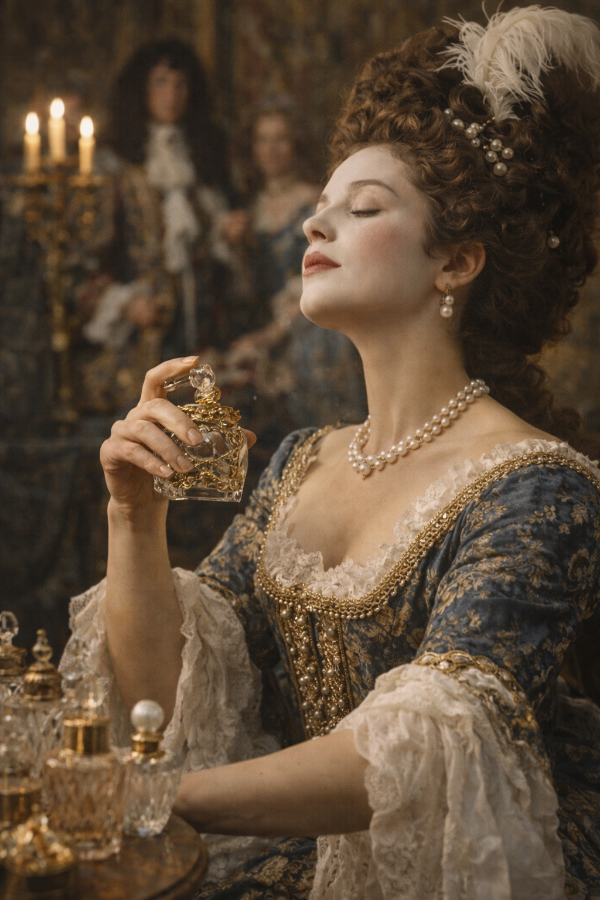
In the seventeenth century, with the establishment of the royal court at Versailles, beauty underwent a radical transformation.
It ceased to be discreet or functional and became public, collective, and explicitly political.

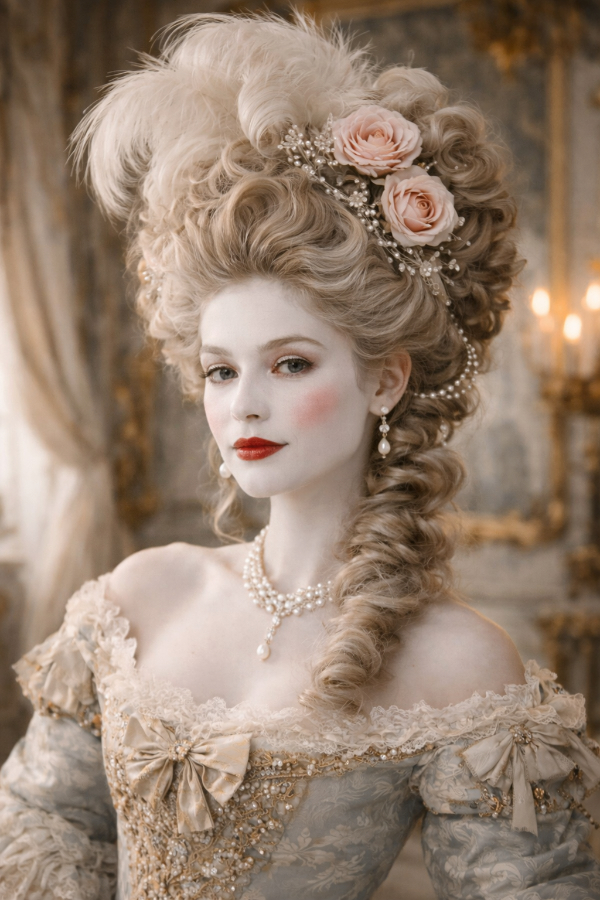
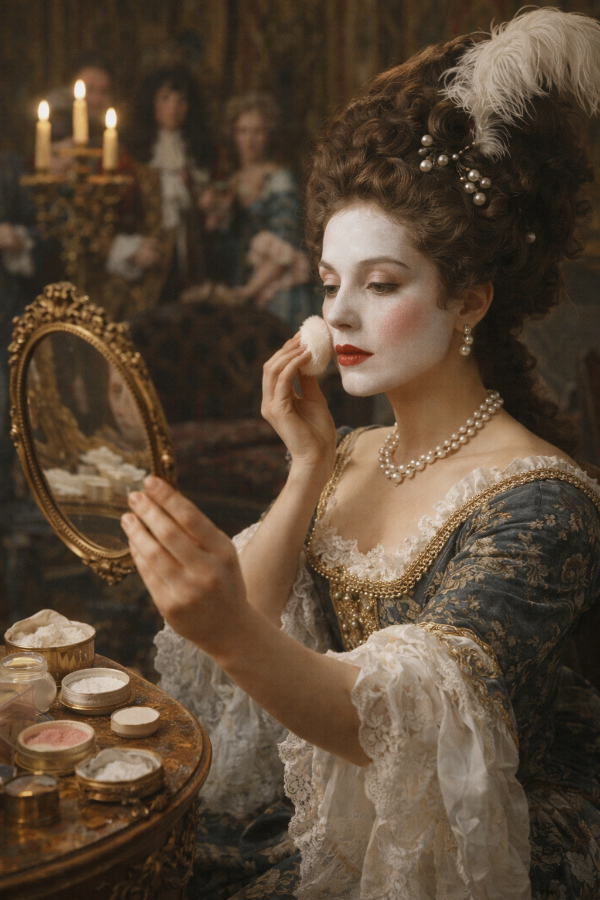
At the court of Louis XIV, failing to wear makeup was almost a social error.
Cosmetics were used to make social rank immediately visible.
White skin signaled freedom from physical labor.
Rouged cheeks suggested health and vitality.
Defined lips gave presence to faces illuminated by candlelight.

Men and women used the same products, colors, and techniques.
The famous beauty patches  small pieces of fabric applied to the face  were not merely decorative.
Their placement carried precise meanings, signaling seduction, wit, or social status.

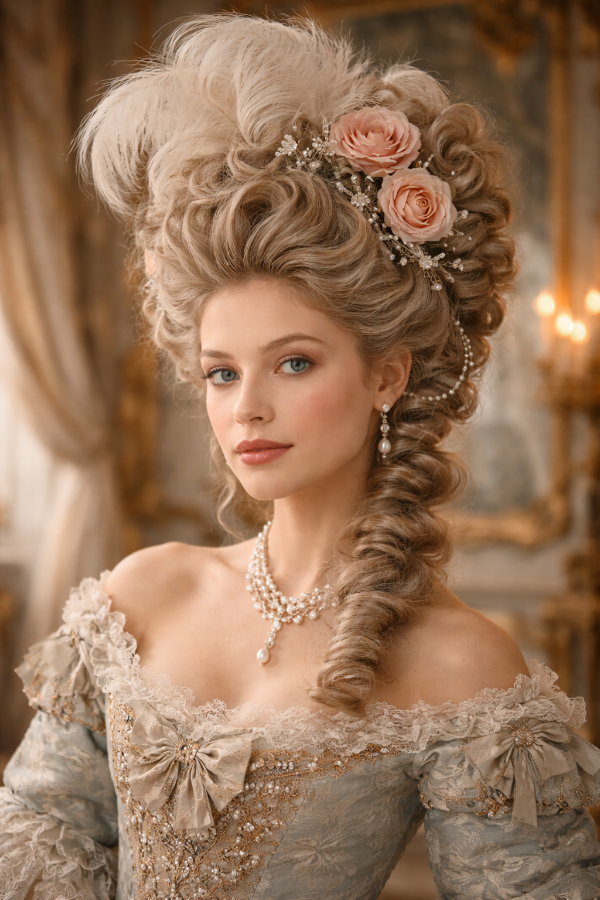
Hairstyles played an equally important role in this visual system.
They were tall, rigid, and spectacular.
The more visible the hairstyle, the higher the perceived status.
Some required internal structures made of padding and wire, as well as dedicated attendants.
Feathers, ornaments, and even miniature scenes were sometimes incorporated.

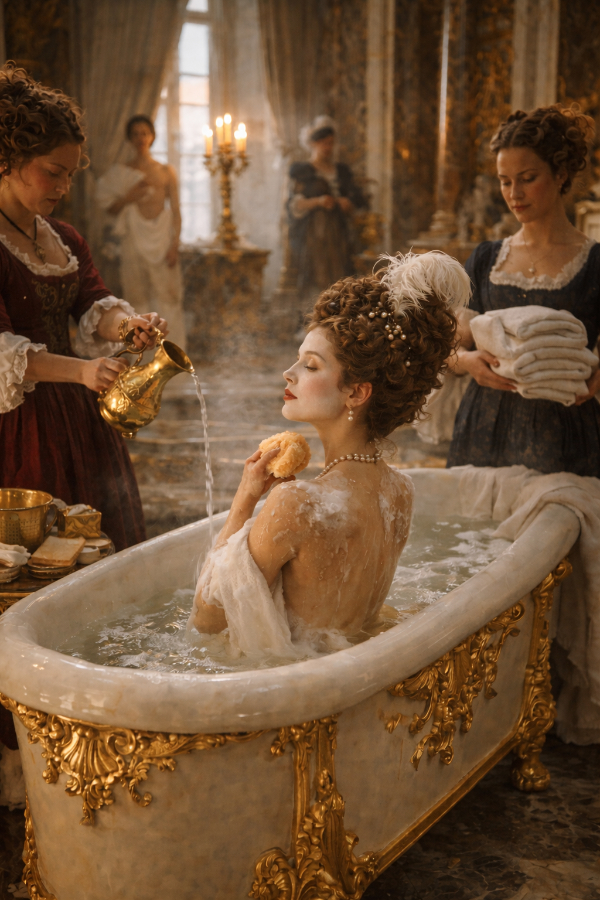
Perfume, finally, was not a pleasure but a necessity.
In crowded, enclosed spaces with limited hygiene, fragrance served to mask bodily odors.
Clothing, wigs, and gloves were heavily scented.
Versailles was a place of intense and omnipresent smell.

Key point
At this time, beauty was demonstrative, codified, and collective.
It was designed to be seen and read from a distance.
It did not express individuality, but the social and political system itself.

The Revolutionary Break: Rejection of Artifice

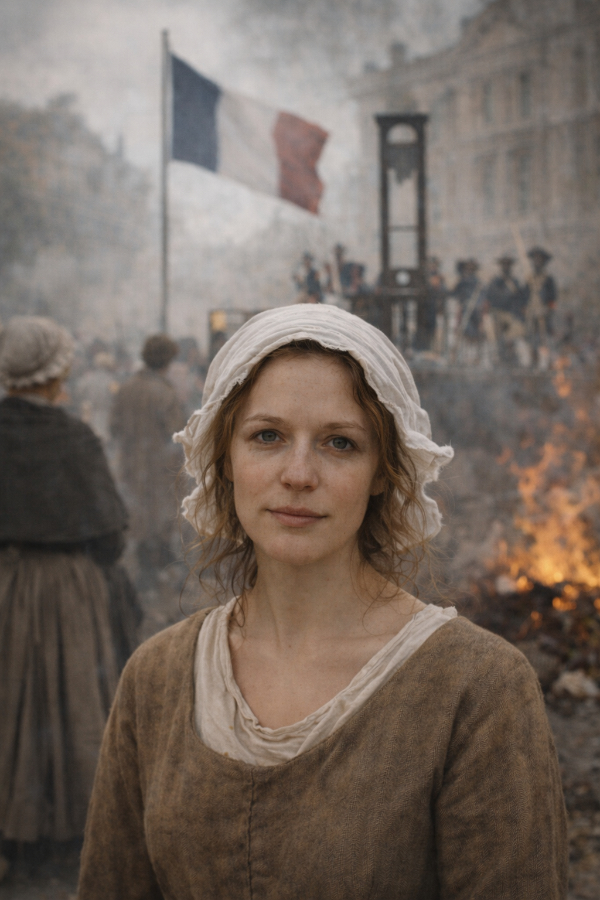
The French Revolution marked a sharp rupture in aesthetic codes.
The visual practices of the Ancien Régime became politically and morally unacceptable.
Makeup, associated with aristocracy, deception, and excess, nearly disappeared from public life.

It became private, discreet, and sometimes concealed.
This period firmly established the idea that excessive artifice was suspect.
Restraint once again became a core value, deeply embedded in French culture.

From the Nineteenth to the Twentieth Century: Toward Measured Expression

During the nineteenth century, makeup gradually reappeared.
However, it no longer aimed to transform or impress.
Its role was to accompany and enhance rather than to dominate.
Freshness replaced visible artifice.

In the twentieth century, women fully reclaimed makeup as a personal choice and a marker of modernity.
At times, it also became a symbol of emancipation.
Yet the underlying philosophy remained unchanged: excess was to be avoided.
Makeup could be present  but it should never impose itself.

This historical trajectory continues to shape the French relationship to makeup today.
It is a relationship defined by balance, individual freedom, and personal expression, all framed by a deep cultural memory.

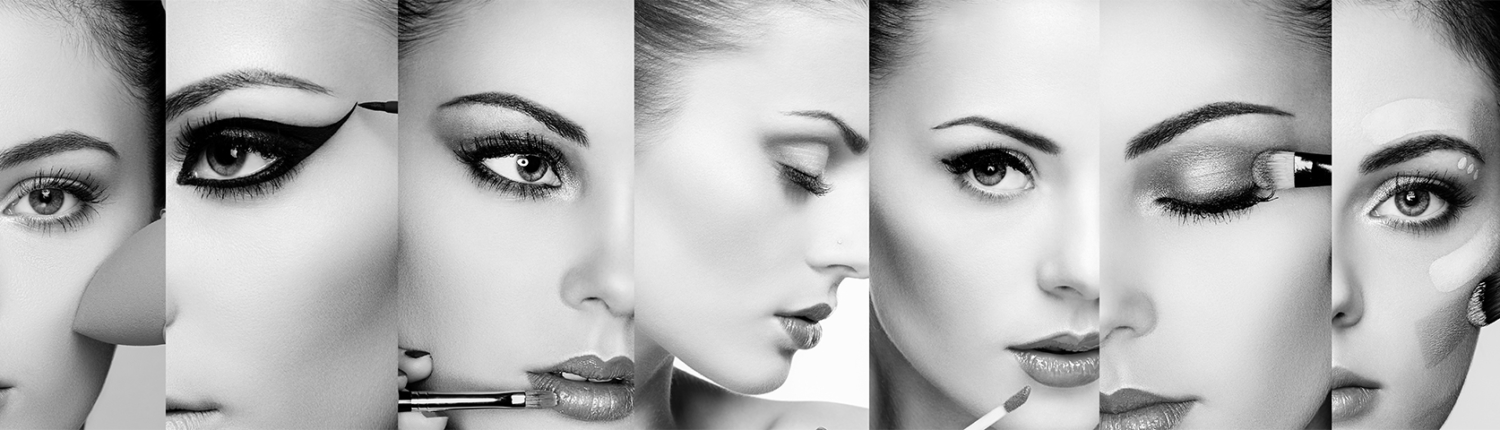
Hair: Control, Discipline, and the Gradual Liberation of the Body

The history of hair in France follows a trajectory closely parallel to that of makeup.
It moves from strict control and visual display toward restraint, proximity to the body, and eventually personal freedom.
Like makeup, hair has long functioned as a social language before becoming an individual expression.

Versailles: Hair as Hierarchy and Spectacle

At the court of Versailles, hair was neither natural nor incidental.
It was an essential component of the visual system through which power and hierarchy were displayed.

Hairstyles were designed to be seen from a distance.
They were tall, rigid, and highly structured.
The more elaborate and elevated the hairstyle, the higher the wearer’s perceived social rank.
These constructions often required internal supports padding, wire, and complex frameworks as well as the constant attention of servants.

Hair, like makeup, erased individuality in favor of visibility.
It did not express personality but status.
Men and women alike participated in this aesthetic of excess, where the body became a surface for political representation rather than personal identity.

The French Revolution: The Birth of Distrust Toward Excess

The French Revolution did not merely transform political structures; it profoundly altered the relationship to appearance.
Anything that visually evoked the aristocracy became dangerous.

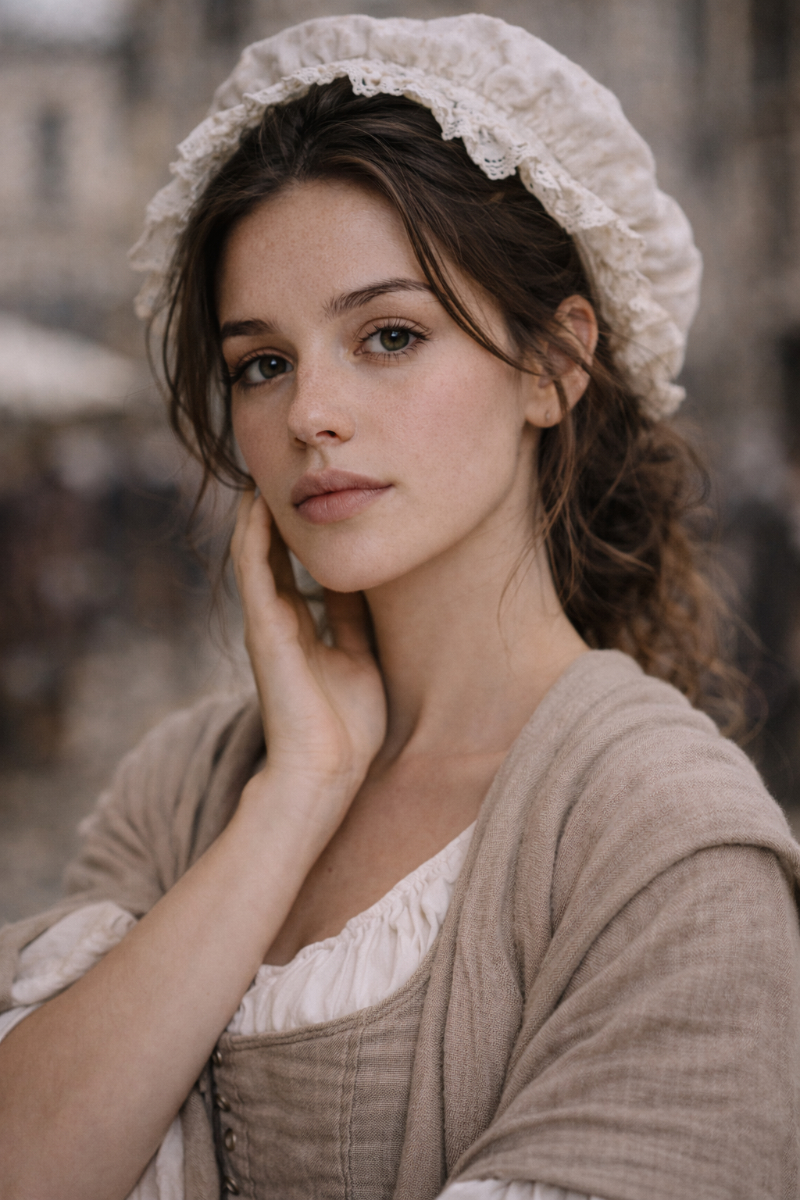
Elaborate hairstyles disappeared from public space.
Excessive grooming, visible artifice, and ornamental display attracted suspicion.
Simplicity became a moral value.
Discretion became a form of social protection.

This moment marked a decisive cultural shift.
Visibility, once a source of power, became a liability.
To stand out was no longer an advantage, but a risk.

This rupture established a lasting principle in French culture:
what draws too much attention loses legitimacy.

That principle remains perceptible today.
Excessive styling is often judged not as a technical failure, but as a cultural imbalance an impression of self-display rather than self-possession.

The Nineteenth Century: Hair Returns to the Body

In the nineteenth century, hair gradually regained a place in everyday life, but under new rules.
It remained controlled and groomed, yet no longer demonstrative.
Elegance became discreet.

Hairstyles were meant to accompany the face rather than dominate it.
Hair ceased to function as a symbol of power and instead became an extension of the individual body.
The goal was coherence rather than spectacle.

This period reinforced a specifically French ideal: beauty should not precede the person, but follow them

The Twentieth Century: Hair as Freedom and Movement

The twentieth century introduced a major rupture.
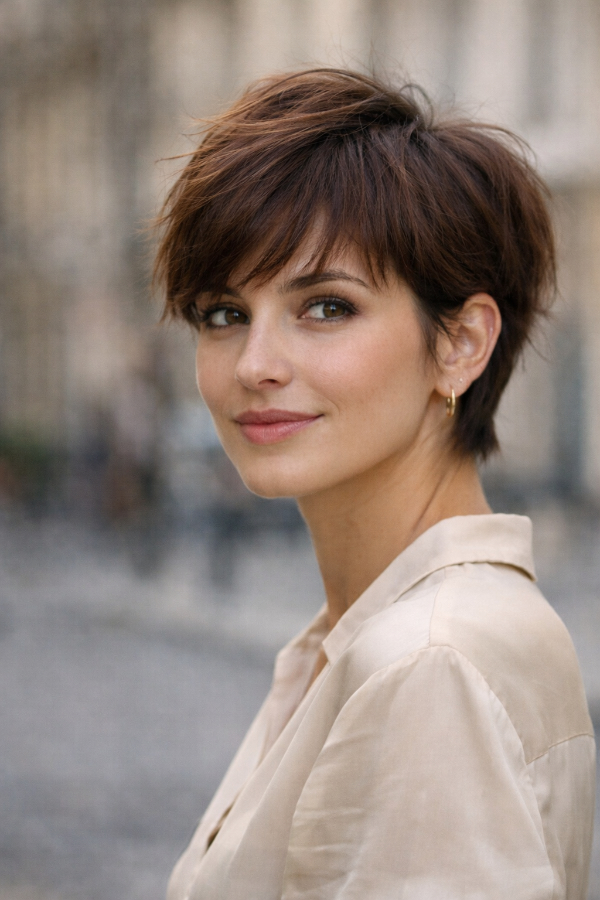
Women cut their hair.

This gesture was not merely aesthetic.
It symbolized autonomy, movement, and modernity.
Hair became lighter, freer, more responsive to the body in motion.

Paris played a central role in this transformation, both reflecting and shaping new attitudes toward femininity, work, and public life.
Hairstyles no longer sought rigidity or permanence.
They embraced change, imperfection, and flexibility.

Contemporary French Hair: Controlled Imperfection

This historical trajectory remains clearly visible today.
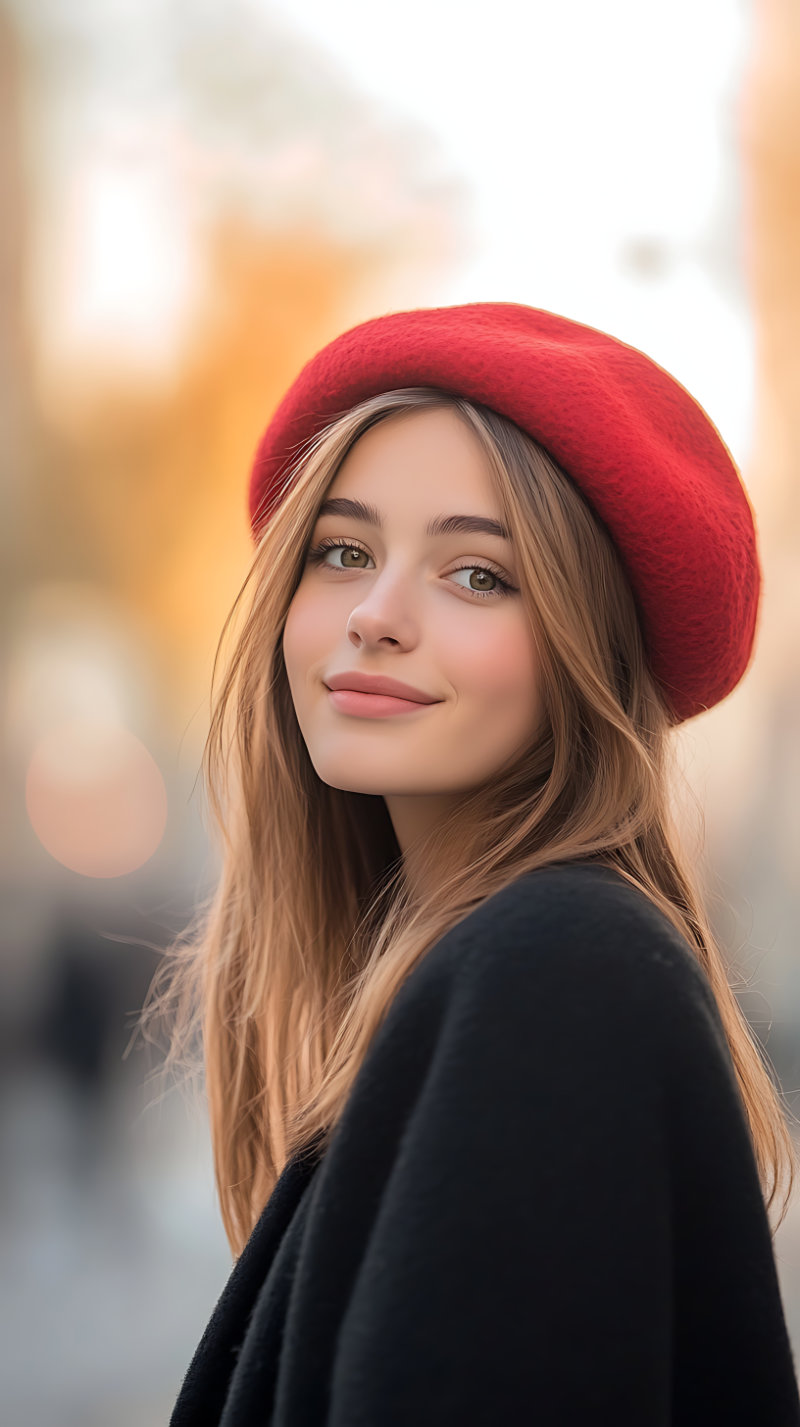
French hairstyling prioritizes the cut over styling, structure over finish.
Hair is expected to move, to live, to age.

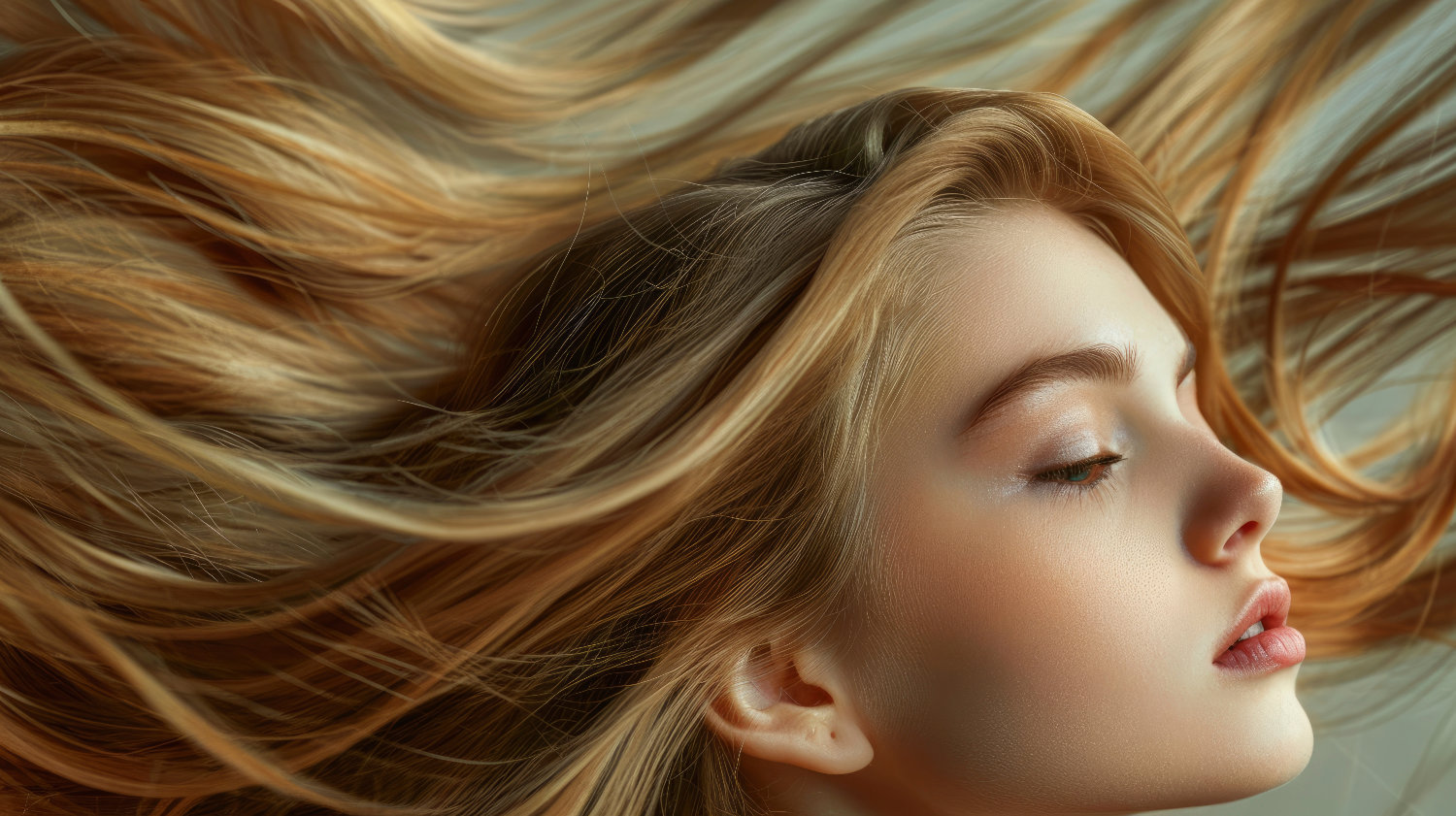
The ideal is not perfection, but controlled imperfection.
Hair should appear natural, even when carefully constructed.
It should suggest freedom rather than effort.

French hair culture thus tells a broader story:
one of control gradually relinquished, of visibility replaced by balance, and of a body increasingly allowed to exist on its own terms.

Fragrance: The Invisible Trace

Fragrance naturally concludes this journey.
Less visible than makeup or hair, it is nonetheless essential to understanding French beauty culture.
By definition invisible, it is often the most enduring element  a trace, a presence, a form of memory.

Since the seventeenth century, fragrance has occupied a central place in French culture.
Its role, however, has evolved profoundly over time, following the same trajectory as makeup and hair: from collective necessity to intimate expression, from excess to suggestion.

Before Modern Perfumery: Masking, Protection, and Distinction

At court, fragrance was omnipresent.
It was neither a pleasure nor a personal choice.
It was a necessity.

In a world of limited hygiene, crowded interiors, and constant proximity between bodies, fragrance served primarily to mask bodily odors.
Clothing, wigs, gloves, and accessories were heavily scented.
Fragrance was strong, pervasive, and sometimes overwhelming.

Like makeup and hair, it functioned within a collective system of representation.
It signaled rank, belonging, and social position.
It was meant to be perceived from a distance.

The French Revolution: Discretion as Protection

The French Revolution profoundly altered this relationship to fragrance.
Everything associated with the Ancien Régime became suspect.
Strong, easily identifiable perfumes were avoided.

As with makeup and hair, discretion became a form of social protection.
To attract attention was no longer a sign of power but a potential danger.
Fragrance retreated, becoming lighter, rarer, and sometimes nearly absent.

This period established a lasting cultural principle:
what draws too much attention is suspect.

The Nineteenth Century: Naturalness as a Hidden Art

In the nineteenth century, Paris established itself as the cultural capital of Europe.
At the same time, the bourgeoisie imposed new aesthetic codes.

Beauty was expected to exist, but never to announce itself.
Makeup was used, but remained invisible.
Women spoke of a “healthy glow,” never of cosmetics.
Products existed powders, light tints, discreet formulas  but they were meant to leave no visible trace.

Hair followed the same logic.
It was groomed and structured, yet never spectacular.
It accompanied the face rather than dominating it.

Fragrance underwent a fundamental transformation.
It ceased to be collective and became personal.
A scent began to be associated with an individual identity rather than a social group.
It was worn closer to the skin.

Essential idea
French “naturalness” does not mean the absence of effort.
It means the absence of display.

The Twentieth Century: Fragrance as an Intimate Signature

In the twentieth century, this evolution intensified.
Fragrance became a fully personal choice.
It was chosen for oneself, not for others.

A perfume evoked memory, emotion, place, and time.
It was not intended to fill a room or impose itself.
It revealed itself only at close range, in moments of intimacy.

This relationship to fragrance helps explain much of contemporary French style.
Perfume does not seek to impress.
It accompanies.
It suggests.
It leaves a trace rather than a statement.

What the Visitor Takes Away

More than makeup or hairstyle, fragrance is often what visitors take with them when they leave France.
A bottle, a scent, a sensation.

Along with it, they carry something less tangible:
a relationship to memory, discretion, and time.
A fragment of French history made invisible  yet enduring.

The Twentieth Century: Freedom, but Coherence

The twentieth century marks a decisive transformation in the history of beauty in France.
For the first time, women gained real autonomy in their relationship to appearance.
They cut their hair.
They chose their makeup.
They wore fragrance for themselves, rather than to conform to a collective norm.

This liberation of the female body is inseparable from the broader social, political, and cultural shifts of the century: access to work, increased mobility, evolving social roles, and new ways women occupied public space.

Yet this freedom did not eliminate aesthetic codes.
It transformed them.

A Liberated Body, Still Culturally Legible

Hair became shorter and more mobile, closer to the natural movement of the body.
Makeup ceased to be an obligation or a disguise and became a personal choice.
Fragrance evolved into an intimate signature, associated with identity rather than status.

However, this freedom operated within a precise cultural framework.
In France, individual expression remains governed by a strong expectation of coherence.

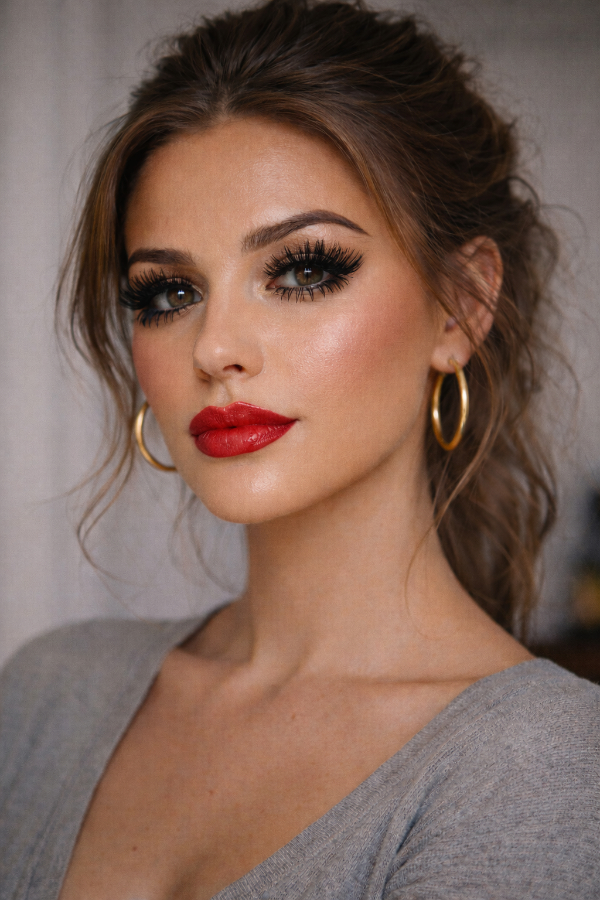
A woman may wear a bold lipstick 
but often with minimal makeup elsewhere.

A hairstyle may appear loose or effortless 
but the cut itself is precise.

Nothing is entirely left to chance.
Freedom does not mean showing everything;
it means choosing what deserves to be visible.

Coherence as a Core Value

It is during the twentieth century that a defining principle of French style fully crystallizes:
coherence takes precedence over accumulation.

Each element  makeup, hair, fragrance  must remain in dialogue with the others.
One gesture may be strong, provided the rest remains restrained.
Excess is not forbidden, but it must be isolated, controlled, and justified.

Field anecdote
Many visitors say:
“French women look like they do nothing.”

In reality, they do fewer visible things 
but with greater logic, continuity, and restraint.

The Twentieth-Century Legacy Today

This philosophy continues to shape the contemporary French relationship to beauty.
Freedom has been acquired.
But it is exercised within a cultural framework shaped by history.

In France, being free does not mean unlimited display.
It means knowing how to measure, balance, and suggest.

The twentieth century did not abolish aesthetic codes.
It replaced obligation with choice 
and choice with aesthetic responsibility.

Why Some Tourists “Miss the Mark”

In many cultures, successful makeup is expected to be visible.
It corrects, transforms, and impresses.
The more technical and elaborate it is, the more it is valued.
Visibility is proof of skill.

In France, this logic is reversed.

A makeup look that is too visible is often perceived as a rupture.
It draws attention to itself rather than integrating into the whole.
Without malice, it may be described as “painted”  not as an insult, but as an indication that the makeup has become the subject instead of the person.

Faced with this perception, some visitors attempt the opposite strategy.
They try to do very little.
Sometimes nothing at all.
But without understanding the underlying intention.

The result can then appear careless, unfinished, or incoherent  not natural, but accidental.

The Tourist Misunderstanding: Too Much or Not Enough

This is where many visitors struggle.

Some arrive with aesthetic habits shaped by cultures where makeup is designed to be seen, photographed, and recognized.
They wear heavy foundation, strong contrasts, and highly structured looks intended for visibility.
In France, such makeup is often read not as mastery, but as excess.

Others attempt to adapt by erasing makeup entirely.
But without understanding French aesthetic logic, this absence can feel unintentional rather than deliberate.
It lacks structure, balance, or coherence.

In both cases, the issue is not technical ability.
It is not a matter of products, trends, or skill level.

Key point
This is not a problem of technique.
It is a problem of intention.

Revealing Rather Than Transforming

In France, makeup is not conceived as a tool of transformation.
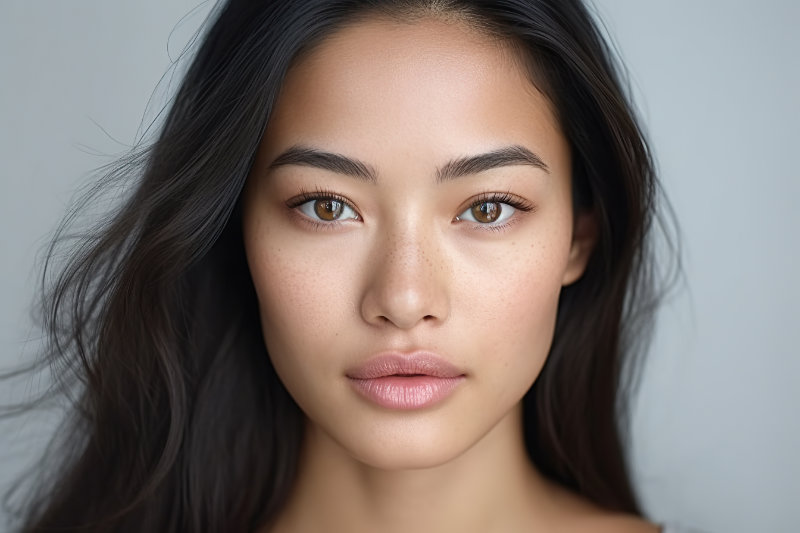
Its purpose is not to change the face, but to accompany it.

The goal is to reveal rather than to correct.
To support rather than to dominate.
To suggest rather than to declare.

A successful French makeup look does not announce itself.
It integrates into a larger whole: the face, the body, the moment, the context.

This logic extends beyond makeup.
It applies equally to hair and fragrance.
Each element must remain in dialogue with the others.
None should seek to take control.

Understanding this intention is what allows visitors to “fall into place.”
Not by copying French women, but by reading the cultural language that shapes their choices.

What often appears effortless is, in reality, deliberate 
not less thought, but different thought.

How to Read France Today

Observing the French today is to see this history still at work.
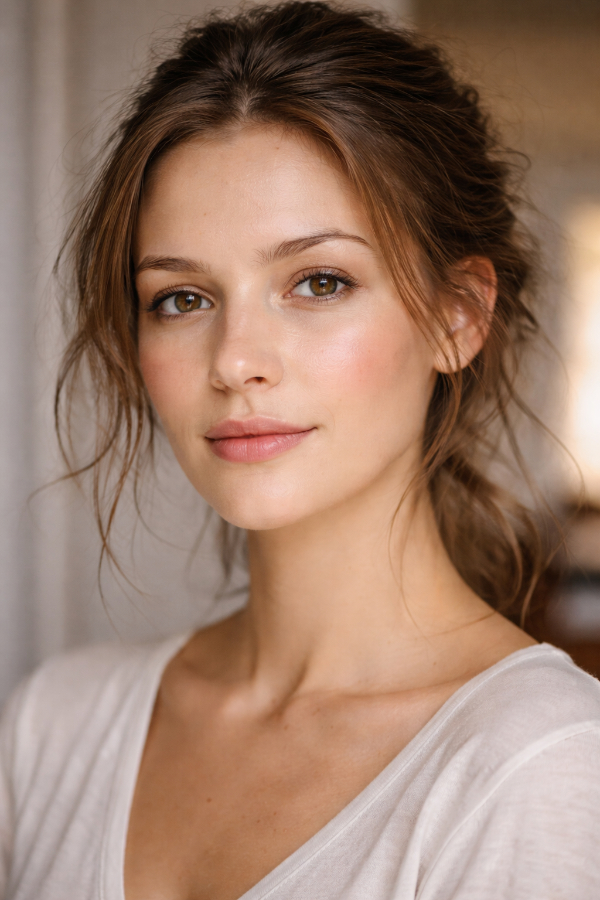
Subtle makeup.
Natural-looking hair.
Discreet fragrance.

This is neither a passing trend nor a matter of chance.
It is the result of centuries of cultural adjustment  of excesses corrected, of reactions refined, of balance gradually achieved.

Contemporary restraint is not a rejection of beauty.
It is its culmination.

An Inherited Aesthetic, Not an Improvisation

In French public space, beauty is not meant to dominate.
It accompanies the person rather than preceding them.
It exists in continuity with the face, the body, movement, and context.

Makeup is rarely highly visible 
but it is considered.

Hair appears simple 
but it is constructed.

Fragrance is discreet 
but seldom absent.

Reading key for visitors
In France, beauty is meant to underline identity,
not replace it.

Observing Rather Than Judging

To understand this logic, observation is often enough.

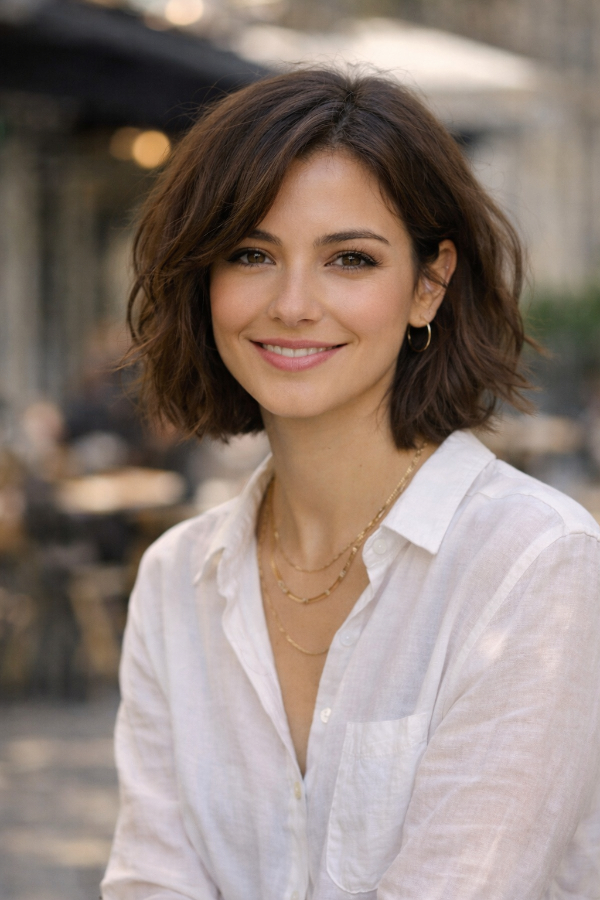
Sit at a café terrace.
Watch people pass.

You will rarely see faces that appear “transformed.”
But you will see coherence.

Hair moves.
Faces remain expressive.
Fragrance reveals itself only at close range.

What you are seeing is not negligence.
It is the visible result of a long cultural history.

Conclusion: What the Traveler Truly Takes Away

Understanding French beauty does not mean changing who you are or adopting a new look. It is not about imitation or transformation, but about learning to read a language one shaped by restraint rather than display, balance rather than accumulation, and confidence rather than assertion.

This language did not emerge overnight. It is the result of centuries of cultural shifts, of excess followed by correction, and of freedom negotiated rather than claimed. Each gesture makeup, hair, fragrance carries the memory of what came before.

What often fascinates visitors is not a specific style, but a way of inhabiting the body: an approach to appearance that does not seek to dominate space. French elegance rarely announces itself, yet it remains deeply intentional.

This is why French beauty is often described as “natural,” even though it is rarely spontaneous. What appears effortless is usually deliberate; what seems simple is often the result of careful choice.

When travelers leave France, they may take home a perfume, a café memory, or an image of faces that appeared untouched yet unmistakably present. But what they truly carry with them is less tangible: a different way of seeing others, and themselves. An understanding that beauty does not need to be visible to exist, that confidence can be quiet, and that coherence is often more powerful than performance.

And often, without realizing it, they return home not with a new look, but with a new way of being in the world.

References

Makeup & Beauty

  • Georges Vigarello, A History of Beauty – Polity Press
  • Dominique Paquet, The Hidden History of Beauty
  • Caroline Weber, Queen of Fashion: What Marie Antoinette Wore to the Revolution -Picador
  • Palais Galliera (Paris Fashion Museum) – archives and exhibitions
  • Musée Carnavalet & British Museum – 18th-century cosmetic collections

Hair & Appearance

  • Antonia Fraser, Marie Antoinette: The Journey – Anchor Books
  • Évelyne Lever, Louis XIVMarie Antoinette – Fayard
  • Château de Versailles archives – wigs, powders, court hairstyles
  • Bibliothèque nationale de France (BnF) – fashion engravings (18th-19th centuries)

Perfume

  • Elisabeth de Feydeau, Scent and Seduction: A History of Perfume
  • Osmothèque (Versailles) – International Perfume Conservatory
  • Historic Parisian perfume houses: Houbigant (1775), Lubin (1798)

The French Revolution & Aesthetic Rupture

  • Mona Ozouf, Festivals and the French Revolution – Harvard University Press
  • Lynn Hunt, Politics, Culture, and Class in the French Revolution
  • Musée Carnavalet – everyday life during the Revolution

French Cultural Codes & Perception

  • Roland Barthes, Mythologies – Hill and Wang
  • Gilles Lipovetsky, The Empire of Fashion – Princeton University Press
  • Contemporary cultural observation (fashion, beauty, urban tourism)

Texte : GV Paris Webservices – Photos : Adobe stock  / AI Images

Website Security Test