THE SUMMIT GUIDE
What to Know Before Reaching the Highest Public Level of the Tower

What to Know Before Reaching the Highest Public Level of the Tower
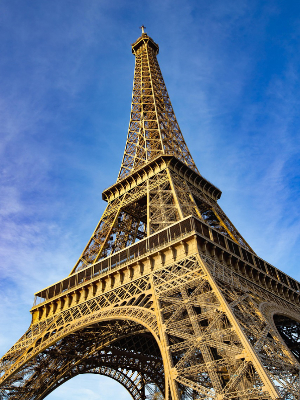
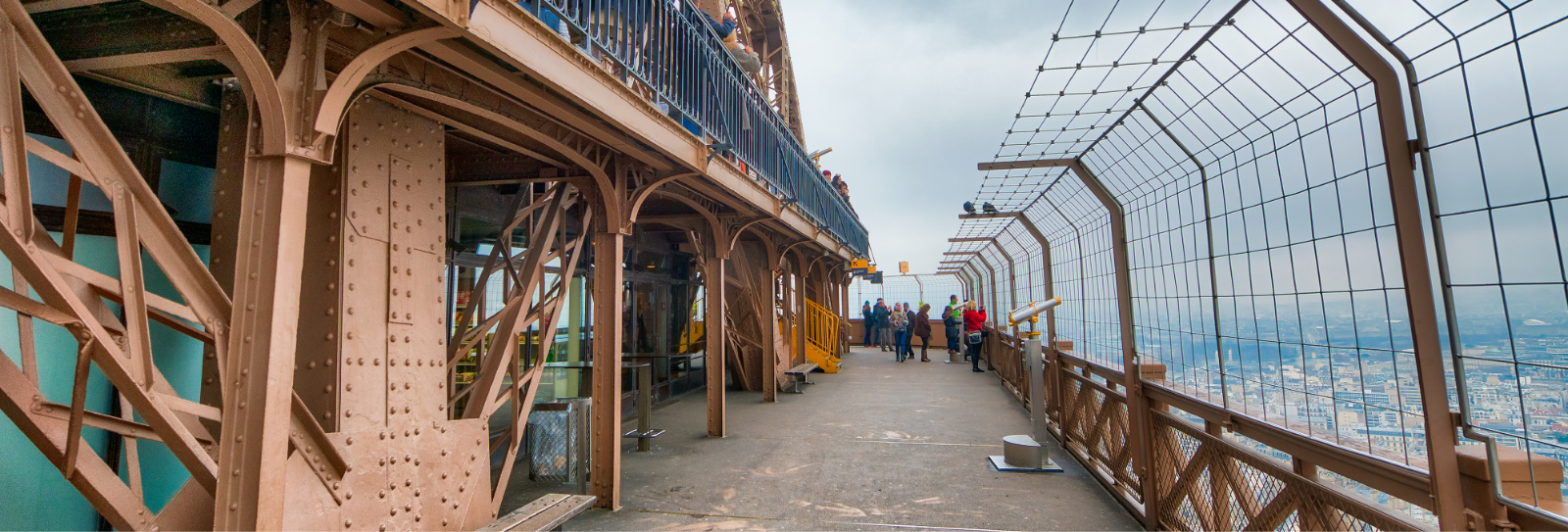
The summit of the Eiffel Tower, at 276 metres above the Champ-de-Mars, is the experience most visitors prioritise. The panoramic range is extraordinary, the sensation of altitude is unlike anything available on the lower levels, and Gustave Eiffel’s reconstructed private apartment is one of the most historically precise and consistently overlooked spaces the Tower contains. Knowing what to look for here changes the visit completely.
The summit does not simply give you a higher view. It changes the way Paris feels. The lower levels still let you read the city in detail. Up here, the capital begins to dissolve into horizon, atmosphere, and distance. That difference matters. It is why the summit feels so memorable, and also why it works best when approached with intention rather than speed.
The summit view is often described as panoramic. That is true, but it is not the whole story. What makes it remarkable is the scale of what becomes visible at once.
The view on a clear day
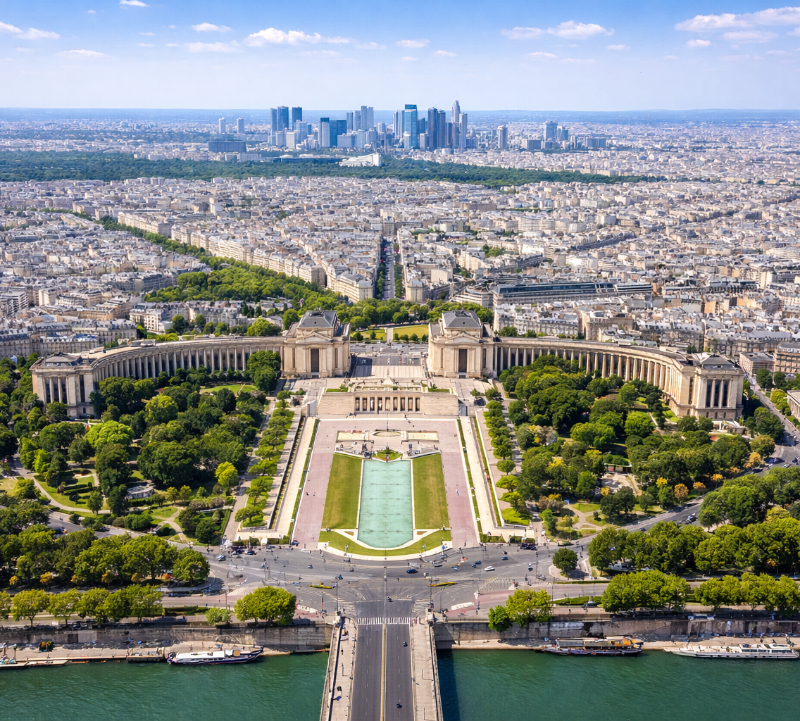
The summit observation deck sits at 276 metres, while the full height of the Tower, including the antenna mast above, reaches 330 metres. On a standard clear day in Paris, the visible range extends to roughly 70 kilometres in all directions. On exceptional mornings in winter or early spring, after rainfall has cleared the atmosphere, visibility can stretch farther still, with Chartres Cathedral visible to the southwest at around 90 kilometres and the Reims region identifiable to the northeast.
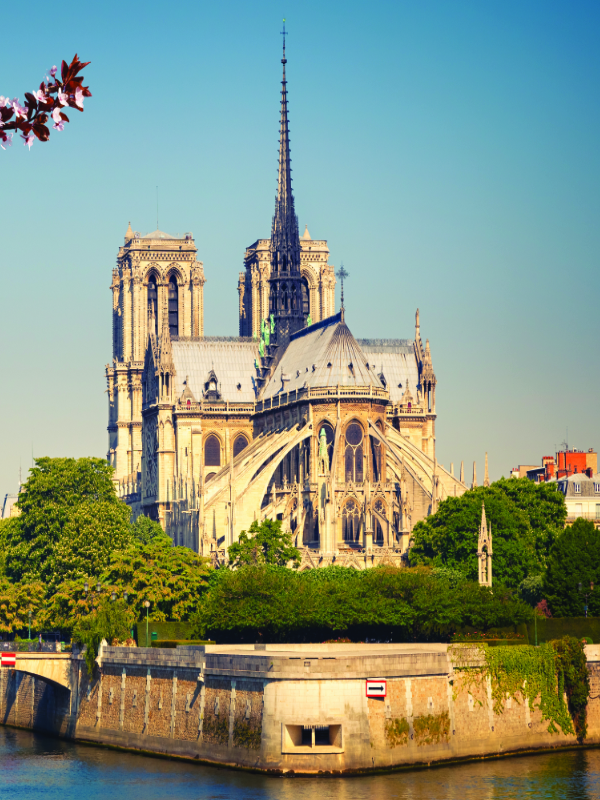
On any normal clear day, the major landmarks of Paris can be identified without optical aids. Notre-Dame lies to the east. The Arc de Triomphe appears to the northwest. Sacré-Cœur rises to the north. The Panthéon stands to the southeast. Montparnasse Tower anchors the south, while the Grande Arche de La Défense extends the western axis beyond the city. The long green strip of the Champ-de-Mars reads clearly below. The orientation panels on the terrace are genuinely helpful and far more useful in practice than memorising directions in advance.
What the summit does not show
At the same time, the summit does not offer proximity. At 276 metres, the urban texture begins to dissolve. Individual buildings become difficult to distinguish. Streets lose their intimacy. The Haussmann boulevard grid remains visible, but it reads as pattern rather than as a sequence of places you can follow. The experience is atmospheric rather than analytical.
That is why the combination of second floor and summit remains more rewarding than the summit alone. The second floor lets you understand Paris. The summit lets you see it whole.
| From this height, Paris becomes less a collection of monuments than a single vast composition. |
For many visitors, the most unexpected part of the summit is not the view. It is a room.
A private space at the top of the Tower
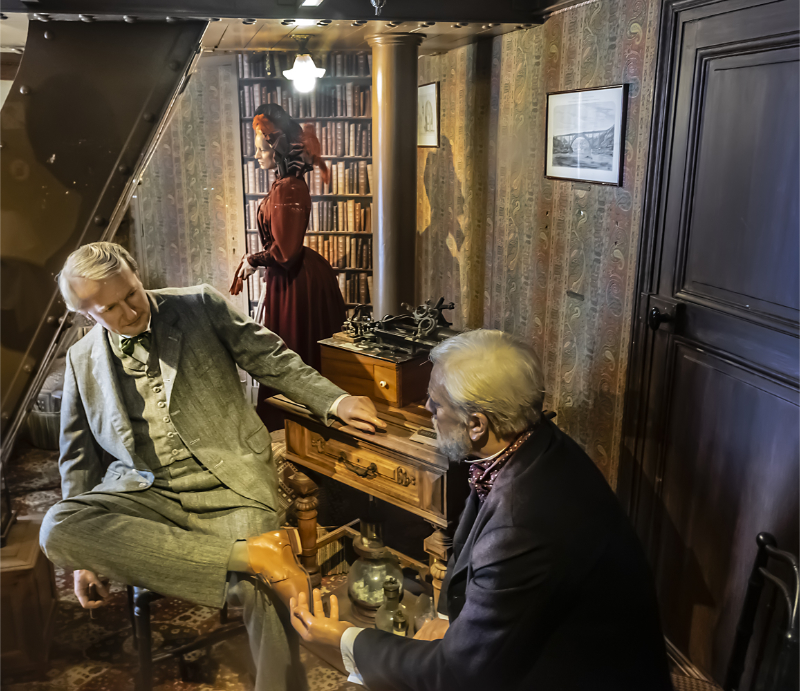
At the northeast corner of the summit level, behind a glass partition, stands the reconstruction of Gustave Eiffel’s private apartment. These rooms were fitted out at the top of the Tower to receive distinguished guests during the Universal Exhibition of 1889. Period photographs and written accounts document the original arrangement, and the reconstruction follows that evidence closely.
The apartment attracted attention from the start. Wealthy Parisians reportedly offered to rent it, but Eiffel refused. His position was clear. The summit, in his mind, was primarily a scientific and observational platform, not a social retreat. That decision still shapes the way the room is read today.
The meeting with Thomas Edison
The most famous visitor received there was Thomas Edison, who met Eiffel in September 1889 during his visit to the Universal Exhibition. Edison signed the guest book and expressed admiration for the engineering precision of the structure and the instruments installed at the summit. That guest book is now held in the archives of the Institut de France.
Today, the apartment has been reconstructed with period-appropriate furnishings, including wallpaper, upholstered chairs, a small piano, and wax figures representing Eiffel and Edison in the configuration shown by a contemporary illustration of their meeting. Many visitors glance at the figures and move on. However, the interpretive panels around the apartment are among the most precise historical texts on the entire Tower. Taking five minutes here is one of the best uses of time at the summit.
| At the highest point of the Tower, Eiffel did not build fantasy. He built a room for thought, science, and selected conversation. |
Not everything at the summit needs to be solemn. Part of the pleasure of this level is that it also allows a moment of uncomplicated celebration.
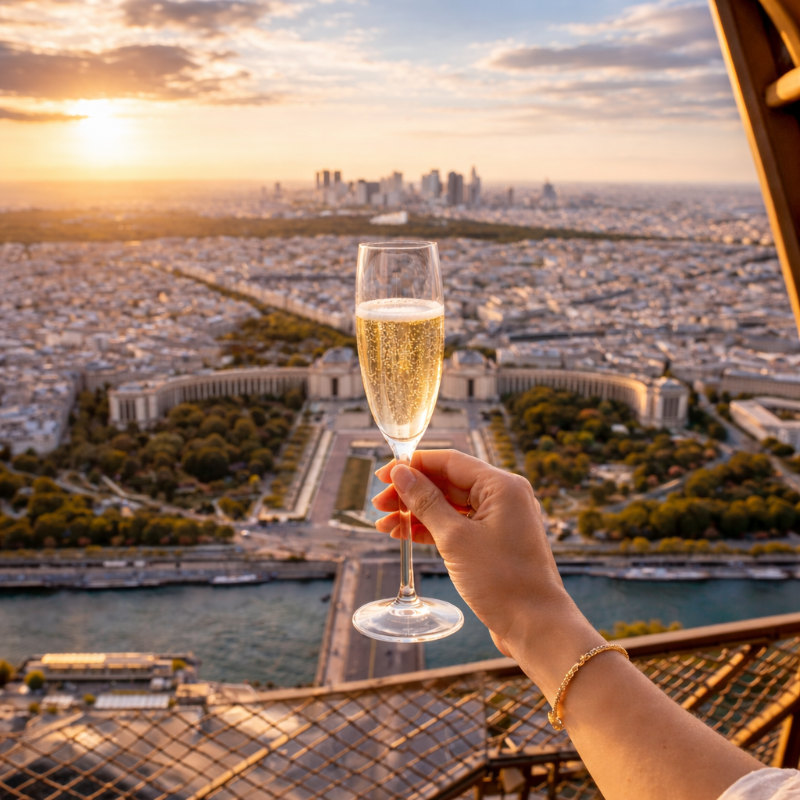
A champagne bar operates at the summit year-round during normal Tower opening hours, without reservation. It serves glasses and small bottles of champagne, alongside soft drinks and light snacks. There is no minimum spend and no advance booking required.
The appeal is obvious, but it is not trivial. Drinking a glass of champagne at 276 metres above Paris, especially on a clear evening when the city begins to illuminate below, is one of the most straightforwardly successful visitor experiences the Tower offers. It is simple, well placed, and entirely in keeping with the summit’s sense of occasion.
| Some views ask for analysis. Others ask for a pause and a glass in hand. |
The summit feels effortless when it goes well. In reality, a few practical details shape the entire experience.
How access works
The summit is not reached directly from the esplanade. Visitors first take the pier lifts to the second floor, then queue again for the separate central vertical lift that continues upward. In peak season, especially between June and August, this second lift queue can add a substantial amount of waiting time. Planning for it changes expectations immediately.
The staircase does not continue to the summit. From the second floor upward, lift access is the only option.
Weather and temperature
Bring an additional layer regardless of the weather at ground level. The summit is typically five to eight degrees Celsius cooler than the esplanade, and wind speeds at 276 metres can feel significant even on days that seem calm in the city below. Visitors often underestimate this difference and arrive underprepared.
Unexpected closure
The summit also closes independently of the rest of the Tower when wind speeds exceed operational safety thresholds. These closures can happen without advance notice. If the summit becomes inaccessible, the second floor remains open and the operating company provides a partial refund for the difference in ticket price. Checking the Tower’s official app or social media before arrival is therefore a useful habit rather than an excessive precaution.
| The summit feels elevated in every sense. That is exactly why small practical decisions matter more here than they do below. |
A summit visit improves immediately when it is treated as a sequence rather than as a single vertical rush.
Read the city before rising above it
Spend time on the second floor before continuing upward. Even twenty minutes there makes the summit more meaningful, because you arrive with a clearer mental map of Paris already in place.
Find the apartment
The reconstructed apartment sits at the northeast corner of the summit level. Follow the signs from the central lift exit. Many visitors complete a full circuit of the terraces without locating it, which is one of the easiest mistakes to avoid.
Choose dusk if possible
If your schedule allows, visit at dusk. Watching the transition from late afternoon light to the first activation of the floodlighting is one of the finest single moments the Tower offers. The best booking is the slot that places you at the summit around forty-five minutes before sunset.
Morning can be calmer in windy seasons
If wind closures are a serious concern, morning slots in summer are often more reliable than afternoon ones. This matters especially for visitors travelling with children or with anyone uneasy at height.
| The summit rewards timing as much as altitude. Arrive well, and the whole experience settles into place. |
Author’s note: This text was written with the intention of sharing and transmitting knowledge, not as an academic work. Its author is not a historian. Some details or interpretations may not reflect current historiographical consensus. For a rigorous approach, please refer to the sources listed at the end of this document
Références : Tour Eiffel, Découvrir le sommet ; Tour Eiffel, Explore the top of the Eiffel Tower ; Tour Eiffel, Bar à champagne au sommet de la tour Eiffel ; Tour Eiffel, Billet sommet par ascenseur + coupe de champagne ; Tour Eiffel, FAQ – Peut-on réserver pour le Bar à Champagne ? ; Guide MICHELIN, Le Jules Verne – Paris ; Guide MICHELIN, Inside Two-Star Le Jules Verne Restaurant in Paris ; Tour Eiffel, Le sommet de la Tour Eiffel ; Tour Eiffel, Tarifs et offres – billet sommet.
OUR BEST TOURS