THE EIFFEL TOWER MYTHS GUIDE
Seeing the Tower Through History, Assumption, and Misconception


THE EIFFEL TOWER MYTHS GUIDE
Seeing the Tower Through History, Assumption, and Misconception
At first glance, the Eiffel Tower seems overfamiliar. It is one of the most photographed monuments in the world, one of the most written about, and one of the easiest to think we already understand.
The structure is the same. The assumptions are not. Over time, a monument this famous attracts its own mythology: some of it historical, some practical, some simply repeated until it feels true. A few myths come from real episodes enlarged by memory. Others come from photographs, travel advice, or the logic of first impressions. Together, they shape how visitors imagine the Tower before they ever arrive.
That difference matters. A better understanding of the Eiffel Tower depends not only on knowing its history, but on separating what is memorable from what is accurate. Once you do that, the monument becomes more interesting, more legible, and often more surprising than the myth itself.
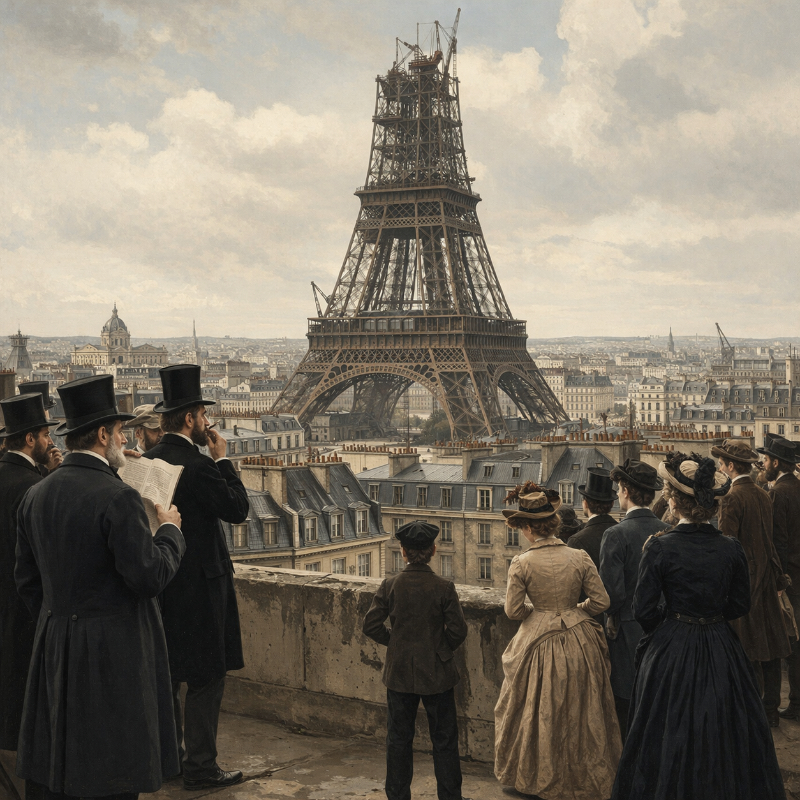
The protest was real. The unanimity is the fiction.
The idea survives because it is simple and dramatic. Paris, city of balance and taste, saw the Tower rise above its rooftops and rejected it as one. In reality, the reaction was sharper, narrower, and far less universal than the myth suggests.
A famous protest, not a collective verdict
The belief comes largely from the 1887 petition signed by prominent writers and artists who attacked the project before it was completed. Their language was memorable enough to outlive the moment itself. Over time, that protest hardened into a broader legend: not opposition from part of the cultural elite, but rejection by the whole city. That is what the myth gets wrong.
What the critics feared
To many opponents, the Tower seemed too industrial, too tall, and too disruptive for the Paris skyline they knew. It looked less like architecture than an intrusion of engineering into the symbolic heart of the capital. Yet criticism was never the only response. Curiosity was immediate, visitors came in large numbers, and the 1889 Exposition gave the structure a public audience far beyond the circle of its detractors.
Why the myth lasts
Elite disapproval leaves better records than ordinary fascination. Petitions are archived. Famous insults are quoted. Quiet admiration is harder to preserve. The result is a distorted memory in which the objections remain vivid, while the early success of the Tower fades into the background.
| The Eiffel Tower was controversial from the start, but it was never hated by all of Paris. It was debated, criticised, admired, and visited almost immediately. |

The glow is continuous. The sparkle is not.
It is one of the easiest assumptions to make from photographs and short videos. The Tower shines after dark, flashes in golden bursts, and seems to remain in that theatrical state for the whole evening. In reality, its night image is much more structured than that.
A timed spectacle, not a permanent effect
The Eiffel Tower does not sparkle continuously throughout the night. Its permanent amber floodlighting comes on at dusk, while the sparkling display appears for five minutes at the start of each hour. On standard evenings, the final sequence begins at 11:00 PM and ends at 11:05 PM, with the floodlighting remaining visible until midnight. During the summer schedule, the Tower stays illuminated later, and the last sparkle begins at 11:45 PM before the lights go out at 1:00 AM.
Why the myth feels true
Most people encounter the Tower at its most dramatic moment. Travel videos, postcards, and social media clips nearly always show the sparkling sequence rather than the quieter intervals between them. Over time, that edited version becomes the remembered one. The monument seems to glitter all night, when in fact the effect is brief, repeated, and carefully timed.
Why timing matters for visitors
This distinction matters more than it may seem. For dinner reservations, river cruises, night photography, or a walk to a viewpoint such as the Trocadéro, the difference between permanent lighting and the five-minute sparkle can shape the whole experience. The drama is real. It is simply scheduled rather than continuous.
| The Tower does not sparkle all night. It glows for hours, but the sparkling display appears only in short hourly sequences, which is exactly why it feels memorable when it begins. |
The resemblance is obvious. The intention is not.
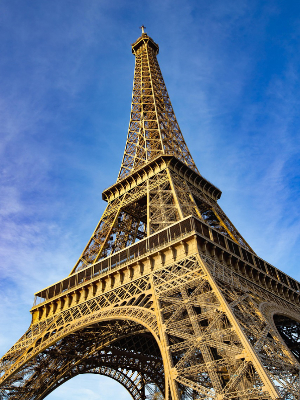
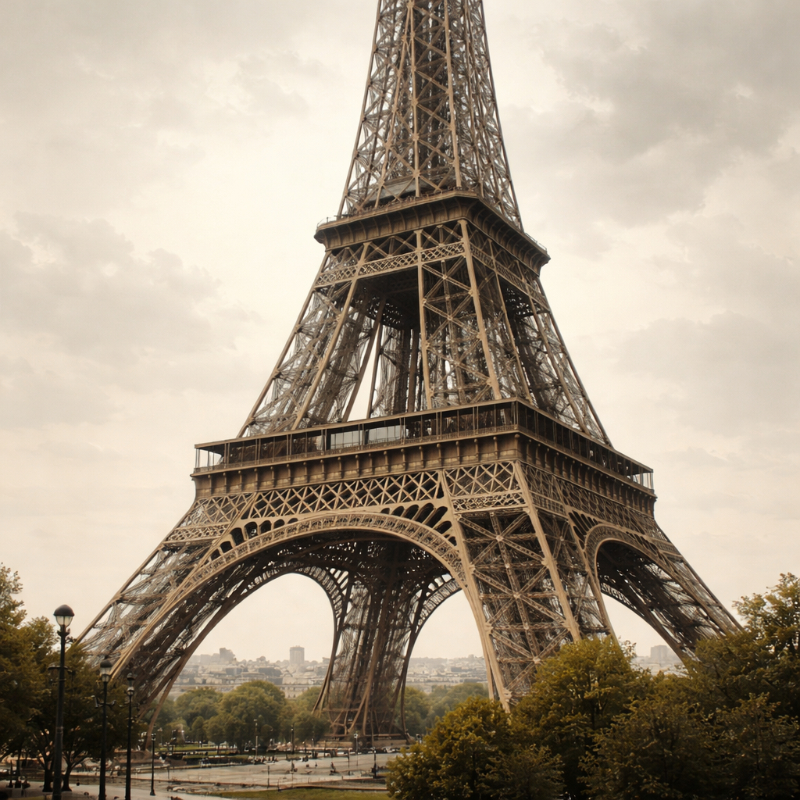
It is an easy myth to believe once the idea has been planted. The Tower rises on four legs, narrows as it climbs, and seems at first glance to trace the outline of a giant capital A. For many visitors, that visual coincidence feels too neat to be accidental. In reality, the form comes from structural logic rather than symbolic design.
A shape created by engineering constraints
The Eiffel Tower was not designed as a typographic gesture or a hidden emblem. Its silhouette emerged from calculations about weight, wind resistance, stability, and the efficient distribution of force through iron. The broad curved base and narrowing profile were practical solutions to an extreme engineering problem, not an attempt to draw a letter in the Paris skyline.
Why the myth survives
The myth lasts because the comparison is visually satisfying. Once noticed, it is difficult to unsee. But resemblance is not the same thing as intention. Many great structures acquire meanings and associations after they are built, especially when their form is simple enough to invite interpretation. The Tower’s outline is memorable partly because it feels legible, even when that legibility was never the point.
What visitors should remember
The Eiffel Tower may look like an A from certain angles, but its form was shaped by engineering before symbolism. That is part of what makes it so remarkable. Its elegance was not imposed on the structure after the fact. It emerged from the discipline of making height, iron, and balance work together.
| The Tower resembles a letter only by coincidence. Its silhouette was designed to stand, not to spell. |
Advance planning helps. Absolute urgency does not always.
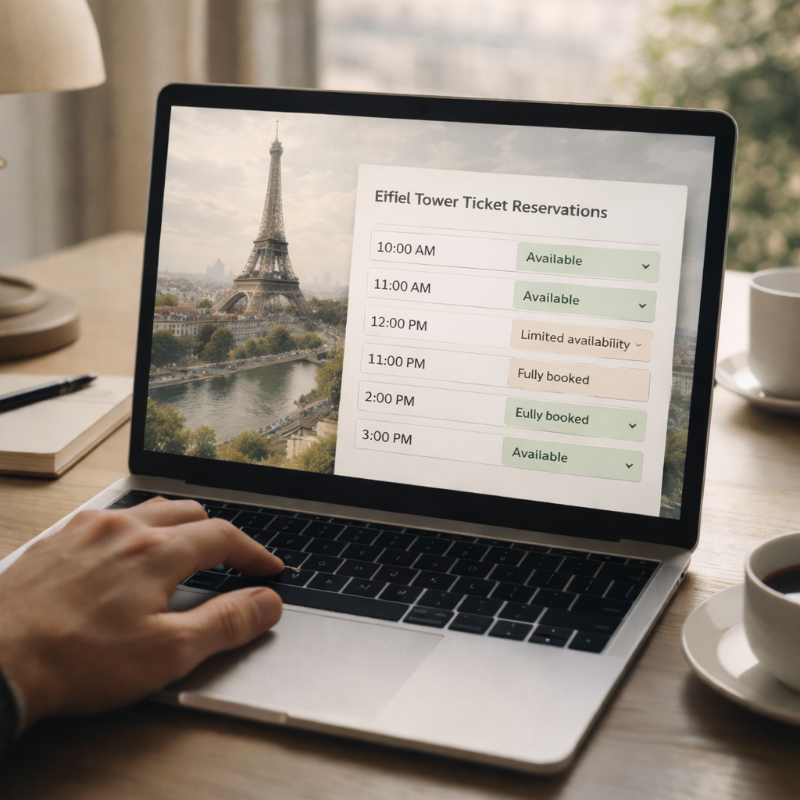
This is one of the most common assumptions visitors make before opening the booking page. The Tower feels so iconic, and demand can be so uneven, that many people conclude every visit must be planned months in advance or not at all. In reality, the situation is more nuanced.
Demand depends on what you want
Some experiences do require precision. Summit tickets, sunset slots, peak summer evenings, and restaurant reservations can become difficult quickly, especially on weekends. But that does not mean every possible visit follows the same pattern. Second-floor access is often easier to secure, and weekday or off-season slots can be far less competitive than the myth implies.
Why the myth survives
Part of the confusion comes from travellers searching at the most competitive moments and assuming those results apply to the entire calendar. Another part comes from the Tower’s reputation itself. Because it is one of the most recognisable monuments in the world, scarcity feels permanent even when it is actually selective. What sells out fastest is not every visit, but the most desirable combinations of date, hour, and access level.
What visitors should remember
Booking early is sensible, but months of advance planning are not necessary for every Eiffel Tower visit. The real question is not whether you need to reserve far ahead in all cases, but what kind of experience you are trying to secure. Flexibility changes the equation more than the myth suggests.
| You do not need months of notice for every visit. What usually requires real anticipation is the most popular version of the experience, not the monument as a whole. |
A timed entry helps organise access. It does not remove waiting.
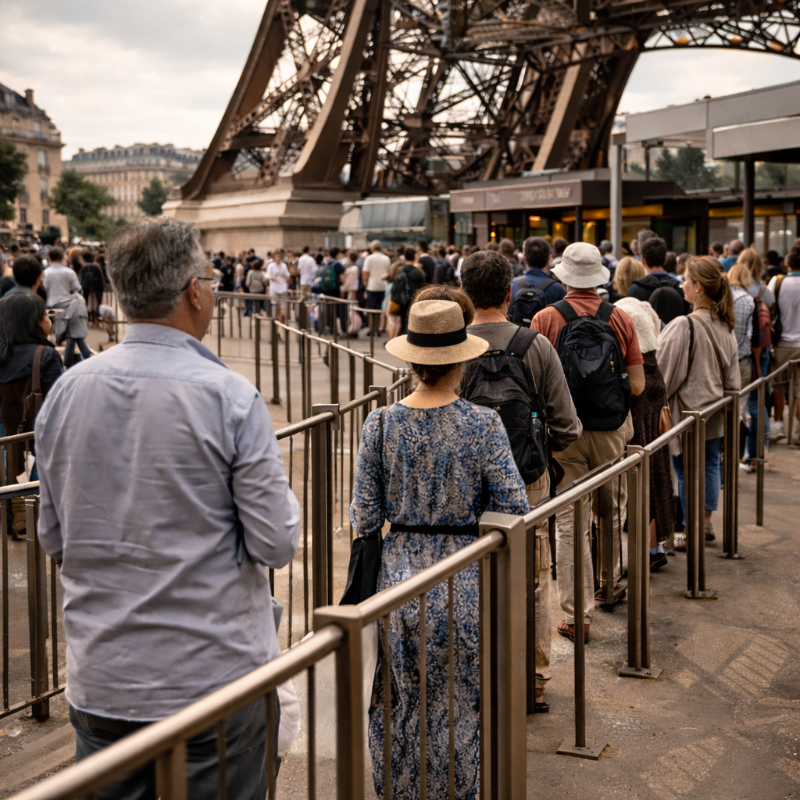
This is one of the most common misunderstandings surrounding Eiffel Tower tickets. The presence of a reserved time suggests a smooth, almost immediate passage from the esplanade to the lifts. In practice, a timed ticket reduces uncertainty more than it eliminates delay.
What the ticket time actually controls
The time shown on the ticket corresponds to your scheduled access window, not to a guaranteed instant ascent. Visitors still pass through security screening, ticket checks, and lift queues, all of which can create waiting time even with a reservation. At busy moments, especially in high season, the gap between ticket time and actual ascent can be substantial.
Why the myth survives
Part of the confusion comes from the language of timed entry itself. It sounds more precise than the experience usually feels. Another reason is that many travellers compare the Tower to museums or monuments where a reserved slot brings a much faster flow. The Eiffel Tower works differently because vertical transport is part of the visit, and the capacity of the lifts shapes everything above ground.
What visitors should remember
A timed ticket is still valuable. It helps secure access and makes planning easier. But it should be understood as structured entry, not queue-free entry. For practical planning, the safest assumption is simple: a reservation improves the experience, but it does not make the Tower frictionless.
| The time on your ticket is the beginning of the process, not the guarantee of an immediate ride upward. |
Author’s note: This text was written with the intention of sharing and transmitting knowledge, not as an academic work. Its author is not a historian. Some details or interpretations may not reflect current historiographical consensus. For a rigorous approach, please refer to the sources listed at the end of this document
Références : Tour Eiffel, 10 urban legends about the Eiffel Tower debunked ; Tour Eiffel, Why does the Eiffel Tower change size? ; Tour Eiffel, What time does the Eiffel Tower light up and sparkle? ; Tour Eiffel, How radio saved the Eiffel Tower from destruction ; Tour Eiffel, The Eiffel Tower and science.
OUR BEST TOURS

✓ Licensed French Travel Agency
✓ Licensed VTC Private Transport Operator
✓ Licensed LOTI Transport Operator
✓ Atout France Registered (IM075120025)
✓ APST Financial Guarantee
✓ Fully Insured by Hiscox
✓ Secure Online Payment
✓ Recommended by Rick Steves